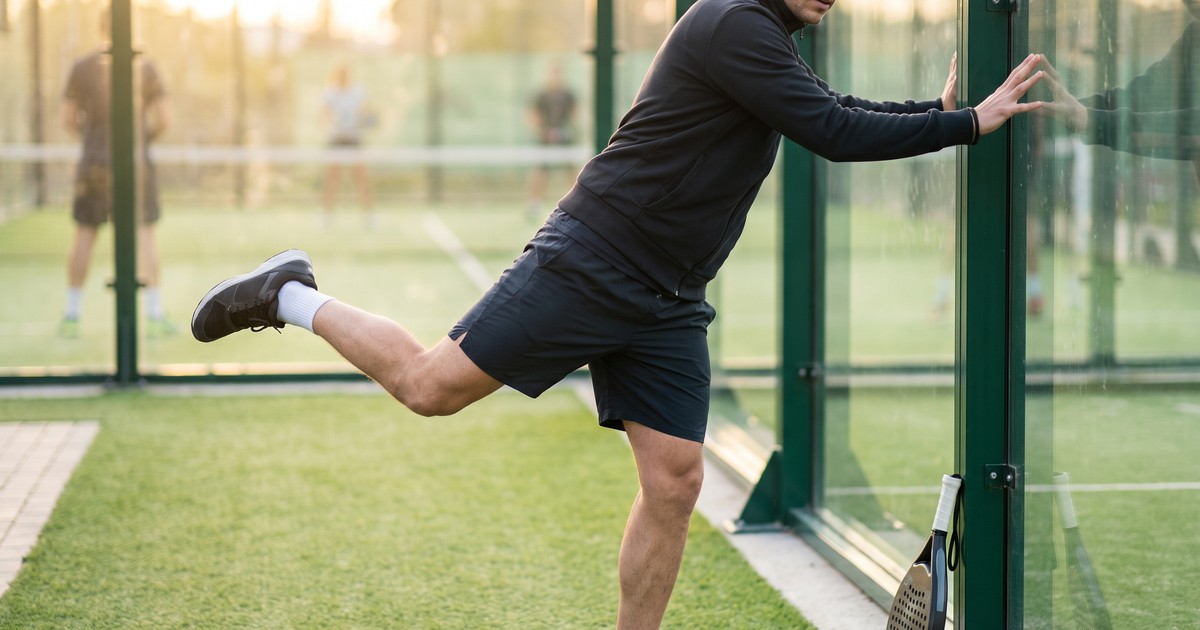
When two amateur players step on a padel court for the first time together, the most important question of the day almost never gets asked out loud: "Which side do you play?" Most of the time the partners just drift to whichever box looked free, then spend the whole match wondering why nothing clicks. The truth is that picking sides is the second biggest tactical decision in padel after picking the partner. Sides decide which shots you hit most, who covers the middle, and which corner your opponents will target when they sense weakness. This article walks you through how to choose your side, how to test a new partnership in three sessions, and when to swap sides in the middle of a match.
What "right" and "left" actually mean
A padel court is 20×10 m, split by the net into two halves, and each half is then split lengthwise by the centre service line. When the pair sets up to defend, one partner covers the right box, the other the left. That's the "right side" (also called the drive side internationally) and the "left side" (the reverse side, sometimes the revés).
Simple geometry — but the consequences are bigger than beginners realise:
- Most people are right-handed. A right-hander's strong arm works on the right of the body, so the right-hander's forehand covers the middle of the court when they stand on the LEFT side, and covers the sideline when they stand on the right.
- The middle of the court is half of every match. Most balls fall through the middle, and the question of who takes them — and with which shot — decides whole sets. On the left side, the middle is taken with a right-hander's forehand (strong, controlled). On the right side, the middle is taken with the right-hander's backhand (usually weaker).
That gives you the rule that works 80 % of the time at amateur level: a right-hander plays right, another right-hander plays left, and both forehands sit in the middle. But that's only the starting point — the interesting stuff comes after.
Why side choice matters more than it looks
At amateur level matches are rarely decided by one beautiful bandeja. They're decided by which pair has fewer holes in the defence and a more stable strong side. That is exactly where the side split comes in:
- Opponents target the weaker side. If your left-side player is a right-hander with a shaky backhand, smart opponents will hammer the middle on every other rally. If your right-side player is a left-hander with a soft forehand, they'll do the opposite.
- The strong side decides who gets the bandeja. When you're stuck in the right corner and the opponent lobs through the middle, you have to either backhand-smash it or run around it. With sides chosen right, the cross-court lob is almost always taken with the forehand.
- A well-paired team plays 0.3–0.5 levels above the sum of its parts. And the reverse is true: two solid players in the wrong setup play half a level below what they are individually capable of.
If you're still working on the basics of where to stand, start with our piece on court positioning — picking your side stacks on top of good positioning, not instead of it. And if you're still hunting for a regular partner, see how to find one in Tashkent — side fit and partner fit are tied together.
Right-side profile: stability and defence
The right side usually goes to the player with these traits:
- A solid down-the-line forehand and a calm backhand. Most balls the opponent hits will come down the right line first — they go for what they see best, which is also down their own line.
- Discipline and good court reading. The right-side player is the anchor of the pair. They take fewer risky decisions and keep more balls in play so that the left-side player can light up the rally.
- A calm return of serve. Returning on the right side is almost always easier: the ball comes from the right, gets hit with a forehand, and is easy to send back deep so you can move forward to the net.
The right-side player rarely wins a rally with a single shot. Their job is not to lose the rally on an unforced error — keep opponents under pressure with long, deep balls and cover the middle when their partner chases a lob.
Classic right-side mistakes at amateur level:
- Going for too much on the down-the-line forehand — the single most common error in any match.
- Sending the backhand straight at the opposing net player — this gets forgiven by pros but punished mercilessly by amateurs.
- Sprinting too far for a lob and leaving the middle wide open.
Left-side profile: creativity and attack
The left side is the playmaker's spot. It tends to go to a player with these qualities:
- An aggressive cross-court forehand. This is the left-sider's main weapon: a right-hander's forehand on the left naturally fires diagonally across the middle — the hardest place for opponents to defend.
- Reliable overhead shots. Opponents will keep lobbing to whichever side they think is weaker, and that's usually the attacker. The left-sider has to play bandejas, víboras and bajadas all match long.
- Comfort with responsibility. The left-sider takes more middle balls, attacks more often, misses more often, and wins more rallies. It's the spot for the player who likes to decide the point.
Important caveat for left-handers. If a pair is one righty and one lefty, the lefty almost always takes the left side. That puts both forehands in the middle — the most powerful setup in padel, used by every top pair on the world tour. The same logic applies at amateur level in Tashkent: if your partner is a lefty, they play left even if their personality fits the calm right-side role.
The quick-reference table
Use this when you have to decide on the spot:
| Pair makeup | Right side | Left side | Why |
|---|
| Two right-handers | The steadier player | The more aggressive player | Two forehands in the middle, attacker on the left |
| One righty, one lefty | The right-hander | The left-hander | Both forehands point at the middle (the ideal pair) |
| Two left-handers | The more aggressive player | The steadier player | Mirror image; both forehands in the middle, attacker on the right |
| One player plays either side | Weaker on return — right | Stronger in attack — left | A versatile partner; put the strong attack on the left |
This works as a first approximation. If a pair has played together for years and the "right" player has a vicious backhand and the "left" player has a panicky forehand, the table loses to reality. Then it's time to test.
A three-session test to find your side
If you're not sure which side is yours, don't guess — test. It takes three normal sessions and costs almost nothing.
- Session 1: play the right side for an entire set. Don't switch even if it goes badly. After the set, note three things: how many returns you handled cleanly, how many forehands down the line landed, how many times you had to "rescue" your partner by running across the middle.
- Session 2: play the left side for an entire set. The same three notes, plus one more: how many times you fired your forehand across the middle, and how many of those ended in a winning shot or a great position for your partner.
- Session 3: play by the table. If both of you are right-handers, use the "steadier on the right" rule. If you're a righty and your partner is a lefty, the righty goes right. After the set, compare: easier? harder? no difference?
The thing to track is not the score, but how you feel. If on the left you're constantly chasing and never catching up, your side is the right. If on the right you're bored and want to be in the middle, your side is the left. Your body knows before your head does.
It's also worth recording sets from a phone behind one corner. A week later you'll see what you missed live: how your partner shifts, where the middle opens, whose balls each of you takes more naturally. The coaches at PlaySport often run sessions like this with pairs: 30 minutes on court, then video review and a conversation.
Edge cases: two righties, two lefties, no obvious "weaker" player
The table doesn't always help. Four common situations and how to solve them:
- Two right-handers, both equally strong. Put the player with a better lob and better overheads on the left, since they'll need them. Usually that's the younger or more ambitious of the pair.
- Two left-handers. Mirror of the righty-righty case: the left side goes to the steadier player and the right side to the attacker. Both forehands cover the middle again — the advantage just flips.
- One of you has an elbow or shoulder injury and the backhand barely works. Put the injured player on the side where their strong arm covers the middle. For a right-hander that's the left side, because the forehand owns the middle and the backhand is barely needed.
- One partner is clearly weaker. Put the weaker player on the right. At amateur level the middle is usually open, and the stronger partner from the left can cover half of the middle balls too. The weaker player just needs to keep the ball in play.
If your pair has access to a coach, ask them to watch one set with this exact lens — to see where each of you leaks more points. That outside view saves dozens of training hours.
When to switch sides mid-match
Good pairs aren't afraid to switch sides during a match. It's normal and it often works. The trick is not to confuse "switching sides" with "panicking".
Green lights for a switch:
- You're losing the set and opponents are systematically breaking one side. If you're a righty-righty pair and your partner's left side is falling apart, try swapping. Maybe their forehand works better from the right, and yours from the left.
- The opponent forces awkward balls. Say the opposing lefty has a vicious cross to the right corner, and your right-side partner can't handle it. Swap, and the serve goes back the other diagonal.
- One of you is running out of legs. The left side requires less footwork (fewer chases back for lobs). Swap and let your partner rest without leaving the court.
Red lights — things not to do:
- Swap at 0–4 without a conversation. That's flight, not a plan. Talk it through between games and decide calmly.
- Swap because "nothing's working". First check the simple things: serve, chiquita, back-wall play, communication. Only if those work and the side doesn't, swap.
And above all: switching sides is a team decision. Never drift to the other box without warning your partner. One unannounced swap and the pair eats a lob into the wide-open zone on the next easy rally.
Tashkent: where to try this in practice
Tashkent now has around ten active clubs and coaches who work specifically on doubles play. If you want to test your side honestly, browse the PlaySport coaches page — half of them accept "pair sessions" where you and your partner play while the coach intentionally loads each side. That's a different exercise from the usual stroke training: the goal here is diagnosing the setup, not grinding shots.
The other option is to enter a few amateur tournament matches. The tournaments and events page lists the next starts by level: beginner (2.0–3.0), club (3.0–4.0), advanced (4.0–5.5). A tournament is the fastest way to see whether your side holds up under pressure or whether you only win friendlies on a court you know. If you're preparing for a first start, read Your First Amateur Tournament — every logistical detail is in there.
If you're still without a regular partner, browse the list of clubs and venues and join their open sessions — one evening of mixed play is the fastest way to sample two or three sides and feel which one fits.
Pre-match checklist for new partners
Before your first match with a new partner, spend five minutes on a short conversation. Agree on three things:
- Who plays which side for the first set. Follow the table; don't argue about comfort. Compare afterwards.
- Who takes the middle ball. Default: the forehand (so on a righty-righty pair the left-sider, on a righty-lefty pair always the forehand-into-the-middle player).
- How you call balls. "Mine!", "Yours!", "Out!". Quick and loud. More in our piece on partner communication.
That's enough to keep the first set from descending into chaos and give you usable information for the second.
Frequently Asked Questions
If I'm right-handed, do I have to play the left?
No. A right-hander can play the left if they're attack-minded and their partner is steadier. But if your partner is a left-hander, the left side almost always goes to them — it's the strongest pairing in padel. And plenty of right-handers at amateur level are happiest on the right, especially with a reliable return of serve.
Can I switch sides every set?
You can, but don't make it a habit. Every swap breaks the reflexes you've built up: your partner is used to your call from the right, used to lobs going there, used to the middle being covered from the left. Swap when there's a reason, not for variety.
Why do world-tour pairs almost always play "righty right, lefty left"?
Because it puts both forehands in the middle of the court, and the middle is half of every match in padel. An attacking forehand cross-court from the left is the most reliable way to put pressure on an opponent. The rule works just as well at amateur level.
What if neither of us likes our side?
Play the table for three sessions first and don't argue about "I like / I don't like". Often "I don't like" is just unfamiliarity. If the feeling sticks after three sets, swap. Just never make the switch after one bad point — that's an emotion, not data.
Do you pick a side once and for all?
No. Players develop different shots over time. A steady right turns into an attacking left because their forehand improved. A flashy left moves to the right when they get tired of running. That's normal. Revisit the setup every six months: what's changed, who's more comfortable now? Padel is a pair's game, and the pair grows too.
How do I tell a new partner I only play the right side?
Just say it: "My forehand down the line is solid, but my backhand through the middle is shaky, so I'm more useful in the right corner." That's specific and easy to hear. A good partner will respect it — you're not being picky, you're thinking about the pair. Good partners pair up exactly this way: by how one side complements the other.