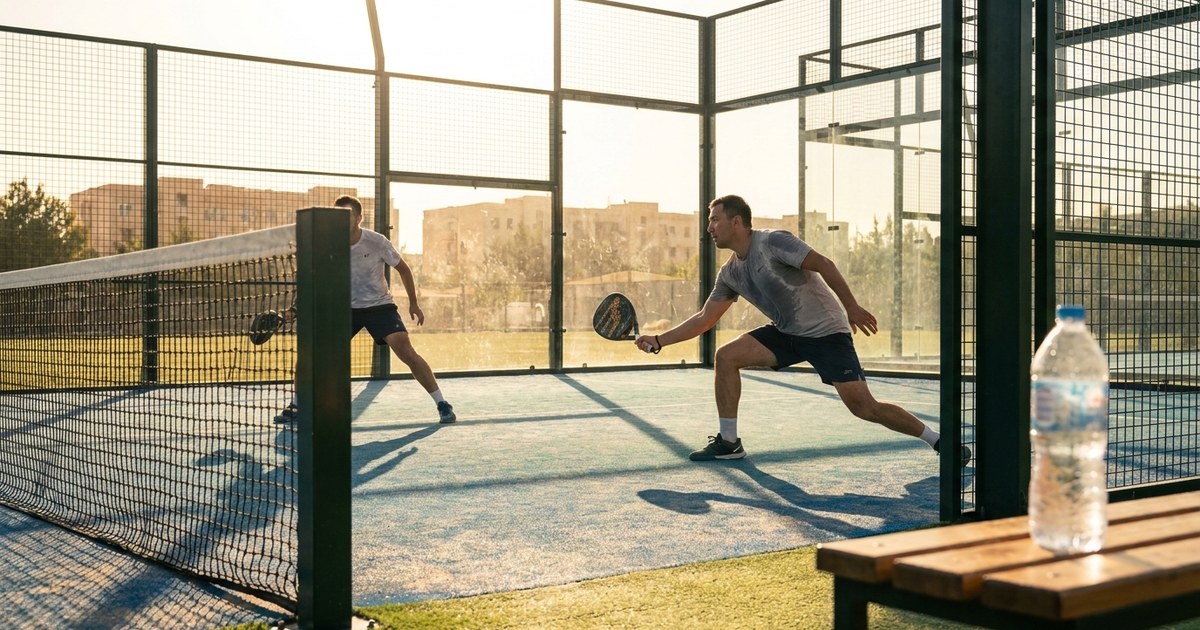
You've booked your first lesson, and the next question hits immediately: group class or private coaching? The price gap is real, and the advice in group chats contradicts itself — "go private or you'll plateau in a month" versus "why pay more for the same drills you'd get in a group." Here's what each format actually delivers, and how to choose without overpaying or losing momentum.
There's no short universal answer, and that's not us dodging the question. The format that helps depends entirely on the problem you're solving — and a beginner one month in, a player stuck on a plateau, and someone prepping for their first tournament are solving three completely different problems. What follows isn't a vague "try both" — it's a breakdown by stage: what each format really gives you, where it falls short, and how to build a routine that doesn't waste money on what you don't need right now.
What actually separates group and private lessons beyond price
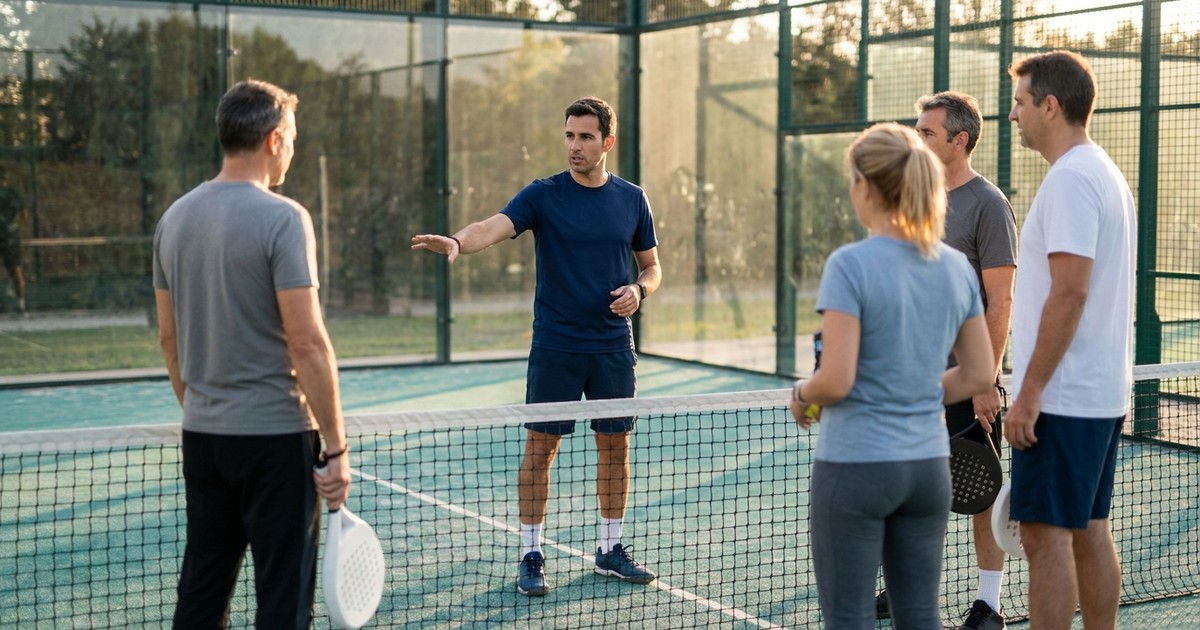
On paper the difference is simple: a group puts one coach in front of four to eight players; private coaching puts the coach entirely on you (or you and a partner). The real difference runs deeper:
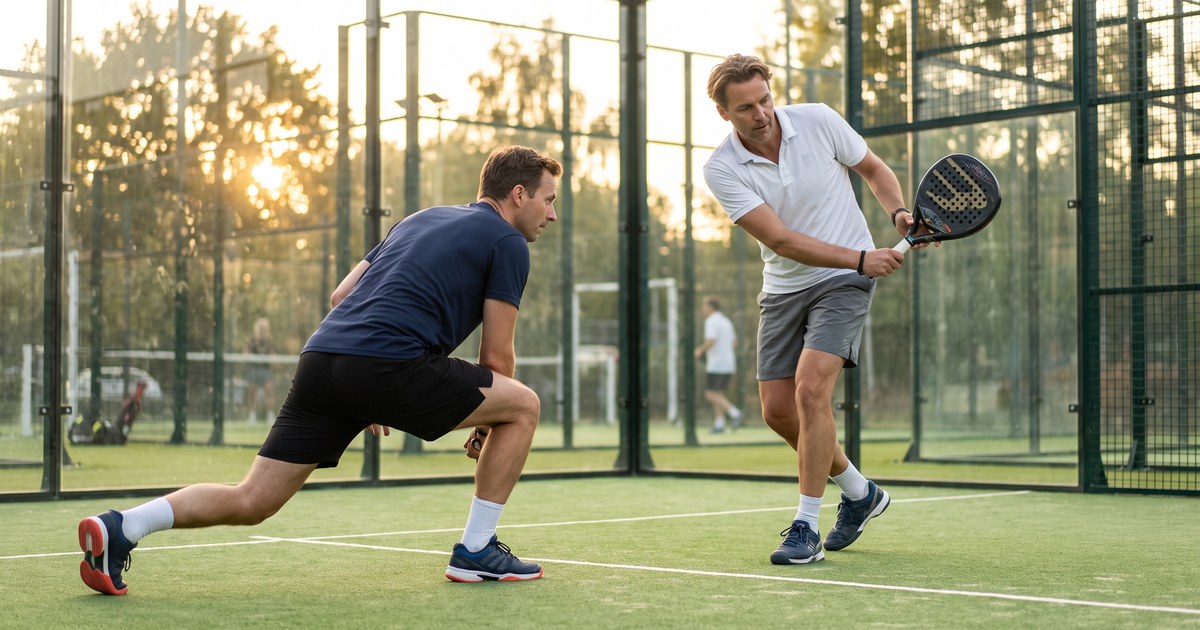
- Coach attention. In a group, the coach spots your error every few minutes and often corrects it with a general note to the whole class. One-on-one, the coach is watching your grip, your stance, the exact moment your swing goes wrong.
- Match-realistic practice. Groups play more live points and drills against real opponents — that trains reaction and reading the game. Private lessons pack in more repetitions of the same movement — that trains the mechanics of the shot itself.
- Pace. A group moves at the speed of its average member. A private lesson adapts to you — if your víbora isn't clicking, you can spend half an hour on it without holding anyone up.
Neither format is "better" in the abstract — they solve different problems. The real question is which problem you're facing right now.
There's a less obvious factor too: social dynamics. In a group, part of your progress rides on having people at a similar level around you — seeing that your neighbor's víbora isn't landing either takes the edge off. In a private lesson, it's just you, your mistake, and the coach — more comfortable for some, more pressure for others. Worth being honest with yourself about that, not just about technique and budget.
Where group classes win
Live tactical context
Padel is a four-player game, and most of its tactics — who covers the middle, when to go for the smash, how to play a chiquita under pressure — only exist with real opponents on the other side of the net. A one-on-one lesson with a coach can't recreate the pressure of a live 2v2 point the way a group session can.
Partners at your level
Group lessons are the most natural way to meet people you'll actually want to play with off the court. You've already seen how someone moves, how they hold up under pressure, and how they react to losing a point — that tells you more than any profile in a chat. If finding partners is its own headache, we've broken down what actually works in Tashkent: how to find playing partners.
Cost per hour on court
For the same budget, a group class almost always buys more hours on court per month than private lessons. For a beginner who mostly needs total time with the ball, the racket and the glass, that's often a better investment than fewer, more targeted private sessions.
Discipline and routine
Groups usually run on a fixed schedule — Tuesday and Thursday, 7pm, same club. It's less flexible, but it removes the weekly decision of when to show up. Private lessons, by contrast, are easy to push "to next week" around a busy schedule — and for a lot of players that's the real reason private coaching feels slower than expected: not the format, but the irregularity.
Where private lessons win
Fixing one specific error, fast
If you've been stuck on the same problem for months — hitting your bandeja too flat, losing balance on your víbora — a private lesson cuts the time to fix it dramatically. The coach sees the issue immediately, explains it to you specifically, and watches the movement on every single repetition instead of once every few minutes.
Working on a weak spot without holding up the group
In a group, plenty of players feel awkward "stopping" a drill to fix their own mistake — nobody wants to slow everyone else down. That barrier disappears in a private lesson: you can just say "my serve falls apart under pressure" and spend as long as it takes.
Training toward a specific goal
Prepping for your first tournament, or trying to close one specific gap before a big match — a private lesson lets you build a plan around that exact goal instead of following a group's general curriculum. If a tournament's already on the horizon, we've written about what to expect from your first amateur event: what your first tournament looks like.
Feedback that isn't relative to the group
In a group, a coach inevitably splits attention based on who else is on court — a stronger player gets fewer basic corrections, a weaker one gets more. In a private lesson, feedback is built entirely around your own progress: the coach is comparing you to yourself a month ago, not to whoever's next to you. For players who find comparison demotivating, that's a real difference in experience, not just a matter of efficiency.
Group vs. private, side by side
| Group | Private |
|---|
| Cost per hour on court | Lower | Higher |
| Coach attention on your technique | Shared across the group | Fully on you |
| Live 2v2 match practice | Plenty | Little to none |
| Speed of fixing one specific error | Slower | Faster |
| Finding playing partners | Works well | Doesn't happen directly |
| Flexibility around your pace and goal | Low | High |
The first few weeks: group wins
Early on, the priority is total ball feel, getting used to the glass bounce, and understanding basic court position — not polishing one shot. A group class gives you enough reps for that, costs less, and puts you next to other beginners right away. If that's you right now, we've covered the common mistakes of the first month: common beginner mistakes.
The mid-level plateau: targeted private lessons
After a few months, most players get stuck on one recurring error a group can't fix on its own — usually grip, the swing on overhead shots, or net positioning. Here, one or two private lessons focused squarely on that problem often produce more progress than another month of the same group routine.
Advanced level: a mix of both
At a higher level, group sessions become valuable again — not as a foundation, but as competitive pressure against opponents of similar strength. Private lessons at this stage tend to get used surgically: breaking down tactics against a specific opponent's style, or automating one shot completely.
Before arguing about training format, it helps to be honest about where you currently stand — that determines what you actually need right now: more hours on court, or a targeted technical fix. We've covered the international 1.0–7.0 rating scale and how to self-assess in a separate piece: how to understand your padel level.
What to check before you sign up
Format isn't the only thing that determines results. Quality varies a lot within the same format, and before paying for a membership or a package of private lessons, it's worth checking a few things:
- Group size. A group of four and a group of ten per coach are functionally different products sold under the same label. The bigger the group, the closer it gets to a general warm-up session; the smaller it gets, the closer it feels to private coaching — at group prices.
- A trial session. Most Tashkent clubs and coaches let you attend one class before committing to a membership or package. Don't skip this step — a coach's pace, explanation style and the group's atmosphere matter as much as the formal curriculum.
- Coach specialization. For private lessons especially, it matters what a specific coach specializes in — building technique from scratch, advanced shots, or physical conditioning. Being strong in one area doesn't guarantee strength in another.
- Level match within the group. A group where half the players are well above your level will move at someone else's pace — you'll either fall behind or slow everyone else down. Ask upfront whether the group is level-matched or an open enrollment for anyone.
Most players don't need to pick one format forever — it's more effective to combine them deliberately:
- Group lessons as your base. One or two sessions a week for match practice, partners, and total hours on court.
- Targeted private lessons as needed. Not on a "once a month for the sake of it" schedule — book one when a specific problem has built up that the group can't solve.
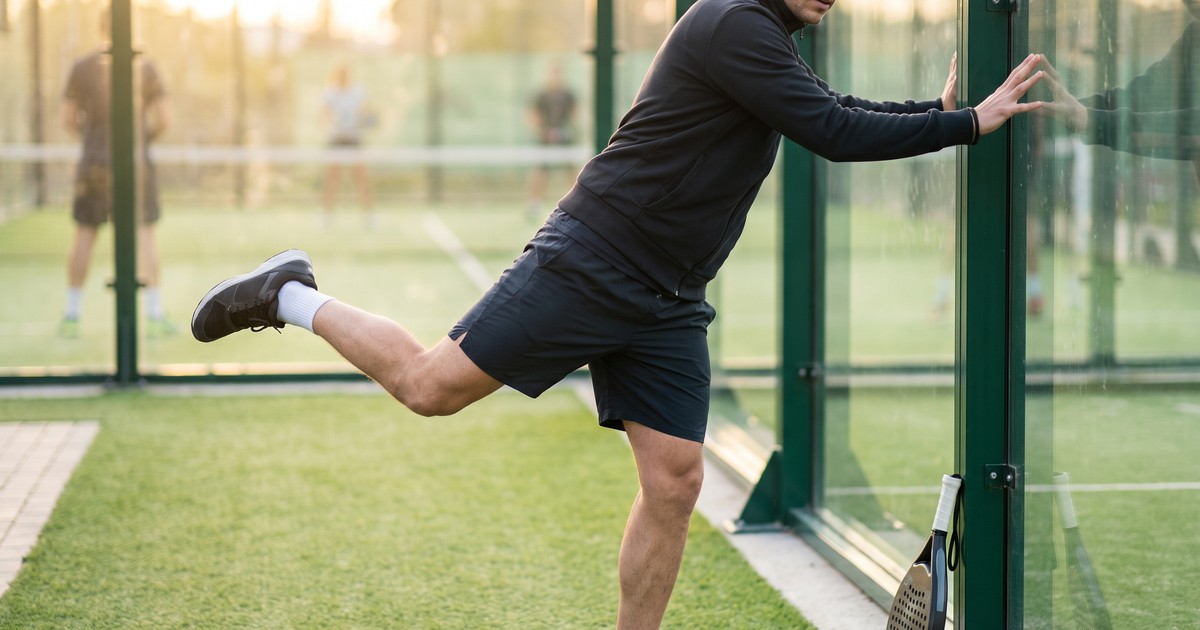
- Homework between lessons. A private lesson pays off far more if you reinforce the movement between sessions — even simple wall drills or balance exercises your coach showed you.
- Periodic reassessment. Every few months, honestly ask which format is currently doing more for you — the stage changes, and what worked at the start won't necessarily work six months in.
- Going straight to private lessons from day one. It's expensive, and it skips the thing that matters most early on — real 2v2 match practice.
- Staying in the same group for years even after progress stalls. If you've been stuck for months, it's usually not a lack of talent — it's a lack of targeted correction. Time for at least one private lesson.
- Expecting a miracle from a single private lesson. One lesson changes understanding, not automaticity — a new movement only sticks through repetition, ideally in both group play and on your own.
- Ignoring fitness. Even great technique breaks down under fatigue. If your legs tire out before the point does, some of your progress belongs off court, in general conditioning.
- Switching coaches or groups too often. Technical progress rarely moves in a straight line — sometimes a movement gets worse right before it clicks. Switching every couple of weeks chasing a quick fix usually interrupts that process rather than speeding it up.
- Not telling your coach your goal. In both formats, a coach works better knowing what you actually want — playing for fun, prepping for a tournament, or just staying in shape. Without that, a lesson defaults to generic goals that may not match yours.
Where to train in Tashkent
Tashkent's clubs offer both formats in different mixes — some lean harder into group programs for beginners, others make it easier to book a private slot at a convenient time. The split often depends on the season too: in the hottest months, morning and evening slots on courts with comfortable lighting fill up fast, and groups built around them form ahead of time, so it's worth booking a little in advance rather than the day you find a free hour.
Before settling on a club, it's worth checking which courts and lesson formats are available near you: Tashkent venue guide. If you already know you need targeted private work on a specific error, it's more efficient to go straight to coach profiles and specializations: PlayPadel coaches. And if the format question is settled and what you're missing is partners or a tournament to put your new level to use — check the calendar: Tashkent padel events.
Frequently Asked Questions
What's better for a beginner — group or private lessons?
For the first few weeks, group lessons almost always win: they're cheaper, give you more match practice, and put you next to other beginners right away. Private lessons are worth adding once a specific error shows up that isn't going away on its own.
How many group lessons per week are enough to progress?
One or two sessions a week is usually enough for steady early progress, as long as you're getting at least some independent practice between them — like playing points with partners outside of class.
Should I book a private lesson before my first tournament?
If there's a specific gap — an unreliable serve under pressure, for example — one or two targeted private lessons before the tournament close that gap faster than waiting for it to fix itself in a group setting.
Can I combine group and private lessons at the same time?
Yes, and it's often the most effective approach: the group gives you volume and match practice, private lessons give you targeted technical correction. Many Tashkent clubs let you book both formats in parallel.
How do I know it's time to move from group to private lessons?
The main signal is a plateau — the same error repeating for several weeks in a row without the group drills fixing it. That usually means it needs one-on-one, targeted work rather than another month in the same routine.
Is a private lesson with a partner cheaper than one solo session each?
Yes — most coaches offer private lessons for two players at once. It costs more than a fully solo lesson but noticeably less than two separate private sessions, and it works well if you train consistently with the same partner.


 Training
 Training