A year ago I traded my Sunday football match for padel, and I still haven't looked back. My rating is 1.5, I'm very much still a beginner, and I shank easy balls on a regular basis. But in that year I think I stepped on every rake a newcomer can step on. This article is my honest diary: the mistakes nobody warned me about, plus the things I wish someone had told me in my first week.
Padel is not tennis, and that changes everything
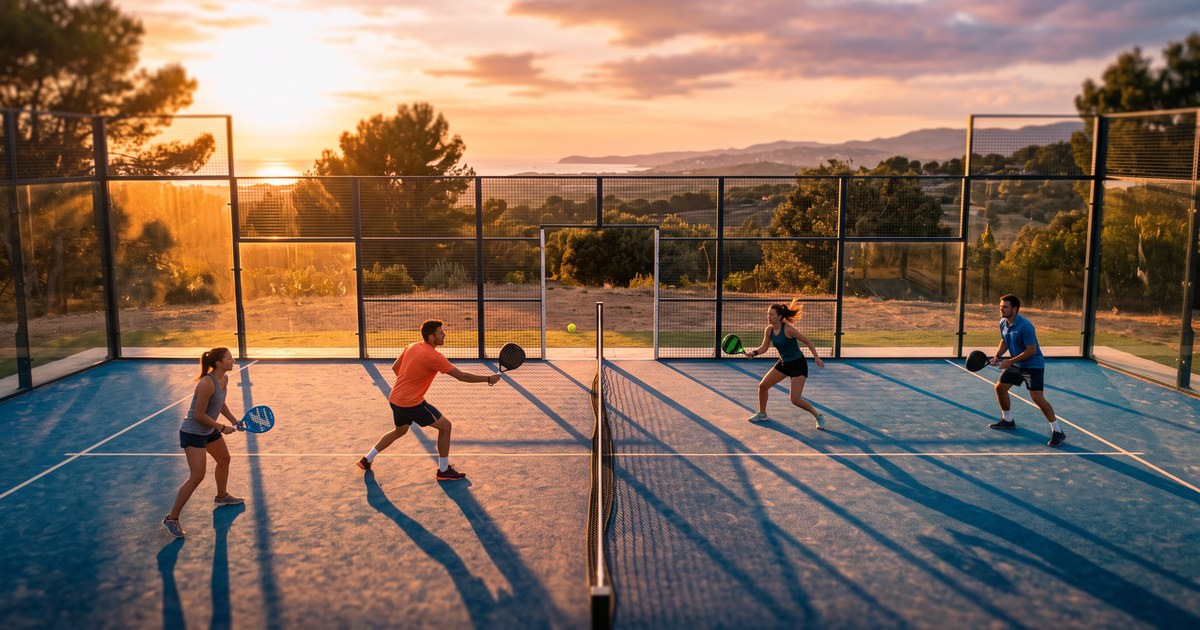
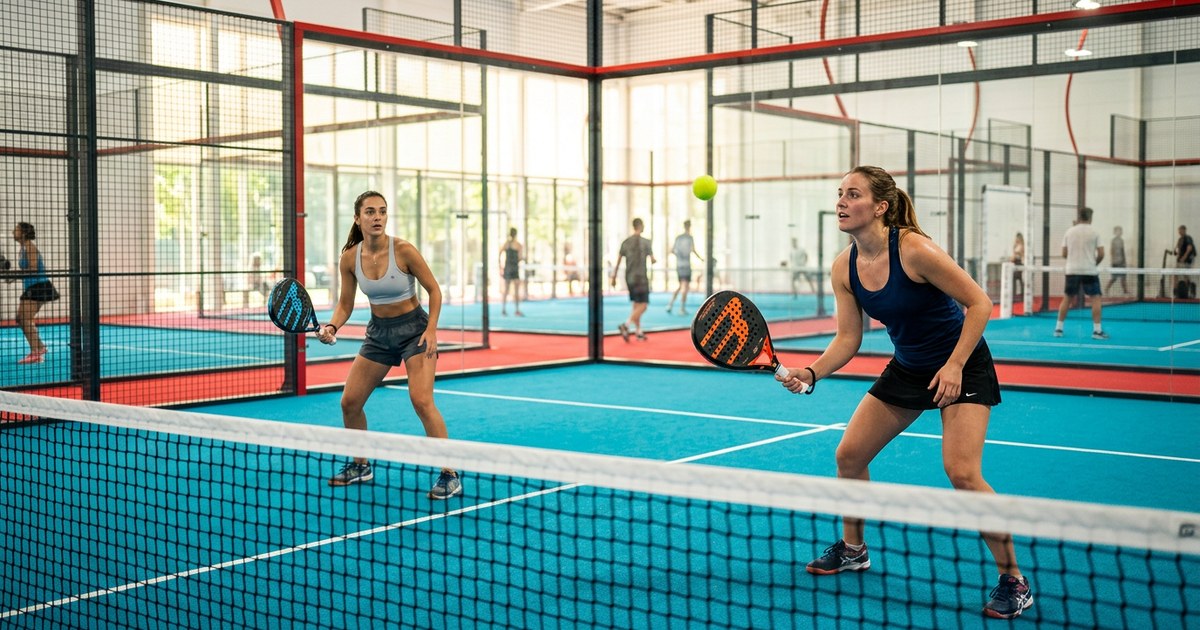
The biggest beginner trap is thinking padel is just "tennis on a small court." I thought exactly that. The court is 20 by 10 metres, fully enclosed by glass and wire mesh, and it's always played four people — two against two. The walls aren't an obstacle; they're part of the game. The ball comes off them, and you're meant to play it.
Because of that, the whole logic is different. In tennis the harder, faster hitter usually wins. In padel the patient, accurate player wins. Points are far more often won by an opponent's error than by a clean winner. Making that switch in your head is the hardest part for a beginner, and almost every mistake below comes from failing to make it.
Padel is one of the fastest-growing sports in the world right now, and Tashkent keeps adding courts. The good news: the barrier to entry is low. The bad news: without grasping a few basics, you'll spin your wheels longer than you need to.
Mistake 1: I hit everything as hard as I could
For my first month I smacked the ball like I was taking a penalty kick. In tennis or football, power wins. In padel it almost always punishes you: the ball flies into the back glass, bounces back nicely to your opponent at the net, and there goes the point.
What I learned:
- In padel, where you hit matters more than how hard.
- A calm ball into your opponent's feet beats a flashy smash into the cage.
- Power arrives on its own once you have technique. Control comes first.
When I forced myself to hit at 60% and think about placement, my percentage of rallies won jumped within a couple of weeks.
Mistake 2: the wrong grip
I held the racket like a tennis forehand — "palm behind the handle." That's comfortable for one shot, but in padel you constantly play forehand, backhand, overhead, and off the wall. The all-purpose answer is the continental grip (also called the "hammer grip" or "shaking hands with the handle").
Hold the racket as if you were shaking its hand, or gripping a hammer. With this grip you don't have to twist your wrist between forehand and backhand — and that's half a court's worth of saved balls. I lost about two weeks before someone on court showed me in thirty seconds. Sometimes one tip from a coach saves you a month of self-teaching — more on that below.
Mistake 3: I camped in no-man's-land and never moved to the net
My football-and-tennis instinct kept me back near the rear wall. But in padel, points are won at the net. The worst place to stand is the middle of the court — the dreaded "no-man's-land" — where you can't reach the net and can't comfortably play the ball off the back glass either.
The positioning rules I took away:
- After serving or returning, move forward to the net as soon as the ball allows.
- Don't linger in the middle: be either at the net or on the back line.
- Move as one unit with your partner — you both go forward or you both drop back, never one each.
Who takes the middle
A specific beginner headache: the ball flies between you and your partner, and you both lunge for it or both freeze. The general rule is that the forehand player takes the middle (for two right-handers, that's the player on the left). But more important than the rule is agreeing before the point.
Mistake 4: I was scared of the walls
The strangest and best thing about padel is that you can — and should — play the ball after it bounces off the back glass wall. For my first weeks I watched those balls go by as if they were out. They're not out: let the ball hit the glass, rebound towards you, and play it calmly.
What helped me stop fearing the glass:
- Don't run away from the ball — turn sideways and wait for the rebound.
- Don't glue yourself to the wall (more on that below).
- Remember: you almost always have more time than you think. The glass slows the ball and hands it back to you.
Once I learned to play "off the glass," the court suddenly felt bigger and the panic faded.
Mistake 5: I went silent on court
Padel is a team game, like football. Yet for my first month I played as if my partner wasn't there. The result was predictable: we both charged the same ball and collided, or we both froze and let an easy one drop.
The minimal vocabulary that kills half the chaos:
- "Mine!" — I'm playing this ball.
- "Yours!" — you play it.
- "Back!" — they've lobbed us, drop back.
- "Leave it!" — the ball is going out, don't touch it.
Call loud and early. Better to call one time too many than to crack heads. By the way, if you don't have a regular partner yet, that's very fixable in Tashkent — more below.
Mistake 6: I bought the wrong racket
I proudly bought a "pro" racket — stiff, heavy, with a diamond (teardrop) shape. Two sessions later my elbow ached and my control was no better than before. The classic beginner mistake.
What I should have known straight away:
- A beginner needs a round shape (centred balance, a big sweet spot), not a diamond.
- A soft core forgives mistakes and protects your elbow.
- A light racket (roughly 360–365 g) tires your arm and wrist less.
Don't repeat my mistake — I broke down how to choose properly in a dedicated guide: how to choose your first padel racket. In short: start light, round, and soft.
Mistake 7: I skipped the warm-up and collected niggles
I used to walk onto a football pitch cold and get away with it. Not in padel: sharp turns, sprints to the net, and overheads soon gave me an aching elbow and wrist. "Padel elbow" is a real thing, and in beginners it comes from poor technique and a heavy racket.
My short pre-game warm-up (5–7 minutes):
- A light jog or brisk walk to get the blood moving.
- Arm, shoulder, and wrist circles.
- A few squats and lunges — your legs do a lot of work in padel.
- A couple of minutes of easy rallying with no score, gradually adding power.
And don't skip the cool-down or the water. Injuries early on are the most common way people quit padel.
Mistake 8: I chased winners instead of keeping the ball in play
I wanted to finish rallies in style, so I kept going for risky put-aways. The result was a mountain of my own errors. For beginners, points are won not by winners but by simply keeping the ball in play longer than your opponent.
The key weapon of patience is the lob, a high ball over your opponents toward the back wall. A good lob:
- pushes your opponents back from the net;
- gives you time to move up and take the net yourself;
- carries almost no risk compared with a smash into the cage.
I underrated the lob for a long time — wrongly. It's probably the most underrated shot among beginners.
Mistake 9: I stood too close to the back wall
My logic was: stand right against the wall and I'll reach everything. The reality is the opposite. If you stand flush against it, the ball rebounds off the glass straight into your body with no room to swing. You need to give yourself space: stand a step or two off the wall so you can take the ball at a comfortable point after the bounce.
And about footwork. Padel is 80% legwork. The two things that helped me most:
- The split-step — a small hop as your opponent strikes, so you can push off in any direction.
- Small adjusting steps instead of one big lunge, so you arrive at the ball in a comfortable position.
Mistake 10: I never learned the bandeja or how to escape pressure
When your opponent lobs you while you're at the net, smashing it with everything you have is almost always a mistake (see Mistake 1). The pro answer is the bandeja: a controlled, sliced overhead that doesn't win the point outright but holds your position at the net and refuses to give up the initiative.
It's the first "grown-up" shot a beginner should learn after the basics. I covered it separately: what the bandeja is and how to hit it. Don't try to master it in your first week — but keep it in mind as your next goal.
What to expect in your first lesson and what to bring
My first lesson pleasantly surprised me: within twenty minutes I was making contact and playing simple rallies. Padel really is friendly to beginners — that's its superpower.
What to bring:
- Court shoes with good grip (tennis shoes are fine; running shoes are not).
- Comfortable sportswear and water.
- You can rent a racket at the court — don't buy your own before your first lesson.
- Balls are usually provided by the court or coach.
A good coach will give you the grip, the basic position, and a shot or two in an hour — saving you weeks of self-inflicted frustration. You can book a first lesson in Tashkent through our coaches, and see where people play around the city on the Tashkent courts page.
Basic court etiquette
- Show up on time — courts are booked in slots.
- Make sure your opponents are ready before you serve.
- A disputed call among beginners is usually just replayed, no drama.
- Compliment a good shot from your opponent. It's part of padel culture.
How quickly you actually improve
Honestly: the first two weeks were frustrating. In the third week something clicked, I won my first set — and that's the exact moment padel hooked me for good. A year in, at rating 1.5, I'm still a beginner, but I genuinely enjoy it and rarely hand over easy points.
A rough feel for the timeline:
- 1–2 weeks: you make contact and learn the rebound off the glass.
- 1 month: you sustain rallies more reliably, move to the net, and shout "mine!"
- 3 months: a lob appears, your positioning makes sense, and the first tactical thoughts arrive.
The pace depends on how often you play and whether you take lessons. A regular partner slightly above your level speeds up progress more than anything — and finding partners in Tashkent is exactly how you meet them.
What I'd tell my first-week self
If I could go back a year, I'd tell myself something short: relax and enjoy it. And five more things:
- Hit softer, aim more precisely — power comes later.
- Move to the net and move together with your partner.
- Make friends with the wall — let the ball bounce.
- Talk on court — "mine," "yours," "back."
- Don't buy an expensive racket, and don't quit in week two.
Padel is about patience, brains, and good company. The best part starts a little later than it seems on your first session. Hang on until week three — and you'll be as hooked as I am.
Frequently Asked Questions
Is padel hard for beginners?
No — padel is one of the most beginner-friendly racket sports. You'll make contact and play simple rallies in your very first lesson; the difficulty lives in the tactics, not the basics.
Do I need lessons?
At least one or two at the start are highly recommended. A coach will set your grip and positioning in an hour and save you weeks of solo trial and error — you can book through our coaches.
Is padel easier than tennis?
The basics are noticeably easier and faster to learn than tennis because the court is smaller and the walls help you. But the skill ceiling is just as high — tactics and net play take time.
What should I bring to my first game?
Court shoes with good grip, comfortable clothing, and water. It's best to rent a racket at the court rather than buy one in advance.
How long until I'm decent?
Sustaining rallies and standing in sensible positions usually takes 1–3 months of regular play. A steady partner and a few lessons shorten that timeline.
Do I need my own racket?
Not right away. Play your first sessions with a rental, and once you know you're hooked, choose a light, round, soft racket using our first-racket guide.