

How to Choose Your First Padel Racket: An Honest Beginner's Buying Guide
Shape, weight, balance, core and face material — what actually matters in a first padel racket, and why a beginner should never buy a pro's diamond model.
Contents
- Why your first racket matters more than you think
- Why a beginner shouldn't buy a pro's racket
- Shape: the beginner's biggest decision
- What's right for you
- Weight and balance: be friends with your own arm
- Core: soft EVA vs hard EVA
- Faces and material: fibreglass vs carbon
- Sweet spot, surface roughness and the holes
- Grip, overgrip and the wrist strap
- Budget: what a first racket really costs
- Second-hand and "try before you buy"
- Care, storage and when to replace
- What to buy for your level: a quick summary
- Frequently Asked Questions
- Round, teardrop or diamond for a beginner?
- How much should a first racket cost?
- Is carbon or fibreglass better for a beginner?
- What weight should a beginner choose?
- Can I use a tennis-style grip?
- How long does a padel racket last?
Almost every week, someone walks up to me on the court and asks: "Sergey, which racket should I buy?" And almost every time, they're holding a stiff, diamond-shaped model straight out of an advert — the exact racket a world-tour star plays with. I've restrung and tested hundreds of rackets over fifteen years, and I'll be honest: for a beginner, that's the worst possible choice. Let's break down what actually matters, step by step.
Why your first racket matters more than you think
Padel is always a four-player game — two against two — and it's one of the fastest-growing sports in the world. When you start, your job isn't to hit hard; it's to catch the ball on the middle of the racket, control it, and not jar your arm. In your first months, almost every point you win comes from keeping the ball in play and letting the opponent make the error — not from a winner. A racket that helps you do exactly that is worth far more than one that promises power you can't yet use. The right first racket solves three things at once:
- Control. A large sweet spot forgives off-centre hits, so the ball goes where you aim instead of sailing long or clipping the frame.
- Comfort. A soft, responsive racket doesn't dump all the vibration into your wrist and elbow, so you can play longer sessions and recover faster.
- Injury prevention. "Padel elbow" is a real problem, and it's most often beginners on overly stiff rackets who develop it — long before their technique can protect them.
I've watched players quit the sport in their first season, not because they didn't love it, but because the wrong racket gave them a sore arm and a string of frustrating, error-filled matches. Don't let your equipment be the thing that holds you back.
The mistake I see at the shop every single time: a beginner picks a racket with their eyes instead of their hand. A gorgeous diamond model in black-and-gold carbon looks professional — and kills progress at the root.
Why a beginner shouldn't buy a pro's racket
Top-tier diamond rackets from premium lines are engineered for a player with a fast, grooved swing. A racket like that only delivers its power when you hit precisely into the small sweet spot near the head. A beginner almost never lands there — the ball flies unpredictably, the arm takes a harsh kickback, and confidence drops. You pay more, play worse, and risk injury. Far better to put the difference toward a few sessions with a coach — that will do many times more for your game than expensive carbon.
There's also a psychological trap. A pro racket carries the name of a player you admire, and it's tempting to believe the racket is what makes them great. It isn't. The pros could win with your entry-level round racket; you cannot win with theirs. Marketing sells the dream of borrowed talent, but on court the laws of physics don't care about the logo. Buy the racket your current swing deserves, not the one your favourite idol uses.
Shape: the beginner's biggest decision
Shape determines where the sweet spot sits and what the racket's character is. Remember three options:
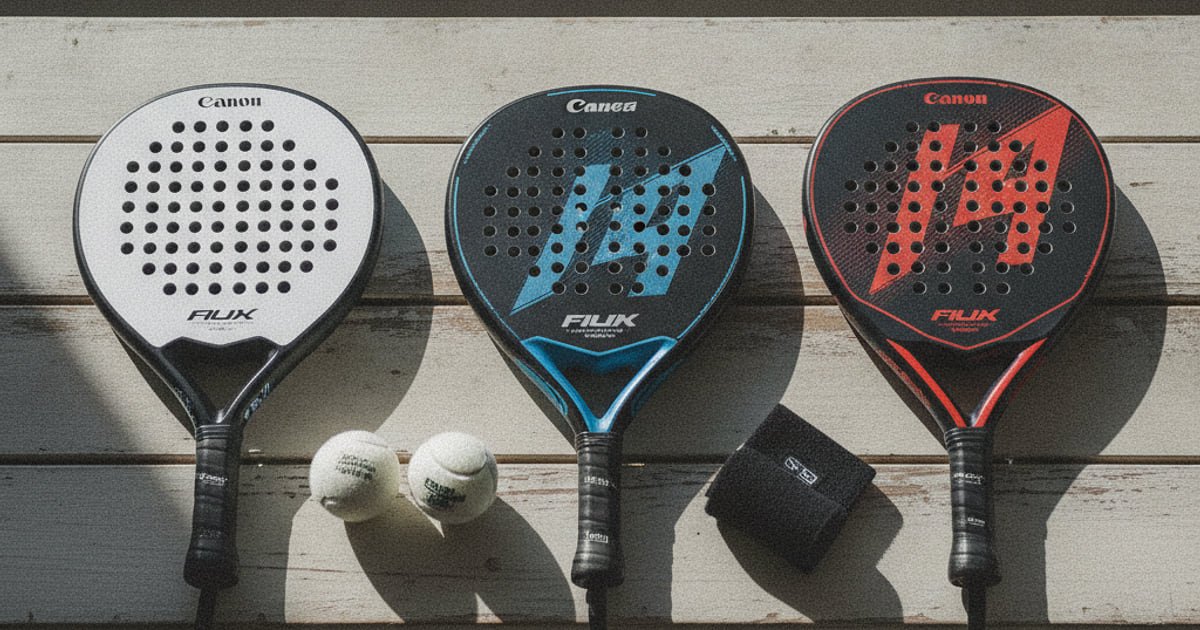
- Round. Balance shifted toward the handle, the sweet spot is the largest and sits dead centre. Maximum control and forgiveness. The best choice for a beginner.
- Teardrop. The all-rounder: a balance of control and power, a medium sweet spot sitting slightly above centre. A good option for a confident intermediate.
- Diamond. Balance in the head, a small, high sweet spot, maximum power. Only for experienced players with a grooved swing.
What's right for you
If you've been playing less than a year, get a round one — no exceptions. Once you feel the ball and want more attack, look at a teardrop. Leave the diamond for later; you have to grow into it. By the way, a control-oriented round racket makes it noticeably easier to learn key shots like the bandeja, where precision matters far more than raw power.
Weight and balance: be friends with your own arm
A typical padel racket weighs 350–370 grams. That's not a trivial detail — it's what your wrist feels on every single shot.
- Lighter (350–360 g) — more control and manoeuvrability, less load on the elbow. Ideal for beginners, for women, and for anyone protecting their arm.
- Heavier (365–375 g) — more momentum and power on contact, but the arm tires faster and overload risk rises.
Balance is how weight is distributed along the racket:
- Low (head-light, toward the handle) — more manoeuvrable, faster at the net, easier on defence. Exactly what a beginner needs.
- Even — a compromise.
- High (head-heavy, toward the head) — more power on the swing, but harder to control. For advanced players.
My advice: for a first racket, choose a light-to-medium weight and a low balance. Manoeuvrability beats power while you're still learning to read the game. A lighter, head-light racket lets you get the face into position quickly when the ball comes fast off the back wall — and in padel, reacting in time is half the battle. Don't worry about "missing out" on power; on a beginner's swing the difference is tiny, and the comfort and control you gain are enormous.
One practical tip: weight is listed as a range on the box, but two rackets at "365 g" can feel different depending on where that weight sits. If you can, hold the racket and make a few slow shadow swings in the shop. If your wrist feels the head dragging behind, the balance is too high for you right now.
Core: soft EVA vs hard EVA
Inside the racket is a foam core, and it's half of the racket's character. There are two types:
- Soft EVA. Comfortable, responsive, forgiving. It dampens vibration, protects your arm, and gives that sense of "holding" the ball. Ideal for a beginner.
- Hard EVA. More power and "pop," but it demands a clean strike and fast technique. It kicks back hard into the elbow on a mis-hit.
The rule here is simple: a beginner always wants a soft core. It will forgive hundreds of mis-hits while you groove your technique, and it keeps your elbow healthy for years to come. There's a stubborn myth that soft means "weak." Not so — a soft core actually returns energy more gently and predictably, which is exactly what you want when your timing isn't yet reliable. The power you give up is power you couldn't have controlled anyway. Save the hard core for the day your strokes are repeatable and your arm is conditioned.
Faces and material: fibreglass vs carbon
The racket's faces are made from fibreglass or carbon — and that changes the feel a lot.
- Fibreglass. Softer, springier, cheaper. It forgives errors, feels comfortable on the arm, and gives natural control. An excellent material for a first racket.
- Carbon. Stiffer, tougher, pricier. More power and a sharper response, and it lasts longer — but in inexperienced hands it adds stiffness and kickback.
Plenty of budget models blend fibreglass with a little carbon, and that's a sensible balance. Don't chase the "3K / 12K / 18K carbon" labels in the spec sheet: those numbers impress in marketing, but a beginner needs softness, not the stiffest possible weave.
Sweet spot, surface roughness and the holes
A few details that often stay in the shadows but still affect play:
- The sweet spot is the zone where contact is most effective and comfortable. On round rackets it's the largest and sits centrally — which is exactly why they're so forgiving for a beginner.
- Surface roughness. A textured or "sandy" face helps you put spin on the ball. Spin isn't critical for a beginner yet, but a little texture doesn't hurt.
- The holes. A padel racket is solid, with no strings, drilled with holes. Their layout affects aerodynamics and flex, but for a first racket this is a secondary detail — don't overthink it.
Grip, overgrip and the wrist strap
Small things that decide comfort and safety:
- Grip size. Unlike tennis, padel grips are usually thinner and largely standardised. If the handle feels thin, that's normal — it's easy to build up the thickness with an overgrip.
- Overgrip. A wrap over the base grip: it tunes the thickness to your hand, soaks up sweat, and improves traction. It's a consumable — replace it as it wears.
- The wrist strap. Mandatory. This is not an accessory but a safety requirement: the racket flies out of your hand more often than you'd think, and there are people right next to you on court. Always loop the strap around your wrist.
Budget: what a first racket really costs
I split the market into three tiers — without exact prices, because they vary, but the logic is the same everywhere:
- Entry level. Fibreglass, round shape, soft core. That's more than enough for your first season. Nothing to be ashamed of and nothing "unserious" about it — quite the opposite, it's smart.
- Mid level. A fibreglass/carbon mix, slightly better materials and build. Worth stepping up to once you play regularly and have felt the ball.
- Premium. Full carbon, professional technologies. For a beginner, money down the drain.
Second-hand and "try before you buy"
- The used market is a great way to save. Check the racket for cracks (especially on the frame and around the core); a dull, dead sound when you tap it is a warning sign.
- Demo rackets. Many clubs in Tashkent rent or lend rackets to try. Holding and playing a couple of games with different shapes is the best way to choose — no spec sheet can replace the feel in your hand.
When you demo, don't judge a racket on the first three balls. Play a full set if you can. Notice how your arm feels after twenty minutes, not after two. The right racket should disappear from your awareness — you stop thinking about it and just play. The wrong one nags at you: a sting in the wrist, a ball that keeps flying long, a sweet spot you can't find. Trust that feedback over any review you read online.
Care, storage and when to replace
A padel racket isn't immortal, but with careful handling it lasts a long time.
- Heat and cold are the main enemy. Don't leave the racket in a car boot in summer or out in the frost in winter: temperature swings break down the core and the glue. In Tashkent's summers, this matters a lot.
- Use a cover. Store and carry the racket in a thermal cover, and protect it from banging into the court wall.
- When to replace. Cracks in the frame, a "rattling" sound, lost flex, a drop in power — these all signal the racket is spent.
- When to upgrade. Not by the calendar, but by feel: if the racket starts holding back your progress and control is no longer enough, it's time to look at a teardrop.
What to buy for your level: a quick summary
Let's roll it all into one formula:
- Complete beginner: round shape, 350–365 g, soft EVA, low balance, fibreglass, entry-level budget.
- Confident beginner / early intermediate: round or teardrop, 360–370 g, soft-to-medium core, fibreglass/carbon mix.
- Intermediate: teardrop, 365–370 g, medium core, more carbon.
- Diamond and full carbon: leave them for the day you're attacking off the bounce consistently.
And remember: a racket won't make you a player — training and practice will. The right first racket simply speeds up the journey. If you want to progress faster, read about the mistakes to avoid in your first month, and find partners for regular play — playing often matters more than playing with an expensive racket.
Frequently Asked Questions
Round, teardrop or diamond for a beginner?
Round, without question. It has the largest sweet spot and the most control, so it forgives off-centre hits. Move to a teardrop at intermediate level, and a diamond only once your attack is grooved.
How much should a first racket cost?
An entry-level model — fibreglass, round shape, soft core — is plenty. Don't overpay for premium: the difference is better spent on coaching, which delivers far more progress.
Is carbon or fibreglass better for a beginner?
Fibreglass. It's softer, kinder to the arm, and forgives mistakes. Carbon is stiffer and more powerful, but those qualities only shine with grooved technique.
What weight should a beginner choose?
Aim for 350–365 grams with a low balance. A light, manoeuvrable racket gives control and protects your elbow, whereas a heavy one tires the arm quickly.
Can I use a tennis-style grip?
Padel grips are thinner and largely standardised, so you don't need a separate "tennis" size. It's easy to tune the handle thickness to your hand with an overgrip.
How long does a padel racket last?
With careful storage, several seasons. Heat, cold and knocks against the wall shorten its life sharply; cracks, a rattling sound and lost flex all mean it's time to replace it.
The blog's deepest column: advanced shots (bandeja, víbora), positional play, periodised training and honest gear breakdowns — grounded in the experience of Tashkent's playing coaches.
Related articles
 Gear
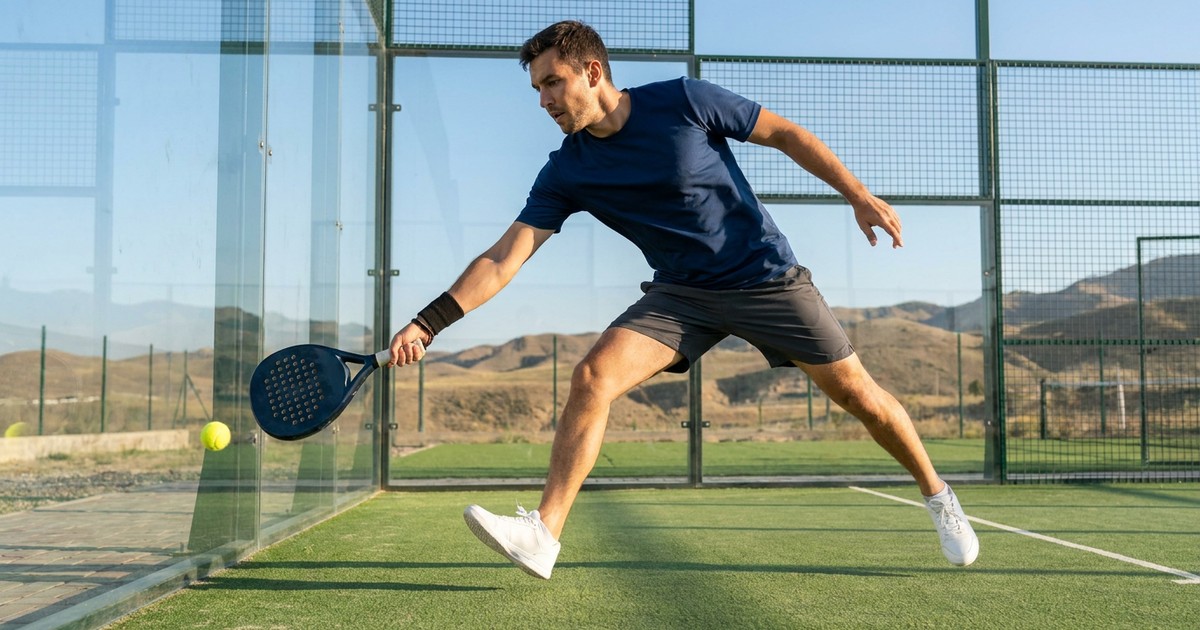
GearWhat to Wear for Padel: A Tashkent Gear Guide
Fabrics, fit, sun protection and Tashkent's seasons — what actually helps your game on court, and what just gets in the way.
 Gear
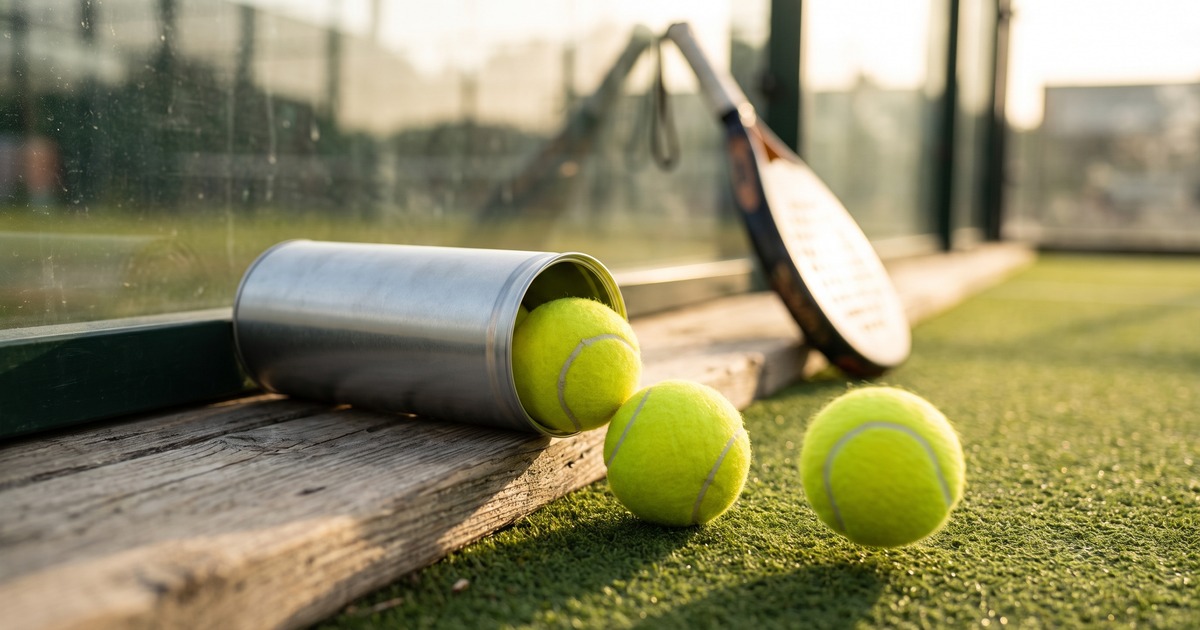
GearPadel Balls: The Gear Nobody Thinks About
Everyone obsesses over rackets and shoes, then plays with whatever ball is lying around — here's why pressure, wear and Tashkent's heat matter more.
 Gear
GearHow to Choose Padel Shoes: A Beginner's Guide
Your shoes matter more than your racket, yet most beginners buy them last. Here's how to pick the sole, the fit, the budget — and avoid the classic mistakes.