When you walk onto a court for the first time, your head is full of racket questions: what shape, what material, how much. Almost nobody thinks about shoes — they play in whatever was in the closet: running trainers, canvas sneakers, sometimes flat indoor shoes. That's a mistake. In padel, it's your shoes that decide whether you reach the ball, hold your balance in a lunge, and don't roll an ankle on a sharp sideways step.
The good news: this is simpler than choosing a racket. You only need to understand three things — what surface you play on, which sole suits it, and how the shoe should fit your foot. Let's take them in order, with no marketing fog.
Why shoes decide more than you'd think
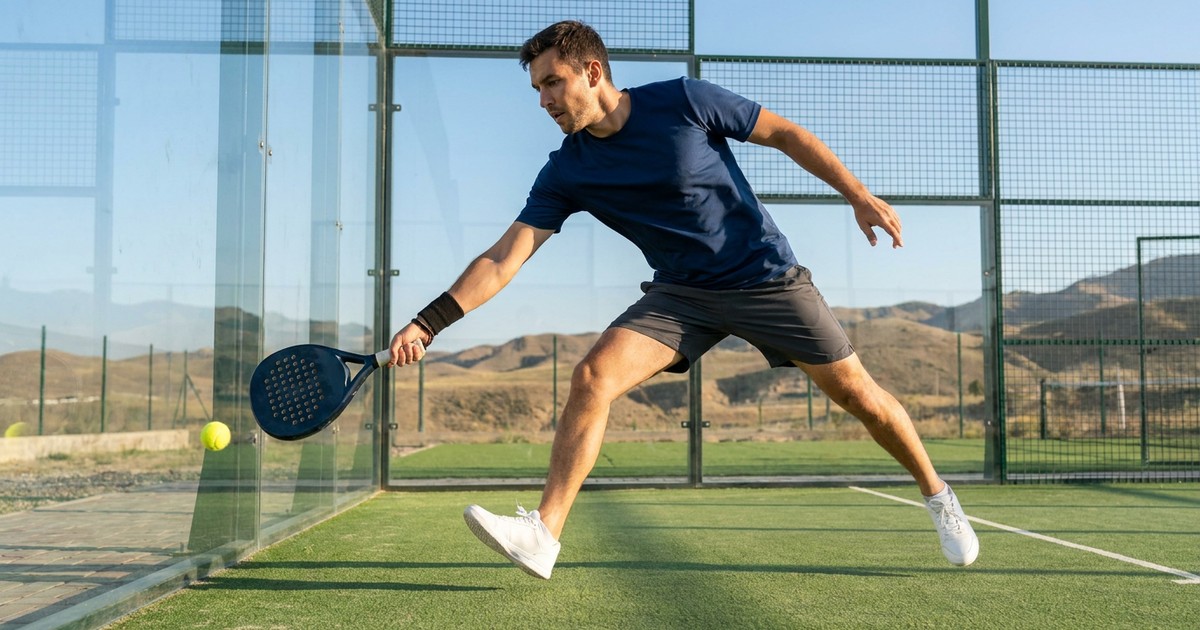
Padel isn't running in a straight line. It's short bursts sideways, sudden stops, lunges to a low ball, and constant changes of direction on a 20×10-metre court. Over an hour your feet make hundreds of small lateral movements, and every one loads the sole's grip and the side of your foot.
Running shoes are built for exactly the opposite job: to push you forward and cushion a heel landing. They're soft, tall and narrow at the base — so on a sideways step your foot tips over the edge. That creates the two classic beginner risks: slipping at the moment you need to brake hard, and rolling an ankle when the foot travels past the edge of the sole.
On court, the brand of your racket matters less than what's under your feet. Until the sole grips, any technique falls apart — you simply don't arrive at the ball in the right spot. If you're assembling your first kit, read this alongside our guide to choosing your first racket: shoes and racket are two halves of the same decision.
How padel shoes differ from running and tennis shoes
Dedicated padel (or tennis) shoes are built for sideways play. Here's what's fundamentally different:
- Low, wide base. A lower centre of gravity keeps the foot stable in lunges and hard stops.
- Lateral support. Reinforced side walls stop the foot from rolling outward on a sideways step.
- A reinforced toe. In padel you often finish a movement by sliding and dragging the toe across the surface — without protection, the fabric wears through in a couple of weeks.
- A grippy sole for sports surfaces. The tread pattern is designed for artificial grass and hard courts, not asphalt.
- Balanced cushioning. Soft enough to protect your knees, but not so plush that you lose contact with the court.
Tennis shoes, by the way, are a perfectly good substitute to start with — they're made for the same lateral loads. But running, basketball (too high) and casual sneakers should stay for other jobs. We covered how court movement loads your legs in our piece on court positioning and movement.
On weight and cushioning: beginners reach for "soft and light," but extremes backfire in padel. A sole that's too soft and tall lifts your foot off the court and steals your sense of the ground — the foot wobbles in a lunge. One that's too stiff and heavy hammers your knees on every stop. The working middle is moderate cushioning and a low ride: your feet don't sink, but the impact of a stop is still absorbed. That matters more than a pretty weight figure on the tag.
Sole vs surface: herringbone, omni or hybrid
This is the main choice. The sole has to match what you play on, or you'll get either slipping or "sticking" (where the foot jams while your body keeps moving — a fast track to a knee injury).
Most courts in Tashkent are sand-filled artificial grass (synthetic turf), plus some indoor courts with a similar surface. A herringbone sole works best on those. Here's how the sole types line up with surfaces:
| Sole type | Best surface | What it gives |
|---|
| Herringbone | Sand-filled artificial grass, clay | Grip with controlled slide — you can brake instead of sticking |
| Omni / "octopus" (small studs/dots) | Hard, slippery synthetic courts | Maximum bite on smooth, dusty surfaces |
| Hybrid (herringbone + dots) | Universal, if you play on different courts | A compromise: slightly less specialised, but works anywhere |
| Smooth / running tread | None | Slips and won't forgive lateral movement |
If you're just starting and play at different clubs, get herringbone or hybrid — the safest all-round choice. You can always check a specific court's surface on the clubs and courts page, which shows where it's turf and where it's hard.
How to choose your first padel shoes, step by step
Let's put it into a simple routine. Walk through these steps and you almost certainly won't go wrong with your first pair.
- Identify the surface you play on most — sand-filled artificial grass or a hard synthetic court.
- Pick the sole type to match: herringbone for turf and clay, omni for a hard court, hybrid if you use several venues.
- Try shoes on in the afternoon, when your foot has swollen slightly, so you don't buy a pair that's too tight.
- Wear the socks you actually play in, and check both feet — they're often a slightly different size.
- Test the lateral support: rock onto the outer edge of your foot — it shouldn't tip over the sole.
- Take a few sideways steps and a shallow lunge right there in the shop: the heel shouldn't lift, the toe shouldn't jam.
- Leave a small gap — about a finger's width — between your big toe and the front, so braking doesn't bruise your nails.
If you can, try more than one brand: lasts differ between makers, and "your" size in one can feel tight in another. Where to see and try padel shoes in person around the city is collected on the shops page.
How the shoe should fit: sizing and feel
The right fit matters more than any logo. The shoe should hold the foot firmly, but without pain. A quick fitting checklist:
- The heel sits snug and doesn't slip upward as you step.
- The midfoot is locked in, but your toes still have room to wiggle.
- There's about a finger's width of space ahead of the big toe.
- The instep isn't crushed by the laces — no numbness or throbbing.
- There are no rough seams inside that rub on a sideways step.
Don't buy "room to grow" and don't squeeze into a tight pair hoping it'll "break in." In padel, a loose heel means blisters and lost control in the lunge, and a cramped toe means bruised nails after the first series of stops. Take the size that fits well straight away.
And don't ignore the small things that work together with the shoe. Mid-weight sports socks change the fit noticeably: too thin and the foot slides, too thick and it's pinched — so try shoes on in them. Lace all the way to the top eyelets and pull the knot tighter at the ankle to lock the heel; that solves half of all slipping problems. Narrow feet benefit from "runner's loop" lacing through the top eyelet, while wide feet are better off finding a roomy last from the start rather than over-tightening the laces.
How much to budget as a beginner
The same rule applies here as with rackets: you don't need a top professional model at the start. The logic is simple:
- Entry level. A basic padel or tennis shoe from a reliable brand fully covers a beginner's needs. It's a sensible first buy.
- Mid level. When you play two or three times a week and feel the sole "go," it's worth paying more for better lateral support and a tougher tread.
- Don't chase the colourway. Colour changes nothing; look at the sole type and the fit.
Professional models are built for the loads of a player spending many hours a week on court. A beginner simply doesn't need that durability margin — that money is better spent on a couple of lessons with a coach, which will add far more than an expensive sole.
One more point on fit by foot type. Many makers have women's and kids' lines — that's not about colour but a narrower last and different cushioning for a lighter frame. If a standard men's model swims at the heel, it's worth trying the dedicated line rather than fighting the fit with laces.
Care, and when to replace them
Padel shoes last longer with a little care. And they die not when they get dirty, but when the tread wears smooth.
- Shake out the sand after playing on turf courts — grit inside speeds up wear.
- Dry them at room temperature, not on a radiator or in the sun: heat hardens the sole and it cracks.
- Don't walk the streets in court shoes. Asphalt grinds the tread down far faster than a sports surface.
- Watch the toe. A worn-through reinforced toe is the first sign the pair is done.
- Replace them when the herringbone has flattened. Once the tread goes smooth, grip drops — and with it the risk of slipping rises.
The real signal to replace isn't how they look, but the feeling of slipping where the foot used to hold. Notice that feeling and it's time for a new pair.
The mistakes beginners make when choosing shoes
Almost everyone who comes to padel from "normal" sports steps on these rakes:
- Playing in running shoes. The most common mistake — and the most dangerous for your ankles.
- A sole that doesn't match the surface. Omni "sticks" on turf; herringbone slips on smooth hard courts.
- Buying a size too big. A loose heel feels comfy in the shop and turns into blisters on court.
- Saving on shoes but not on the racket. It should be the other way round: feet under load matter more than a gram or two in the racket.
- Ignoring the reinforced toe. Without it, a favourite pair wears clean through in a few weeks of sliding.
If you want to keep the first weeks' mistakes to a minimum, we have a separate breakdown of the typical mistakes of your first month — and shoes aren't mentioned there by accident.
Padel in Tashkent: built for our courts and weather
Local context matters. Most Tashkent venues are sand-filled synthetic turf, so for the city herringbone or hybrid will almost always be the right call. Summer adds heat: on open courts the surface gets hot in the middle of the day, so value a breathable upper and don't play in dense "indoor" trainers.
In winter and the off-season, many people move to indoor courts — the surface there is flatter and cleaner, and an all-round sole feels great. If you play both, a hybrid saves you from keeping two pairs.
The easiest way to test all this is in practice: take a lesson, play a casual match, sign up for the next tournament from the events section — and you'll quickly learn what your feet are missing. Then dip into the PlaySport blog, where we break down technique, tactics and gear — everything that helps you progress faster.
Frequently Asked Questions
Can I play padel in running shoes?
For a trial session, yes, but it's a stopgap. A running sole slips on lateral steps and holds the foot poorly, which raises the risk of rolling an ankle. As soon as you decide to play regularly, switch to padel or tennis shoes.
Will tennis shoes work for padel?
Yes — they're the best substitute to start with. Tennis shoes are built for the same lateral loads and hard stops. The key is that the sole type matches your surface.
Which sole do I need for courts in Tashkent?
Most courts in the city are sand-filled artificial grass, and herringbone suits that best. If you play at different venues, get a hybrid sole as the all-round option.
Should I buy shoes half a size bigger?
No. Shoes that are too loose cause blisters and rob you of control in the lunge. Take the size that fits snugly straight away, leaving only about a finger's width at the toe.
How often should I replace padel shoes?
Go by the state of the sole, not the calendar. Once the herringbone tread has flattened and you feel slipping, it's time to replace the pair — even if the upper still looks intact.
What matters more for a beginner — the racket or the shoes?
The shoes are at least as important. You can start with a simple, inexpensive racket, but bad shoes immediately hamper your movement and raise the injury risk. If the budget is tight, don't cut corners on what's under your feet.