

What to Wear for Padel: A Tashkent Gear Guide
Fabrics, fit, sun protection and Tashkent's seasons — what actually helps your game on court, and what just gets in the way.
Contents
- Why clothing matters more than you'd think
- Tops: why fabric matters more than cut
- Bottoms: shorts, skirts, and what actually restricts movement
- Footwear: a separate topic, but the conversation isn't complete without it
- Accessories that actually matter — and the ones you can skip
- Sun protection: Tashkent's defining detail
- Seasons: one kit doesn't cover the whole year
- What to avoid on court
- Budget vs. premium: where to spend, and where not to
- Caring for technical fabric: making it last
- Building your first kit without overspending
- The takeaway: gear works as a system
- Frequently Asked Questions
- Can I play padel in regular gym or running clothes?
- Is a racket wrist strap actually mandatory?
- What color should I wear for an outdoor court in summer?
- Do I need dedicated padel shoes, or will running shoes work?
- How often should I replace the overgrip on my racket?
- Is it worth buying club-branded kit?
New players usually rank padel gear in one order: racket first, ball second, and clothing is "whatever's clean in the drawer." In practice it's the other way round. The wrong outfit will cost you a match faster than a mediocre racket ever will. Here's what actually works on court in Tashkent — a city with a scorching summer, a cold winter, and clubs where indoor and outdoor courts often sit side by side.
Why clothing matters more than you'd think
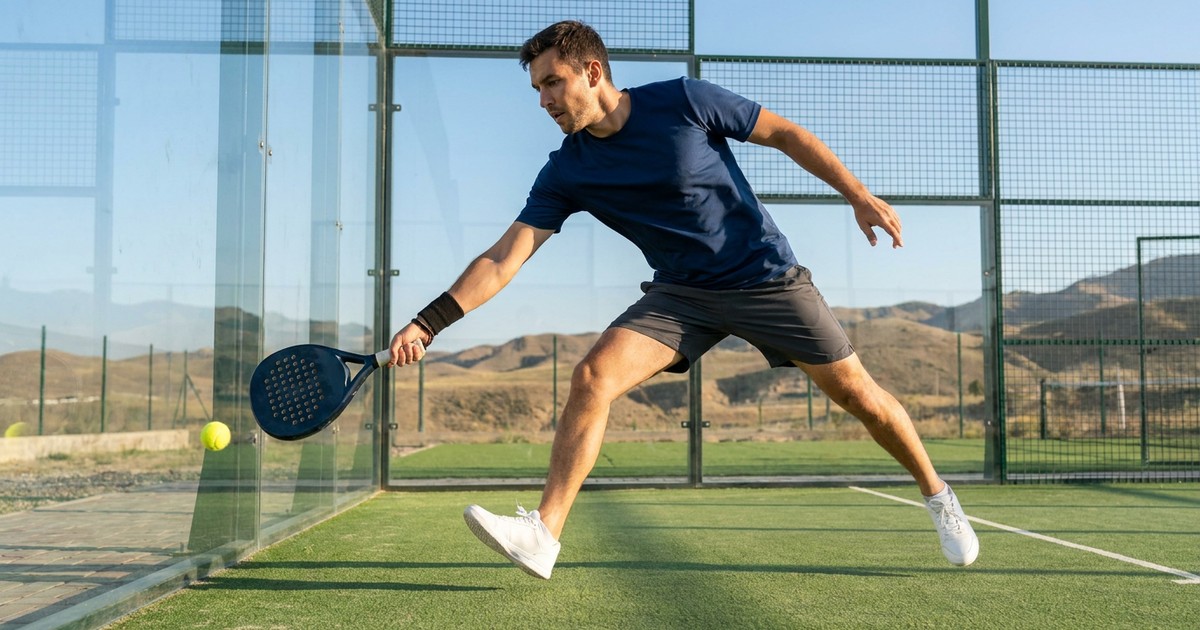
Padel is sprints, sudden stops, lunges to the net and constant rotation through the hips and shoulders. In one hour you'll rack up dozens of short accelerations and decelerations, often under direct sun. Fabric that clings to your skin after the first game, shorts that bind on a lunge, or a shirt that slides off your shoulders mid-swing — these are small annoyances that add up to lost points and a worse time on court.
The bigger issue is trust in your own body. When your kit fits right and doesn't demand attention, you're thinking about net position and shot selection — not whether your shorts are riding down or your shirt is soaked through. It's the same logic as a well-chosen racket or ball: the right gear doesn't win you the match on its own, but the wrong gear can absolutely lose it for you.
Tops: why fabric matters more than cut
A cotton t-shirt is the worst choice for padel, however comfortable it feels in the closet. Cotton absorbs sweat and holds onto it — after 20 minutes in a Tashkent summer you're carrying half a kilo of wet fabric that clings to your back and restricts your swing.
Look for synthetic or blended fabrics labelled "moisture-wicking" or "dry-fit": polyester and polyamide weaves engineered to pull moisture to the surface, where it evaporates faster. A few more signs of a genuinely good sports shirt:
- Flat seams — they won't chafe under a backpack strap or bag, and they won't dig in on a torso rotation.
- Loose through the shoulders, fitted through the torso — enough room for an overhead swing (crucial for a smash or a víbora), but not so loose it flaps like a windbreaker.
- Mesh ventilation panels — under the arms and across the back, especially valuable on outdoor courts in summer.
A polo is slightly less practical than a crew-neck sports tee: the collar and button placket can rub as you turn your head to track the ball. If you want a more polished club look, choose a polo with a stretch panel across the shoulders.
Bottoms: shorts, skirts, and what actually restricts movement
A lunge to the net, a sharp turn on a bajada, a deep crouch for a low ball — your lower body works harder than your upper body in padel. Jeans, everyday shorts with a rigid waistband, or anything in stiff denim are a non-starter: they don't stretch, and the first deep lunge feels like a wall rather than a movement.
What to look for:
- An elastic or semi-elastic waistband — it won't dig in on a crouch or a low reach near the glass.
- Mid-thigh length — shorter restricts your stride, and a longer basketball-style cut catches fabric on a turn.
- Built-in compression shorts or lining — many tennis and padel shorts already include an inner layer, so you don't need to think about it separately.
The same rule applies to skirts and dresses: look for models with built-in shorts and stretch fabric rather than a cotton knit. Length should let you crouch freely, without a hand instinctively holding the hem down mid-point.
Footwear: a separate topic, but the conversation isn't complete without it
We covered shoe selection in detail in a dedicated guide, but the short version: standard running shoes, built with a high heel stack and soft foam for straight-line running, don't hold up well against the sharp lateral stops padel demands. Look for shoes with reinforced lateral support and a herringbone or multidirectional tread pattern — matched to the artificial turf most Tashkent courts use.
Clothing and footwear work as a pair: even the best shoes can't compensate for shorts that restrict your lunge and slow your reaction at the net.
Accessories that actually matter — and the ones you can skip
Not everything sold in a "padel accessories" section earns its place on court:
| Accessory | Why it helps | How essential |
|---|---|---|
| Wristband | Absorbs sweat before it reaches your grip | Useful for most players, especially in summer |
| Headband / cap | Keeps hair and sweat out of your eyes; a brim also blocks direct sun outdoors | Essential in the sun, optional indoors |
| Overgrip on the racket handle | Improves grip; cheap and quick to replace | Yes — it's a consumable, replace it every 1–3 months of active play |
| Sports sunglasses | Cut glare from the sun and from glass walls outdoors | Useful in the hot season, optional indoors |
| Compression sleeves/socks | More about aesthetics and light muscle support than necessity | Optional |
The safety strap that ships with almost every racket isn't an optional accessory — many clubs treat it as a safety requirement, since a racket can fly out of your hand on a hard swing and injure a partner or a player on a neighboring court.
Sun protection: Tashkent's defining detail
Tashkent summers mean direct sun from late April through September, and most city courts are outdoor or semi-covered. If you're playing daytime slots, sun protection isn't an afterthought — it's part of your kit, right alongside your racket:
- A brimmed hat or cap — the baseline defense for your face and eyes.
- SPF 30+ sunscreen on exposed skin — shoulders, neck, forearms — applied 20–30 minutes before you step on court so it has time to absorb.
- Light colors, not dark — dark fabric heats up noticeably more under direct sun.
- If you're booking ahead, check the club's page for lower-sun time slots — several venues in our venue guide show a court's sun exposure across the day.
We've written separately about how sun behaves across different courts throughout the day in The Sun on Court — worth a read before you book a summer daytime slot.
Seasons: one kit doesn't cover the whole year
Tashkent has a sharp continental climate, and dressing for July is a different exercise from dressing for January:
Summer (May–September). Go as light and ventilated as possible, light colors, minimal layers. An outdoor court at noon can feel 5–8°C hotter than the shade — bring a second shirt to change into if you're planning two hours on court.
Spring and autumn. A layer over your base shirt — a light windbreaker or a breathable hoodie you can shed after warm-up. Sharp morning-to-evening temperature swings are common in the shoulder seasons.
Winter. On an indoor court, your kit barely differs from summer — clubs keep the temperature comfortable inside. For the trip there and back, a warm jacket over your sports kit, removed before warm-up. Don't warm up in a heavy hoodie — your body overheats fast once a rally gets going.
What to avoid on court
A short list of mistakes you'll spot on any amateur court, week after week:
- Cotton t-shirts and denim shorts — covered above.
- Brand-new, unbroken-in shoes for an important match or tournament — blisters by the third game, guaranteed.
- Bulky jewelry and watches without a sports strap — they catch on strings and on a partner's clothing during a net exchange.
- A racket without its wrist strap — a safety issue, not a style choice.
- Clothes sized "to grow into" — excess fabric tangles around your legs on a sharp turn or lunge.
Budget vs. premium: where to spend, and where not to
Not all gear deserves equal investment. Our rule of thumb:
- Worth spending on: shoes with lateral support (ankle injuries are real and expensive to treat) and at least one shirt in genuinely technical fabric for the hot months.
- Fine to go cheap on: overgrip (a consumable you'll replace often anyway), wristbands, a second everyday pair of shorts.
- Not urgent: branded club kit, compression base layers, top-tier sports sunglasses — start with the basics and upgrade once you know your preferences on court.
If you're just starting out and not sure padel is a long-term thing, don't buy the full premium kit upfront. Take a trial lesson with a coach in whatever gym clothes you already own — most basic running or fitness shirts and shorts work fine for your first few sessions, until you know exactly what you're missing on court.
Caring for technical fabric: making it last
Moisture-wicking fabrics need different care than plain cotton, which matters if you don't want to replace your kit every season:
- Wash after every session, not "whenever it piles up" — sweat salts and oils clog synthetic fibers and gradually reduce their wicking ability.
- Skip fabric softener — it leaves a coating on the fibers that blocks exactly the breathability you're paying for. This is arguably the single most common laundry mistake with technical sportswear.
- Wash cool or warm, never hot — high heat breaks down the elastic fibers in a waistband or shoulder strap, which is why fit "drifts" over time.
- Air-dry rather than tumble-dry — same logic: heat shortens the life of elastane in fabric far faster than air-drying does.
- Don't machine-wash padel shoes — the tread and glued sole seams don't hold up well to a wash cycle; brush and wipe them clean, and dry away from direct heat or sun.
Five small habits, but they're the difference between a kit that lasts one active season and one that lasts two or three.
Building your first kit without overspending
If you're still figuring out your padel wardrobe, you don't need a specialty store on day one. A practical path for your first month:
- Start with what you already own — a moisture-wicking shirt and stretch shorts from running, the gym, or football cover about 80% of a beginner's needs.
- Add missing pieces one at a time — shoes with lateral support first (the one place where cutting corners genuinely raises injury risk), then a wristband and sun hat for the hot months.
- Reassess after a month or two of real play — playing two or three times a week justifies a second pair of shoes in rotation and a branded kit. Playing once a week for variety means your basic kit will serve you for a long while.
This way you're not spending on gear that turns out unnecessary if padel doesn't stick — and you'll learn, from experience, exactly which fit and fabric work for you.
The takeaway: gear works as a system
No single item — not even the best racket money can buy — makes up for clothing that fights your movement. Think of your kit as a system: a breathable top, stretch bottoms, shoes with lateral support, and sun protection in the hot months. It's not about the logo on your chest — it's about spending your time on court thinking about the game, not about a soaked shirt or sliding shorts.
Ready to put all this to the test? Check out the upcoming tournaments on the calendar, or browse Tashkent's venues with indoor and outdoor courts, and go see how your new kit holds up.
Frequently Asked Questions
Can I play padel in regular gym or running clothes?
Yes, for your first sessions that's completely fine — a moisture-wicking running shirt and stretch shorts will do the job. The difference shows up on longer sessions and in the heat, once specialized fabric and a fit built for sharp movement start to noticeably affect your comfort.
Is a racket wrist strap actually mandatory?
At many Tashkent clubs it's a safety rule, not a suggestion — a racket can fly out of your hand on a hard swing. Check the specific club's rules before you play.
What color should I wear for an outdoor court in summer?
Light colors reflect sunlight and heat up noticeably less than dark ones — the difference is real over the 5–10 minutes it takes to feel the first wave of overheating in direct sun.
Do I need dedicated padel shoes, or will running shoes work?
A dedicated pair with lateral support and a tread built for sharp stops is the better choice — running shoes are designed for straight-line movement and don't hold up as well on quick lateral cuts. More detail in our shoe guide.
How often should I replace the overgrip on my racket?
For active play, every 1–3 months, depending on how often you play and how much your hands sweat. A slick or shiny-worn grip is a clear sign it's time.
Is it worth buying club-branded kit?
That's optional, and it's more about belonging to a community than about performance. Fabric and fit matter more to your game than a logo — most branded club kit is made from the same technical materials as standard sportswear anyway.
For players who are in it for fun: how to actually improve between lessons, find partners at your level, court etiquette, and what your first amateur tournament is really like.
Related articles
 Gear
GearPadel Balls: The Gear Nobody Thinks About
Everyone obsesses over rackets and shoes, then plays with whatever ball is lying around — here's why pressure, wear and Tashkent's heat matter more.
 Gear
GearHow to Choose Padel Shoes: A Beginner's Guide
Your shoes matter more than your racket, yet most beginners buy them last. Here's how to pick the sole, the fit, the budget — and avoid the classic mistakes.
 Gear
GearHow to Choose Your First Padel Racket: An Honest Beginner's Buying Guide
Shape, weight, balance, core and face material — what actually matters in a first padel racket, and why a beginner should never buy a pro's diamond model.