In fifteen years on court I have never met a strong padel player who couldn't hit a bandeja. It isn't the flashiest shot — it doesn't win the point in one strike and the crowd never leaps to its feet for it. But it's exactly the shot that separates a pair who holds the net from a pair who gets lobbed backwards all match long. If you want to stop handing the initiative to your opponents, start here.
What the bandeja is and why it exists
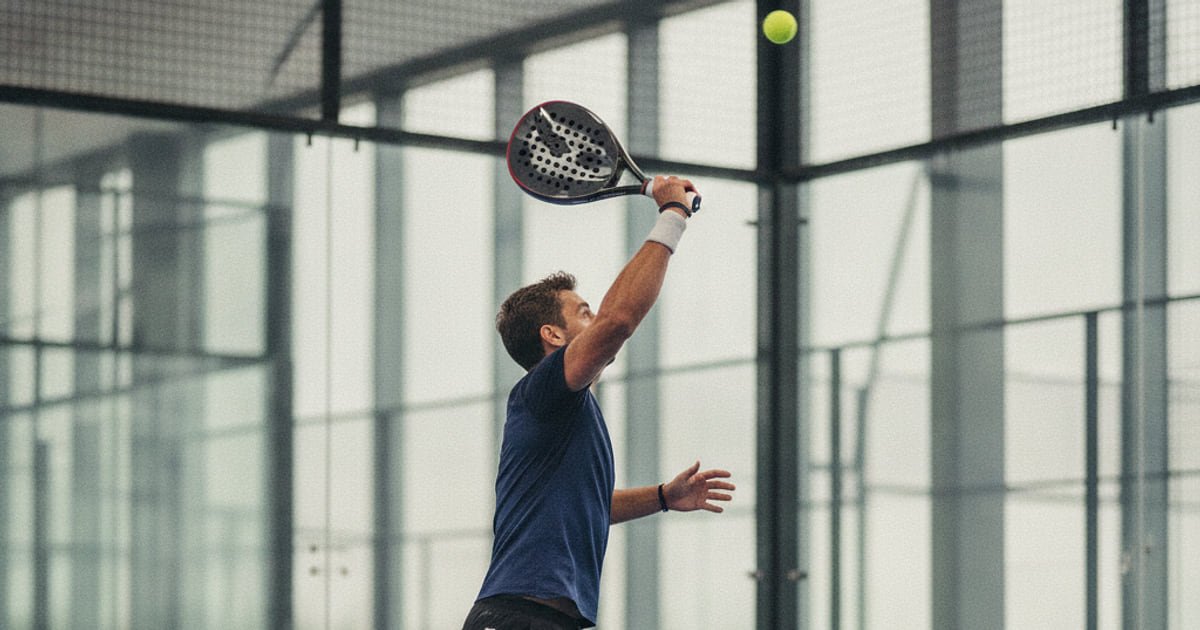
The bandeja (Spanish for "tray") is a controlled overhead you play in response to your opponent's lob, without giving up your position at the net. The motion really does look like a waiter carrying a tray: the arm swings from the side and the hand seems to slide under the ball from high to low.
The whole point of the bandeja is not power — it's control and holding your ground. In padel, points are won at the net: that's where you pressure, intercept and finish. Your opponents know this, so they lob constantly to push you back. The bandeja is your answer to that lob, letting you send the ball back deep and low while staying in front.
I tell my students one simple thing all the time: 80% of lobs should not be smashed — they should be calmly returned with a bandeja. Beginners try to kill every lob with a smash, drift backwards, open up the court, and lose the point two shots later. The professional patiently "covers" the lob with a bandeja again and again until the opponent finally errs.
Bandeja vs smash vs víbora: the differences
These are three distinct overheads, and confusing them is a classic amateur mistake.
- Smash (remate) — the power attack. The goal is to win the point outright: either hit through them or bounce the ball out over the glass. It needs a short, comfortable lob right above you.
- Bandeja — the defensive, controlling overhead. The goal is to return the ball deep, with slice, and keep the net. Contact is lower and out to the side, the swing is shorter, and there's far less power.
- Víbora ("viper") — a hybrid of the two. Hit higher and more aggressively than the bandeja, with sidespin, so the ball kicks awkwardly off the side glass. It's the bandeja with teeth.
A simple decision logic based on the lob:
- A short, high lob right above you → smash.
- A deep lob drifting behind you → bandeja.
- A medium lob where you want to attack but not risk a smash → víbora.
Learn the bandeja first. The víbora and the smash are built on its foundation — without a reliable bandeja, they turn into a lottery.
When to play the bandeja
The bandeja is for exactly those awkward situations where a smash is too risky:
- The lob is heading behind you, but you can still reach it with a step back.
- You don't have time to fully rotate your body for a proper smash.
- The ball is too deep to hit a winner, but high enough to take above your head.
- Staying at the net matters more than gambling and drifting backwards.
If the lob is short and comfortable, smash it. If you can't reach the ball in the air at all, let it bounce off the back glass and play it from below. The bandeja lives precisely in the gap between those two situations — and that gap is most of the match.
Grip and ready position
The continental grip
The bandeja is played with the continental grip (also called the "hammer grip"). Hold the racket as if you were about to hammer a nail: the base of your index finger sits on the second bevel of the handle. This grip is universal — you use it for volleys, the smash and the víbora too, so there's no need to re-grip in mid-air.
Why this grip: the continental naturally opens the string face and lets you draw the racket high to low across the ball — the slice that makes a bandeja a bandeja. If you hold an eastern, forehand-style grip, the face closes and the ball goes into the net or floats up.
The ready position at the net
- Feet shoulder-width apart, weight on the balls of your feet, knees soft.
- Racket up in front of you, head roughly at shoulder height.
- Your non-hitting hand cradles the throat of the racket — it "loads" the turn.
- Eyes on your opponent: you need to read the swing and pick up the lob as early as possible.
Good control starts with the right racket. A stiff, head-heavy model is less forgiving and will literally pop the ball up on the slice, which is why I recommend a more control-oriented frame for a dependable bandeja — something I cover in detail in how to choose your first padel racket.
Footwork and body turn
This is where most bandejas are won or lost. The bandeja starts with your feet, not your hand.
- First move — turn. The moment you read a lob going over you, turn your shoulders sideways to the net. For a right-hander, the left shoulder points at the ball and the left arm lifts to track it.
- Move with side shuffles. Drift backwards sideways, never turning your back to the net. That way you keep your opponents in view and stay ready to come forward.
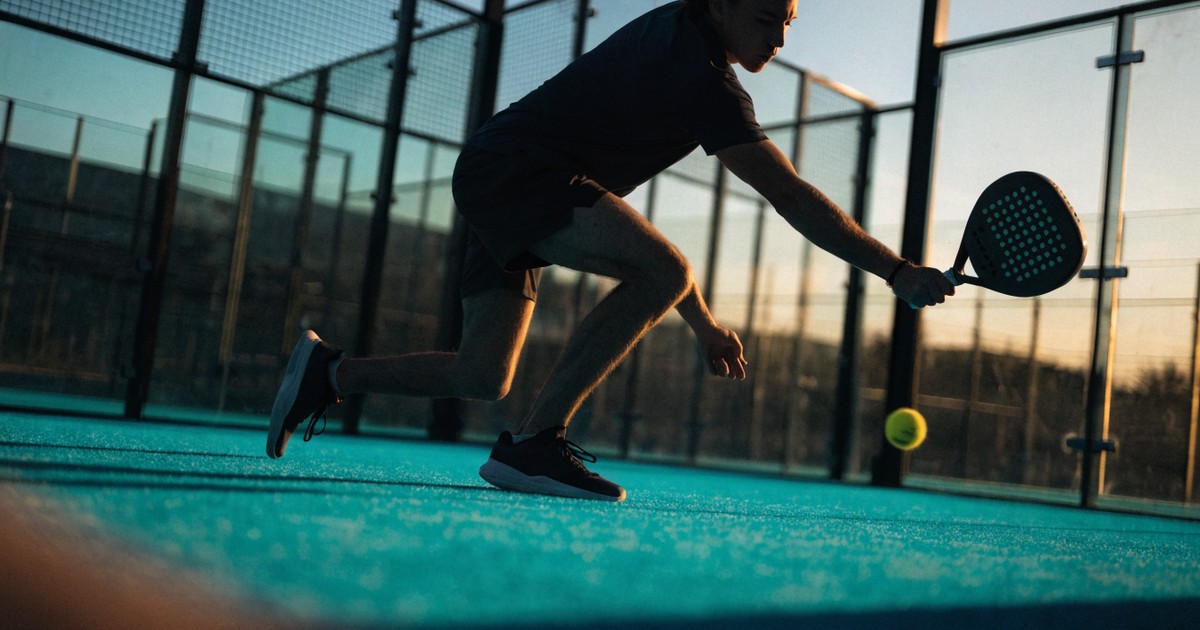
- Adjust to the ball. With small steps, position the ball in front of you and to the side, not directly overhead. This is the key difference from a smash.
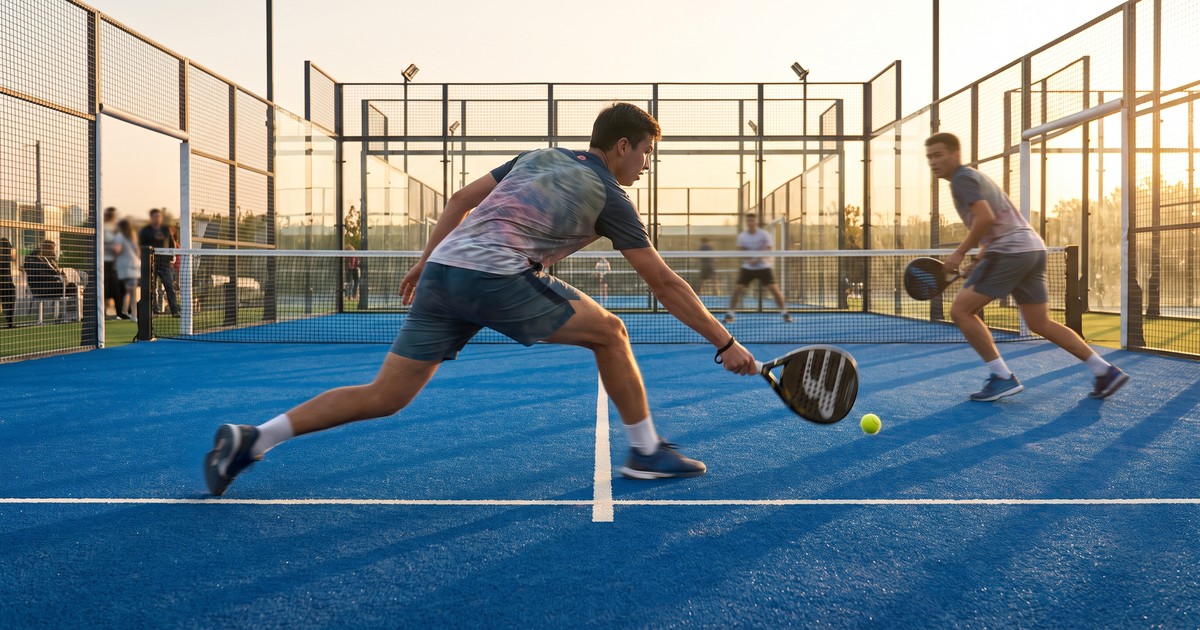
- The scissor step. At contact, your back leg drives back and the front leg swings forward — the body makes a "scissor." This absorbs your backward momentum and immediately squares you up to the net.
- Recover to the net. Your first step after the shot is forward. A bandeja without a recovery is pointless: you played it precisely so you could stay in front.
I repeat it constantly in training: your feet get you to the ball, and your hand only finishes the job. A player with good feet and an average hand hits a better bandeja than a player with a great hand and lazy feet.
The five-step swing technique
Once your feet have put you in position, the swing itself breaks down into five elements.
- Preparation — racket behind the shoulder. Take the racket back behind your shoulder early, elbow up, racket head pointing down and back. The backswing is short: this is not a tennis serve.
- Contact point — in front and to the side, at head height. Strike the ball in front of your body and slightly to the side, roughly at head height — not directly over your crown. Contact should be in a comfortable zone where you can see both the ball and the net.
- Flat contact with a controlled high-to-low slice. Hit the ball almost flat, but draw the racket from high to low, brushing slightly down the back of it. This slice is the heart of the bandeja: it kills pace and makes the ball drop low after the bounce.
- Follow-through toward the opposite side wall. Your wrist and racket continue across your body toward the far side wall. The torso stays stable and your head stays over the ball through the hit.
- Recovery to the net. As the follow-through finishes, step forward immediately and reset your ready position. The shot isn't over until you're back at the net.
Here's the rule I give every student: the bandeja is 70% control and 30% power. The instant that ratio tips toward power, the ball starts sitting up high and comfortable for your opponent.
Where to place the bandeja
An accurate bandeja beats a powerful one. The core placement strategy:
- Into the corner, to the glass. The most reliable target is a deep corner, where the ball dies against the back wall after the slice. Your opponent can't attack from there — all they can do is send up another lob.
- Down the side wall. A ball running tight along the side glass is especially nasty: it "sticks" to the wall and it's hard for your opponent to turn the racket on it.
- Away from the player. Aim into open space or at the deeper opponent — make them move. Never hand the bandeja into the centre or into the attacker's feet.
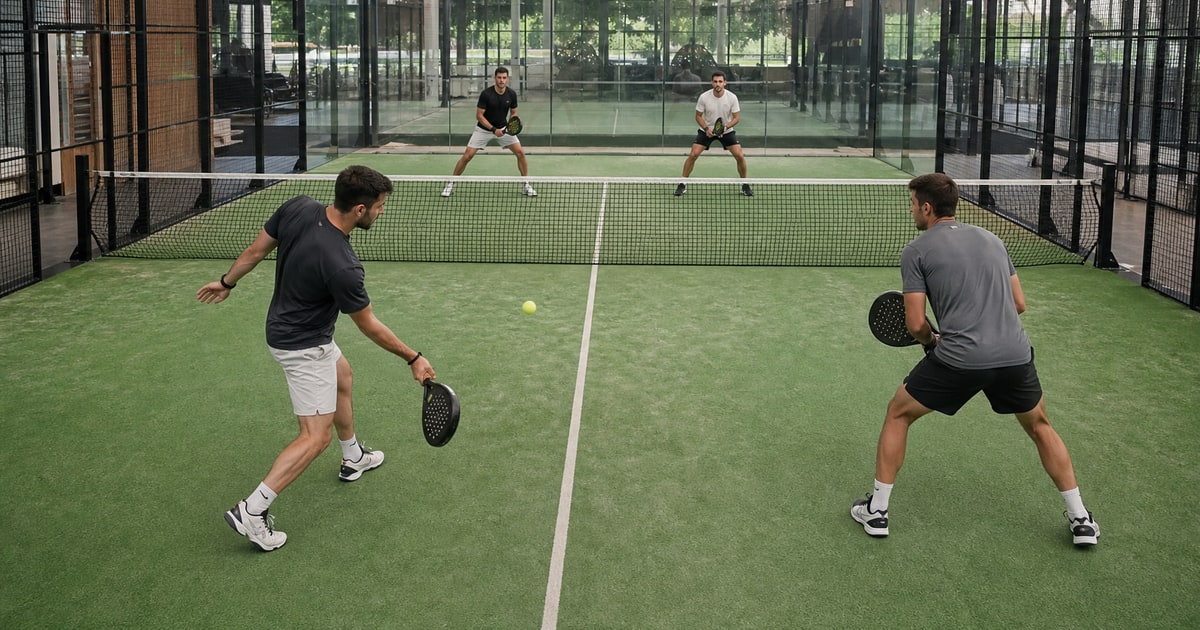
A quick reminder of the geometry so the placement makes sense: a padel court is 20×10 metres, enclosed on all sides by glass and mesh, and the walls are in play. The "to the glass" bandeja exploits exactly that: after the low bounce, the ball presses into the wall and your opponent is left with no choice but to lob again.
Spin: why the slice makes the ball die
Slice (backspin) is what turns an ordinary overhead into a bandeja. As you draw the strings high to low, the ball picks up backspin. In practice that produces three effects:
- The ball travels slower and more controllably — you're not risking sailing it out of court.
- It stays low after the bounce instead of kicking up — making it awkward for your opponent to lob or attack from below.
- It clings near the glass — the backspin presses it into the wall.
Don't mistake slice for slowing down for its own sake. You hit with conviction, but with the string face brushing slightly down the ball. From the outside it looks like a light but firm stroke — hence the image of the tray.
Six common mistakes and exact fixes
- Too much power. The most frequent error. The bandeja loses its purpose if the ball flies high and comfortable. Fix: deliberately swing at 60–70% power, focusing on depth and slice instead of speed.
- Contact directly overhead, like a tennis serve. This costs you control and drifts you backwards. Fix: position the ball in front and to the side; imagine hitting "across a table" forwards, not up.
- The feet stop. A shot played from a standstill almost always nets or floats. Fix: repeat "step — scissor — hit — step forward" in your head. The feet must never freeze.
- A closed string face. Hold a forehand grip and the ball goes into the net. Fix: strict continental grip, open face, high-to-low slice.
- No follow-through. Stopping the racket abruptly after contact kills control and depth. Fix: carry the racket toward the opposite side wall and lengthen the "brush."
- Failing to recover to the net. Many players hit a beautiful bandeja and then stand still in the back. Fix: train yourself on the rule "hit, then step forward." Otherwise the whole purpose of the shot is gone.
I dig into these same errors in my broader piece on the biggest mistakes of your first month in padel — many of them are rooted in shaky overhead play.
Drills: a progression from the wall to the game
You can't learn the bandeja "in your head" — it takes repetitions. Here's the progression I give my students.
A partner feeds you comfortable lobs by hand to one spot. Your only job is technique: the turn, contact in front and to the side, the slice, the follow-through.
- 3 sets of 15 reps. Don't think about depth — think about clean contact.
Drill 2. Bandeja into the corner (accuracy)
Your partner feeds lobs and you return the bandeja into a pre-marked corner (set down a cone or target).
- 4 sets of 10 reps to each corner. The goal is to land in the zone, not to hit a winner.
Your partner feeds the lob deeper, behind you. You add the side shuffle and the scissor step, then recover to the net.
- 4 sets of 8 reps. Count a rep as successful only if you're back at the net after the shot.
Drill 4. The "lob — bandeja — lob" rally
A semi-live rally: your opponent lobs constantly and you hold the net with the bandeja until someone errs. Patience and consistency matter more than beauty.
- 5–10 rallies in a row. Count how many lobs in a row you cover without a mistake.
Progress is faster with a coach: they'll spot a closed face, lazy feet or contact overhead in real time and fix it on the spot. You can find a specialist to drill the bandeja with in the PlaySport coaches section, and practise the shot at any of the Tashkent courts with a proper back wall.
How the bandeja fits your overall net strategy
The bandeja isn't a standalone trick — it's the foundation of positional play. The logic goes like this:
- You take the net and apply pressure.
- Your opponent lobs to push you back.
- You cover the lob with a bandeja deep into the corner and stay in front.
- Your opponent is under pressure again — and either lobs once more (you repeat the cycle) or makes a mistake.
Once your bandeja is reliable, add the víbora: the same motion but higher and more aggressive, with sidespin, so the ball kicks awkwardly off the side glass. The víbora forces more errors, but without a solid bandeja underneath it, it's inconsistent. And all of this is easier to drill as a team — to gather partners at your level for regular sessions, see finding players in Tashkent.
Padel is one of the fastest-growing sports in the world, and the level of your opponents climbs every season. A pair that holds the net confidently with the bandeja will always be a step ahead of the players still trying to solve everything with power.
Frequently Asked Questions
What's the difference between a bandeja and a víbora?
The bandeja is a controlling shot: lower, softer, with a high-to-low slice, aimed at keeping the net. The víbora is hit higher and more aggressively, with sidespin, so the ball kicks awkwardly off the side wall. The víbora is the bandeja with bite, used to apply pressure.
Which grip do I use for the bandeja?
The continental ("hammer") grip. It opens the string face for the slice and requires no re-grip — you play your volleys, smash and víbora with the same grip.
Why does my bandeja sit up high for my opponent?
Usually because of excess power and contact directly overhead instead of in front and to the side. Drop your power to 60–70%, position the ball in front of you, and always draw a high-to-low slice with a full follow-through.
Can a beginner learn the bandeja?
Yes, and you should learn it early. Start stationary with comfortable feeds, drilling clean contact and the slice. Technique comes first; pace and depth come later.
How long does it take to master the bandeja?
A basic, reliable shot comes together in a few weeks with regular practice (2–3 times a week). A confident bandeja under pressure — with the step back and recovery to the net — usually takes several months of deliberate work, ideally with a coach.
When should I hit a bandeja versus a smash?
Finish a short, high, comfortable lob right above you with a smash. Cover a deep lob drifting behind you with a bandeja to hold the net. When in doubt, choose the bandeja: control beats risk.