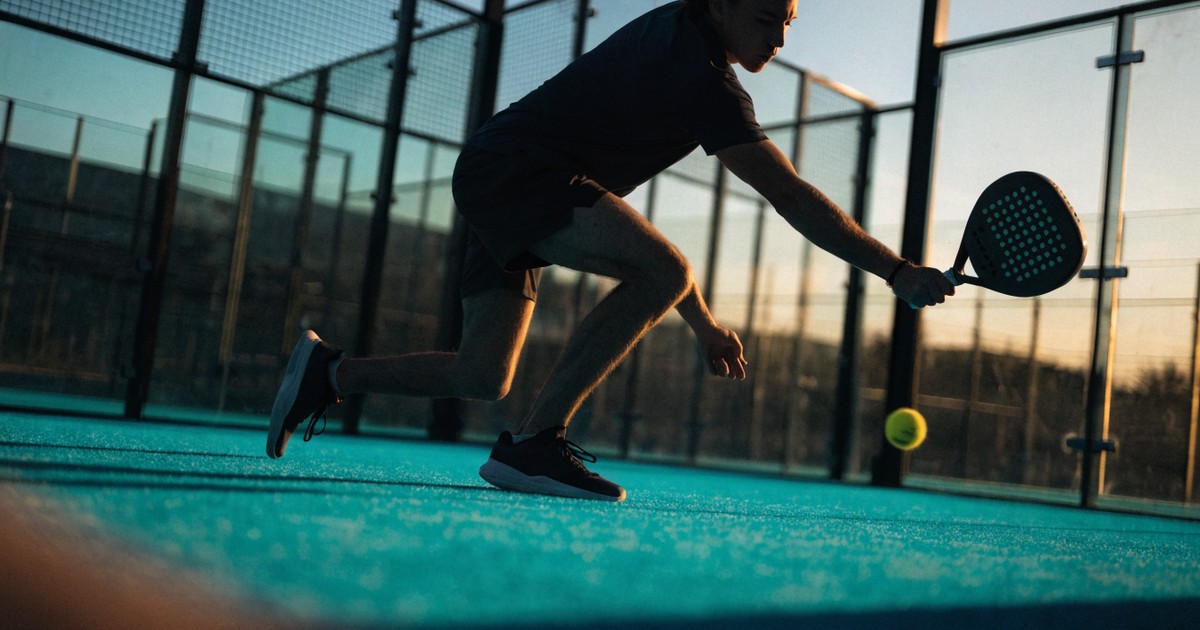
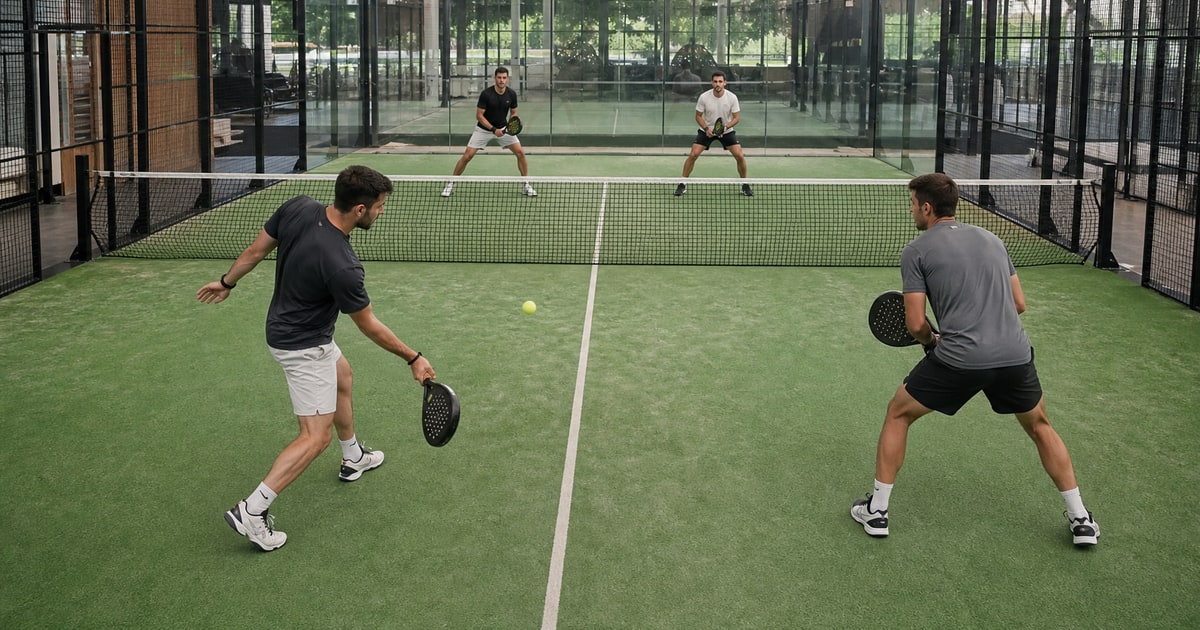
Your opponents smash, the ball drops into your half, and most beginners have exactly one instinct: wait for it to bounce off the court, then off the back glass, then swing. The bote pronto breaks that habit. It's a shot that meets the ball right after it bounces off the ground, before it ever reaches the wall — and that's precisely why it can hand you back the initiative before your opponents get set at the net.
What the bote pronto actually is
"Bote pronto" is Spanish for something close to "quick bounce," and that's a fair description of what it is. It isn't a volley — the ball has already touched the ground — and it isn't a standard glass shot either, since the ball never gets there. It sits in between: your racket meets the ball near the top of its bounce off the court, as close to the landing as possible, before it loses pace and drifts toward the back wall.
The closest comparison outside padel is a half-volley in tennis. The difference is that padel's glass and back wall give you time to "play out" almost any ball if you choose to wait — which is exactly why the bote pronto gets underused. Why rush a shot when a comfortable bounce off the glass is coming? The answer is time. Every extra second the ball spends in the air on your side is a second your opponents get to reset, close in on the net and prepare their next attack.
Why this works differently in padel than elsewhere
In tennis, the half-volley is mostly a forced play — something you reach for when there's no time for a full swing. In padel, the bote pronto is a deliberate tactical choice, not just a last resort. The reason is the walls. If you always wait for the glass, opponents know it and use it: they aim smashes so the rebound lands in an awkward zone for you, and by the time you're ready to hit, they're already set at the net, primed to poach the return.
Take the ball early instead — right after it bounces off the court — and that buffer disappears. Opponents can no longer count on the second or two it normally takes the ball to travel to the glass and back. That shift in tempo works in your favor even when the shot itself isn't especially powerful.
Court position matters too. The bote pronto is usually played from the middle third of the court — not right up against the back glass, where there's usually time to wait anyway, and not tight against the net, where that same ball would more likely be volleyed. In that in-between zone, the choice between "wait for the glass" and "take it early" is genuinely a tactical one, not a forced one, because both options are actually available. For more on how the walls change what "the obvious shot" even is, see our piece on reading your opponent.
When to play it
The bote pronto isn't a shot for every ball. A few situations where it earns its keep:
- A short smash from your opponents. If the ball lands close to the net or the service line, there often isn't a useful glass bounce to wait for — the rebound would either arrive too late or carry too far into the corner.
- When opponents are already closing on the net. If both players push forward right after a smash or a hard shot, waiting for the glass gives them exactly the second or two they need to set an interception position. Taking the ball early denies them that window.
- Fast, flat balls that skid low and don't leave a clean bounce off the glass to work with in the first place.
- To break a pair's rhythm. One unexpectedly early shot forces their next smash to be rushed instead of set up comfortably.
The flip side matters just as much: if the ball bounces high and comfortably and you have time to reach the glass and play a controlled shot, there's no reason to rush. The bote pronto is a tool for specific moments, not a universal replacement for patient play.
The hardest part of the bote pronto is the tiny window you get to prepare. Three things decide whether it comes off.
Grip
The continental grip is non-negotiable here. There's no time to switch grips mid-point on a bote pronto, and continental works reasonably well whether the ball ends up on your forehand or backhand side. If your continental grip still isn't automatic, start with the fundamentals in our guide on how to hold a padel racket — without it, there simply isn't time to set up a bote pronto correctly.
One or two short adjustment steps after your split step is usually all you get — not a full run, the way you might approach a shot off the glass. Your weight should travel forward, into the shot, rather than staying back on your rear foot; that's part of why a bote pronto tends to land cleaner when you meet it slightly on the move rather than from a static stance. If it takes more than two steps to get there, the window has already closed — let the ball go to the glass and play it the normal way instead.
This is the part that matters most. The racket doesn't meet the ball at the top of a full arc (as it would after a glass bounce) and it doesn't meet it right off the ground (as on a volley) — it meets it somewhere in between, just after the ball leaves the court surface, before it starts to lose pace. The swing is short, closer to a slice than a full stroke, because there's no time to complete a longer motion. Control matters more than power here — the point of taking it early is to steal time from your opponents, not to end the point outright.
Common mistakes
- Waiting too long for contact. Let the ball rise to the height of a normal baseline shot and the bote pronto just becomes an awkward regular groundstroke — the entire point of the shot is lost.
- A full backswing. There's often no physical time to take the racket back as far as you would on a standard shot. Trying to anyway leads to late contact and an error into the net or long.
- Reaching for it on every ball. This is a situational shot. Used indiscriminately, you give up the control you'd have kept by simply waiting for the glass.
- Skipping the split step. Without it, your feet don't have time to get into position in the brief window a bote pronto gives you.
Bote pronto vs. waiting for the glass
| Bote pronto | Off the back glass |
|---|
| Prep time | Very little — contact almost right after the bounce | More — the ball has time to travel to the wall and back |
| Ball control | Lower — short swing, less time to adjust | Higher — you can pick direction and spin calmly |
| Effect on opponents | Removes their time to close on the net | Gives them time to set up their next attack |
| Best used | Short smash, opponents already advancing, fast flat ball | Ball bounces high and comfortably, there's time to reach the glass |
| Risk | Errors from rushing | Opponents get to seize the net first |
Neither shot is "better" in isolation — strong pairs keep choosing between the two point by point, rather than defaulting to one pattern.
Where to send it
Since control is limited on a bote pronto, direction matters more than pace. Three reliable choices:
- Low, through the middle between your opponents. This is the safest target. A low ball splitting the pair is hard to smash and creates confusion over who should take it.
- At the feet of the nearer opponent, if they're already moving forward. A low ball at the feet while someone is on the move is one of the most uncomfortable returns in padel.
- A lob, if your opponents are standing too close to the net after rushing forward. A bote pronto doesn't have to be flat — sometimes the right call is a lob over their heads before they can retreat.
Aiming for the corners on a bote pronto is a risky choice: the short backswing leaves less margin for precision, and a miss at that point in the rally usually means giving up the point outright.
How to practice it
This isn't a shot that comes together on the first attempt — it needs repeatable, controlled reps.
- Start without an opponent. Have a partner or coach feed a soft bounce off the back area; your job is to meet it right after it bounces off the court, before the glass, using a continental grip.
- Add a smash. Have your partner hit soft smashes into your half and practice the bote pronto specifically against that ball — the exact shot it was designed for.
- Add a target. Place a cone or marker in the middle of the court at your opponents' net line and aim for it deliberately, not wherever the shot happens to land.
- Move into live points. Play points where the bote pronto is only allowed off a short smash — this trains you to pick the right moment instead of reaching for it automatically.
If you don't have a regular hitting partner, booking time with a PlayPadel coach is a fast way to get the contact point right from the start instead of unlearning bad habits later.
Bote pronto as a team: communication and positioning
The bote pronto affects more than just the player hitting it — it changes what your partner should be doing too. If one of you decides to take the ball early, the other should usually already be moving toward the net rather than waiting to see how the shot lands: an early ball tends to arrive lower and faster, and your partner needs to be ready to either back up the attack at the net or cover a weak return.
A quick signal before the point — a gesture or a word — clears up the "who's taking this one" confusion in the split second when the decision has to be instant. It's the same communication principle that pays off on net poaches: the earlier a pair agrees on roles, the less likely both players end up stuck on the baseline — or both charging forward at once and leaving the middle wide open.
The player who hits the bote pronto should also keep moving toward the net right after the shot rather than admiring the result from where they stood. An early ball buys time against your opponents, but it costs you time too if you don't use it — stand still on the baseline and the next ball gets played against a pair with one player at the net and one still stuck in transition, which defeats the whole point of taking it early. Courts with good lighting on the back glass make this shot noticeably easier to time, since picking the ball out against bright glass at dusk is harder than in daylight — worth keeping in mind when choosing a court while you're still grooving the technique.
Frequently Asked Questions
Is the bote pronto the same thing as a volley?
No. A volley is played before the ball touches the ground. A bote pronto is played right after the ball bounces off the court, but before it reaches the back wall — a different point in the ball's path and a different technique.
Do you need a special backswing for it?
The backswing needs to be shorter than usual — there's often no time for a full stroke. Early, accurate contact matters more than raw power.
Can you hit a bote pronto on the backhand side?
Yes, and the continental grip is what makes a last-second switch between forehand and backhand possible without changing grips — which is exactly why the grip matters so much for this shot.
Isn't hitting the ball that early risky?
There's some risk, but usually less than it looks. The real danger isn't the early contact point itself — it's trying to hit too hard or aim for a corner. A low, controlled shot through the middle keeps the risk close to that of a normal glass shot.
What level should you start learning it at?
The basic version — a low, controlled shot through the middle — is worth trying once your continental grip and split step are already automatic, typically around a confident intermediate level. More aggressive versions, aimed at the feet or with a change of direction, usually come later with match experience.
Is the bote pronto the same as just playing everything on the rise?
No. Playing "on the rise" as a general style means rushing every ball for pace, in any situation. The bote pronto is a specific technique for a specific moment in the ball's trajectory, used situationally — not a blanket approach to the whole game.