

The padel dejada: the shot that switches off pace
The dejada is a short, soft, almost spin-free shot that kills the ball's speed instead of adding to it. We break down the grip, technique and when to play it.
Contents
- What a dejada is and why it matters
- Dejada, bajada and chiquita: the difference
- When to play a dejada
- The dejada as reconnaissance
- Grip and setup
- Technique: how to kill the ball's speed
- Where to aim: the target zone
- Common beginner mistakes
- Three drills to train the dejada
- The dejada in doubles tactics
- Where to practise in Tashkent
- Frequently Asked Questions
- How is a dejada different from a chiquita?
- Can you play a dejada from the back line?
- Is a dejada the same as a tennis drop shot?
- What grip do you use for a dejada?
- How can you tell an opponent is about to play a dejada?
- Does the dejada work at every skill level?
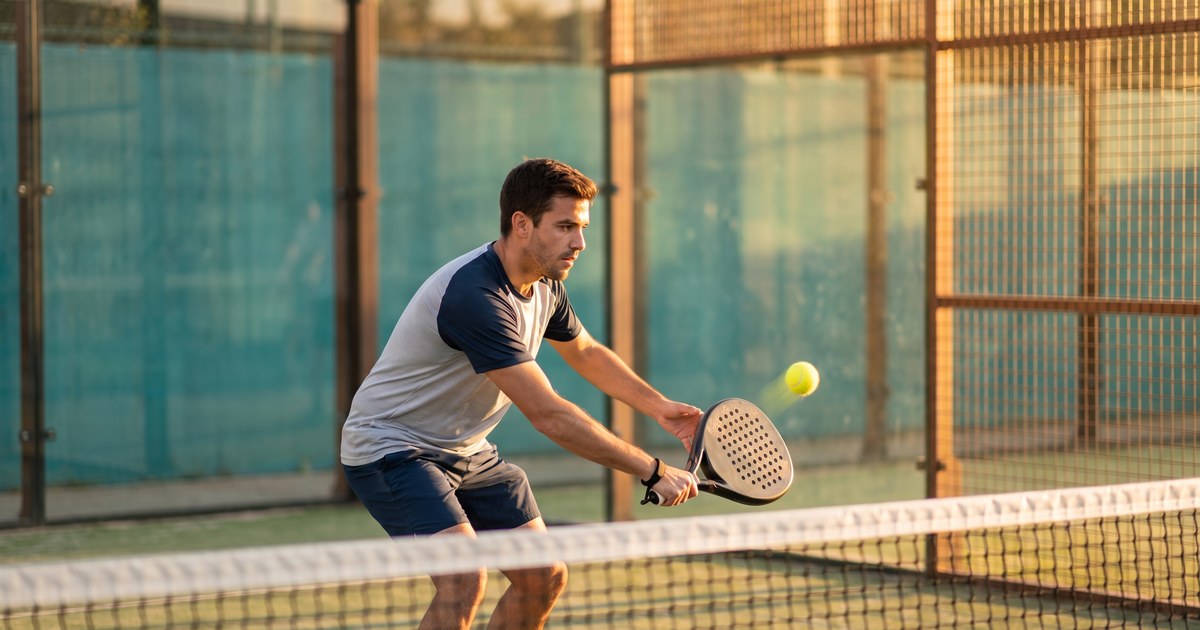
Most padel shots teach you to add: more spin, more height, more pace. The dejada teaches the opposite — subtraction. It's a short, almost silent shot that drains the ball's speed to nearly zero and drops it a couple of metres from the net, right where your opponents physically cannot reach it in time. It won't make a highlight reel next to a big smash, but it's often the shot that decides a point in favour of the pair that knows when to go quiet instead of hitting harder.
What a dejada is and why it matters
Dejada (Spanish for "left behind" or "dropped") is a shortened shot in which the racket kills almost all of the ball's incoming speed on contact. Instead of sending the ball deep, you place it short, low and soft — so that after it bounces on the court it barely rises and barely travels toward your opponent.
The point of the shot isn't power — it's breaking rhythm. Padel is a game of pace and momentum: opponents stand at a distance from the net calibrated to react to a fast ball. A dejada changes the equation — instead of a fast ball, a very slow one arrives, and the exact position that was comfortable a second ago is suddenly too deep. While your opponents scramble forward, your pair has time to move up and take the net.
It isn't primarily a shot meant to end the point outright (though sometimes it does). It's a shot for changing the script — turning a power exchange into one decided by position and patience instead.
Dejada, bajada and chiquita: the difference
All three are padel's "slow" shots, but they solve different problems, and mixing them up is easy — and costly, since the wrong one at the wrong moment just hands your opponents the point.
| Shot | Contact height | Target | Main job |
|---|---|---|---|
| Chiquita | Low, at the net, often on the fly or half-volley | Short, at the opponent's feet at the net | Deny the opponent a downward overhead |
| Dejada | Mid or low, from anywhere on court | Short, just over the opponent's net, near the line | Kill the ball's speed, pull the opponent forward |
| Bajada | After the bounce off the back glass | Deep and hard, into open space | Counterattack, take the initiative with power |
If you've already worked through the chiquita and the bajada, the dejada rounds out the set nicely: chiquita is the low shot at the net, bajada is the power counterattack from the back line, and the dejada is the only one of the three you can play from almost anywhere on court, as long as the ball comes at the right height.
When to play a dejada
A dejada works best in three situations:
- Your opponents are standing deep. If both opponents have dropped back toward the back glass — anticipating a lob or a hard shot — the distance to the net becomes their weakness. A short ball forces them to cover a lot of ground at exactly the wrong tempo.
- You've received a medium-pace ball with no sharp angle. Not an obvious ball to attack with power, but controlled enough to kill cleanly.
- The rally has dragged on with no clear advantage. If both pairs are simply trading deep shots with neither side gaining ground, a dejada is a way to break the pattern and force your opponent to make a decision under pressure.
A dejada is not the right call when your opponent is already close to the net (a short ball only helps them), when the incoming ball is fast and high (attacking is simpler and safer), or when your own pair is standing deep (you won't have time to close in after playing it, and your opponent will punish the short ball instead).
There's a subtler tell worth learning to read, too: your opponent's footwork, not just their court position. A player resting back on their heels, calmly waiting for the ball, is far less ready to sprint forward than one already up on their toes and moving. The first one will almost never reach a short ball in time, even if they're not technically standing that far from the net. Over time, reading this posture becomes as natural as reading the ball's trajectory — and it's exactly what separates a lucky dejada from a deliberate one.
The dejada as reconnaissance
Strong pairs use the dejada for more than winning the current point — they use it to gather information for later in the match. One short ball early on shows you how fast your opponent starts moving forward, which side they cover better, and how they typically answer a short ball — with a flat drive, a lob, or a dejada of their own. That information pays off later, in the tight stretch of a set, when any edge in reading your opponent decides the point.
That's why strong players will sometimes play a dejada even when a power shot is the more obvious choice — not because the position is ideal, but to test the opponent's reaction while the cost of being wrong is still low.
Grip and setup
The dejada is played with the same continental grip ("hammer grip") as the bandeja, víbora and volley — one more reason to set that grip once and stop switching between shots. Hold the racket as if you were hammering a nail: the base knuckle of your index finger rests on the second bevel of the handle.
The key difference in setup from power shots is a short, almost invisible backswing. Where a smash or bajada calls for an obvious take-back, the dejada's backswing barely exists — the racket moves only 15–20 centimetres away from the contact point. The longer the backswing, the harder it is to control power, and controlling power is the entire point of a dejada.
Face the net with your body, knees slightly bent, weight on the balls of your feet. This is a soft-hands shot, not a body-power shot, so extra tension in the shoulder or forearm only gets in the way.
Technique: how to kill the ball's speed
The mechanics come down to three elements.
- A soft, "receiving" contact. Instead of striking the ball, the racket almost catches it and immediately lets it go — like absorbing something falling with an open palm rather than hitting it back. Keep your grip relaxed all the way through contact.
- An open racket face. Tilt the strings slightly upward — enough to clear the net with a small arc, not enough to send the ball travelling far.
- A minimal follow-through. After contact, the arm barely continues forward — a short, "cut-off" follow-through helps the ball lose speed immediately instead of carrying on with momentum.
A common mistake here is trying to carve the ball with a top-to-bottom slice, the way you would on a bandeja. A dejada isn't about spin — it's about absorbing speed. The less active your wrist, the more predictable the shot becomes.
Where to aim: the target zone
Placement matters more than power on a dejada. The ideal landing zone is a narrow strip 1–1.5 metres from the opponent's net, closer to the sideline rather than the centre of the court, where two players can more easily reach it together.
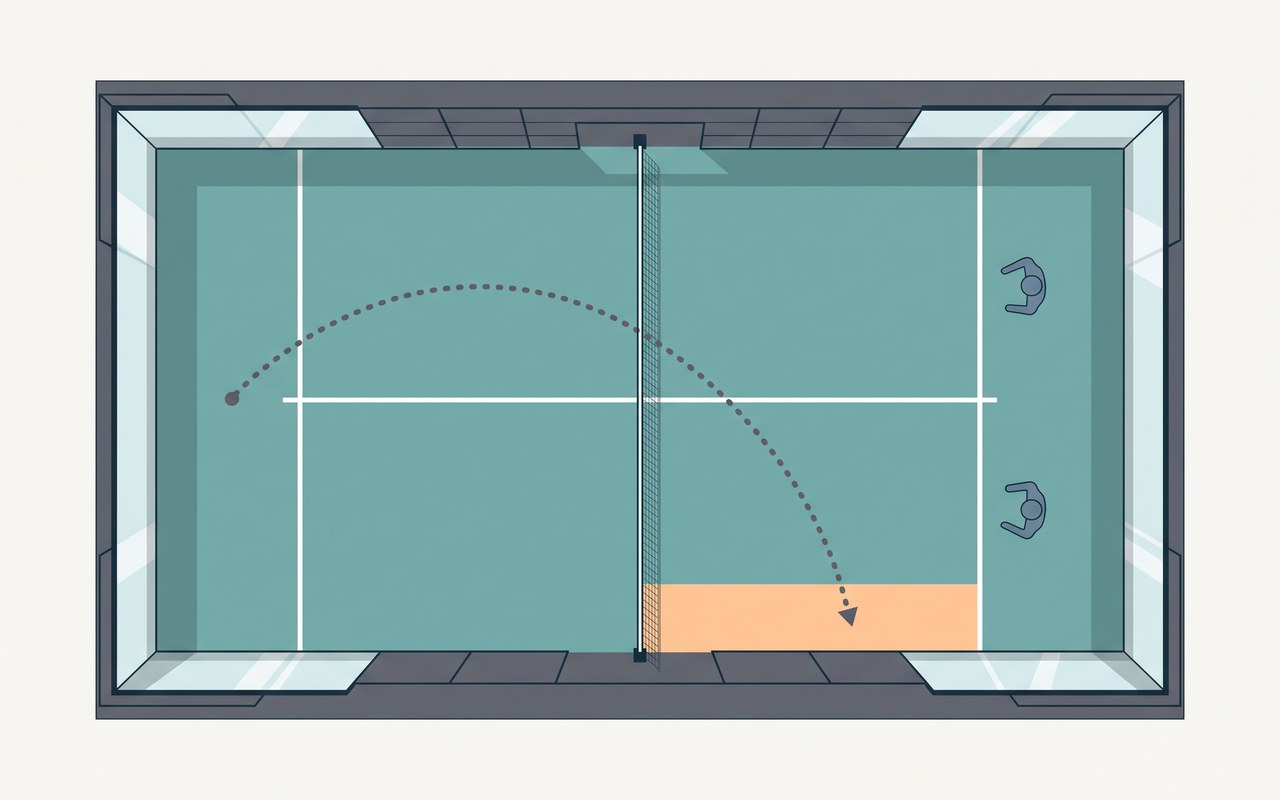
A general rule for direction:
- If both opponents are centred, aim down the line, closer to the sideline of the player furthest from you.
- If one opponent has shifted to one side, aim diagonally into the gap that opens up.
- Never aim straight at a player's body — a dejada hit at the body is easy to volley out of the air, unlike a low bounce near the feet.
Remember that almost no energy should be left in the ball after the bounce: a second bounce, if it happens at all, should land right at or under the net.
Common beginner mistakes
- Hitting it too hard. The most common error: the arm "switches on" at the last moment, and instead of a soft, short ball you get a routine medium-pace shot your opponent can easily attack. Practice hitting slower than feels natural.
- A dejada with no follow-up plan. Playing a short ball and staying put hands your court position to the opponent. A dejada should always be paired with a forward move toward the net.
- Telegraphing the shot. If you always set up the same way — with an obvious pause and the racket face opening early — opponents quickly read the shot from your backswing and simply don't chase the short ball. Work on making the dejada and a routine deep shot start from the same setup.
- Playing it from an awkward position. If you're stretched, off-balance and forcing a dejada out of desperation, it usually clips the net or floats too high. In that situation, a simple deep ball is the safer play.
Three drills to train the dejada
- Wall and ball basket. Standing 4–5 metres from the net, feed yourself medium-height balls and practise only the contact and the open racket face — no target, just the feel of a soft touch. 15–20 reps per session is enough to keep your focus sharp.
- Dejada on the move. A partner feeds medium-pace balls to different spots on the court; your job is to play the dejada on the first touch, with no setup step backward. This mirrors what actually happens in a match — a dejada is rarely played from a perfectly static position.
- Dejada plus the move to net. Same drill, but with one condition: you must take at least three steps toward the net before your partner's next touch. This builds the habit of never leaving a short ball without following it in.
If this is your first season in padel, don't rush to add the dejada before you have solid ball control — start with the basics and read our piece on common first-month mistakes. The dejada is a shot for players who already control the ball confidently at medium pace.
One more useful drill: play full points in groups of four instead of solo repetition, with the rule that a dejada is only allowed after the third shot of the rally. That restriction removes the temptation to play it at every convenient moment and forces you to genuinely read the situation — are your opponents actually vulnerable to a short ball right now, or is the moment not there yet. It's the closest you can get to how the decision actually gets made in a real match, under light pressure and with no time to think it through.
The dejada in doubles tactics
In a pair, a dejada is a shot and a signal at once. Good pairs agree in advance on who has the green light to play the short ball, because after a dejada both players need to move forward in sync — if your partner isn't expecting it and stays on the back line, a gap opens up between you that the next shot can exploit.
A simple rule: if you're about to play a dejada, a quick word or gesture to your partner ("going short!") before contact buys them a fraction of a second of reaction time — the same idea we covered in our piece on doubles communication. The fewer surprises for your partner, the faster your pair closes the net together, rather than one at a time.
The easiest way to work on this on court is with a coach who can give you feedback on how much power you're actually putting on the ball and correct your backswing in real time — your own dejada is hard to judge by feel, because it almost always feels softer than it actually is.
Where to practise in Tashkent
A dejada needs controlled conditions: an even surface, a predictable bounce off the glass, and enough room for a partner to feed you balls freely. Browse the list of courts and clubs on the platform and pick a spot near you — and if you want to test the shot in a live match setting, keep an eye on upcoming tournaments and events where you can try it against unfamiliar opponents.
Frequently Asked Questions
How is a dejada different from a chiquita?
A chiquita is played low and at the net, often on the fly or off a half-volley, and its main job is to deny the opponent a downward overhead. A dejada can be played from almost anywhere on court when the ball is at the right height, and its purpose is broader — changing the rally's tempo, not just defending against an attack.
Can you play a dejada from the back line?
Technically yes, but the further you are from the net, the harder it is to calibrate power so the ball lands short right at the opponent's net instead of drifting toward mid-court. Early on, it's easier to practise a dejada from the middle and front thirds of the court.
Is a dejada the same as a tennis drop shot?
The idea is similar — kill the ball's speed and play it short — but the mechanics differ because of the walls and the smaller court. In padel, a dejada usually fits into a fast net exchange rather than functioning as a standalone tactical surprise the way it does in tennis.
What grip do you use for a dejada?
The same continental grip you use for the volley, bandeja and víbora. There's no need to change grip for this specific shot — only the power and the opening of the racket face change.
How can you tell an opponent is about to play a dejada?
By the shortened backswing and the open racket face a split second before contact. Experienced players try to hide this tell by setting up the dejada and a deep shot identically — which is exactly why it stays effective even against experienced opponents.
Does the dejada work at every skill level?
The dejada needs solid ball control, so players usually start using it deliberately from around a 3.0 rating and up. Below that, it's better to focus on the stability of your basic shots — a dejada without control just becomes a random, easily-read ball.
The blog's deepest column: advanced shots (bandeja, víbora), positional play, periodised training and honest gear breakdowns — grounded in the experience of Tashkent's playing coaches.
Related articles
 Technique
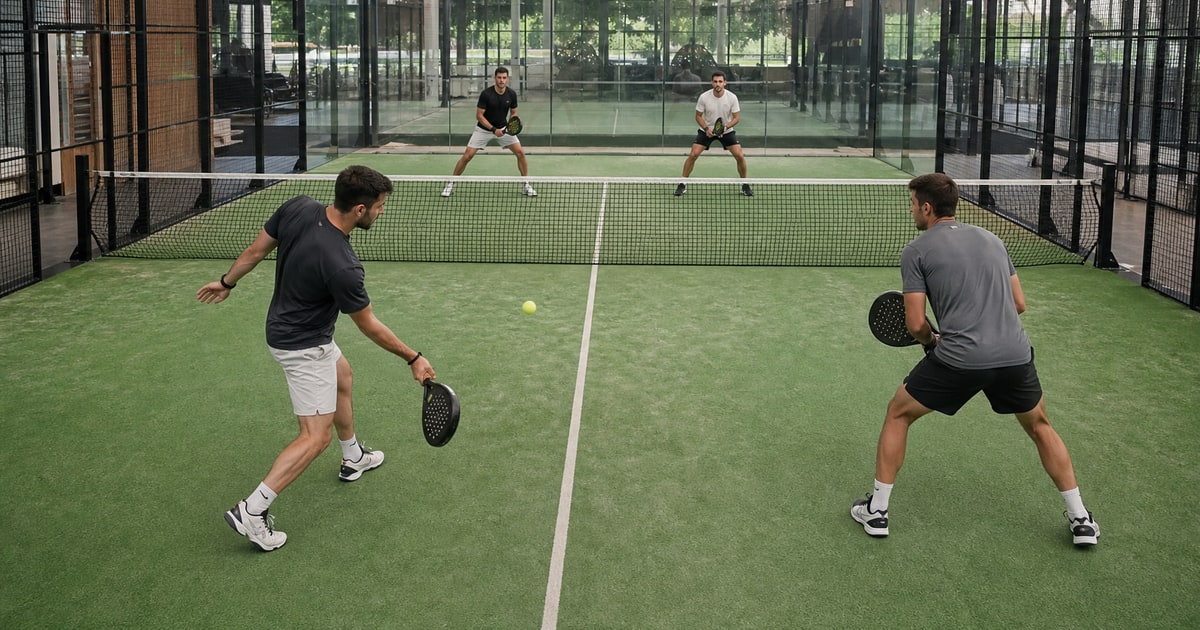
Both Back: How to Defend as a Pair in Padel
When pressure forces you away from the net, both players must retreat together. Learn when to switch, where to stand and how to win the net back.
 Technique
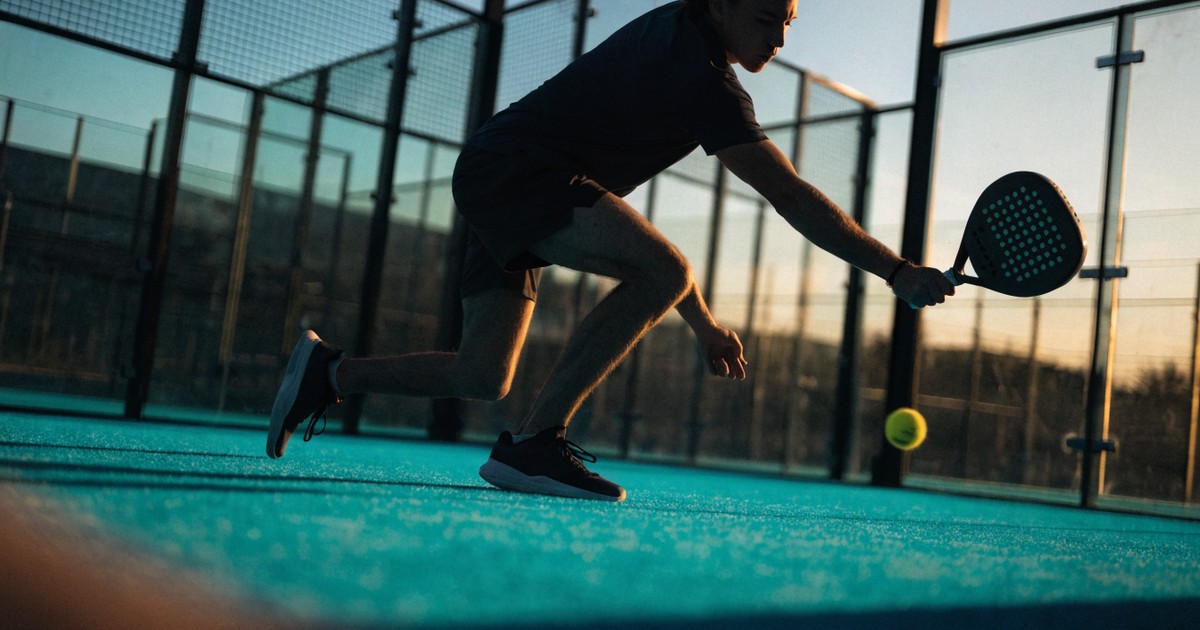
The Bote Pronto: Taking the Ball Early Without Losing Control
Bote pronto means meeting the ball right after it bounces off the court, before it reaches the glass. Here's the technique, timing and when to use it.
 Technique
Poaching in Padel: When to Cross and Steal the Point
A net poach can win the point in one shot — or tear your side of the court wide open. When to cross the middle, how to read it, and where to move after.