

Poaching in Padel: When to Cross and Steal the Point
A net poach can win the point in one shot — or tear your side of the court wide open. When to cross the middle, how to read it, and where to move after.
Contents
- What poaching is, and why it wins points
- When poaching is the right call
- Starting position: standard formation vs. the I-formation
- Three kinds of poach — and when to use each
- Reading your opponent before you commit
- Where to move after you poach
- Three mistakes that turn a poach into a gift
- Three drills to train your poach
- When not to poach: managing the risk
- Frequently Asked Questions
- What is poaching in padel?
- When is the best time to poach?
- What does the partner do while one player poaches?
- What's the difference between a fake poach and a real one?
- Do you need to signal your partner before poaching?
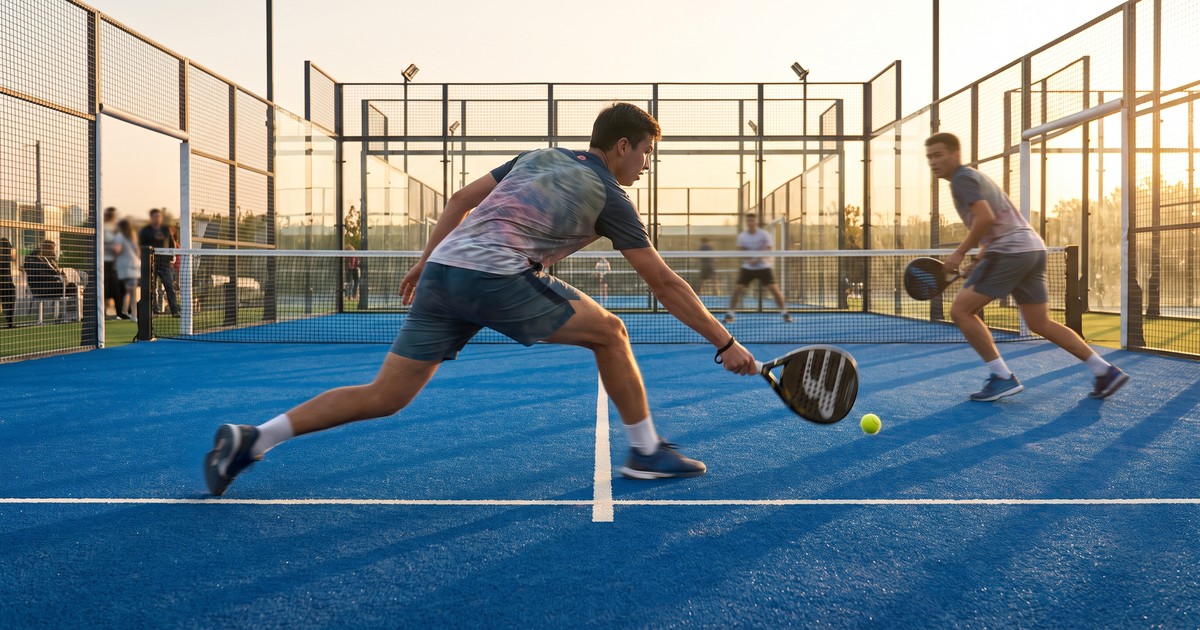
Play padel for more than a couple of months and sooner or later you'll hear the same advice: "poach it." The net player spots a weak ball coming off the opponent's racket, steps into the middle, and steals the point before it has a chance to develop. It looks flashy — but a poach almost always does one of two things: ends the rally in a single shot, or rips your entire side of the court wide open for an easy passing shot. The difference between those two outcomes isn't luck. It's reading the point correctly. Here's when to poach, how to do it without handing your opponents a free point, and what to do the instant after so the gap you left doesn't cost you the game.
What poaching is, and why it wins points
Poaching is when the net player crosses the center line and takes a ball that would "default" to the partner. The tactic comes from tennis, but it hits even harder in padel: the court is only 20×10 meters, the net sits close, and the walls keep the ball alive — so any positioning mistake gets punished faster than it would on a full-size court.
A poach wins points for one simple reason: it changes the angle of attack. Your opponent is set up to hit into space they assume is empty — and your racket is suddenly there instead. That sudden change of angle catches most defending players flat-footed; they don't have time to recalculate the trajectory and adjust the shot mid-swing.
But poaching has a cost. For a split second you vacate your own side of the court — the net and the back zone on your side. If your opponent reads the poach and finds the space you just left, your partner is stuck covering nearly the entire alley alone. That's why a poach shouldn't be a reflex ("weak ball, go") — it should be a decision made off a specific set of cues.
When poaching is the right call
Before you step into the middle, you have a fraction of a second to check the point against a short list of cues. The more of them line up, the safer the poach.
- The opponent's ball is low and under pressure. If they're forced to hit from below net height, their options collapse to a weak lob or a short pass — this is the best window to poach.
- The opponent is looking at your partner, not you. Eyes before contact often give away direction — if a player is clearly setting up to hit toward your partner's side, you can start moving before they even notice.
- Your partner just landed a heavy, controlling shot. A poach is safest right after your partner's strong, forcing shot — the opponent has less time and fewer options to respond.
- One opponent is visibly weaker at the net. If one player consistently feeds short, low balls under pressure, poaching into their side is close to a guaranteed point.
The reverse is also true: if the incoming ball is waist-high or better, with real pace behind it, poaching is a gamble — the opponent has enough options to find the alley you just opened.
Starting position: standard formation vs. the I-formation
The chance to poach is set up before the point even starts — by where you stand on serve. There are two main options.
Standard formation — both net players hold their usual side, closer to the sideline. A poach from here is a visible, committed move: the opponent sees it start and has time to adjust.
I-formation — a relatively new import to padel from tennis, where the net player on serve stands close to the center of the court instead of near their sideline. This immediately creates ambiguity: the opponent doesn't know in advance which side you'll cover once your partner's serve lands. A poach out of the I-formation is shorter, quicker, and much harder to read.
For an amateur pair, the I-formation is an upgrade, not a requirement. Start with the standard setup, build your point-reading first (next section), and add the I-formation once you and your partner are reading each other without needing to talk. We cover the basics of court positioning separately in padel court positioning — poaching only pays off once the underlying stance is already correct.
Three kinds of poach — and when to use each
Not every poach is the same. What separates them is how fully committed you are to crossing the middle.
| Type | What happens | Best used when |
|---|---|---|
| Full poach | Player fully crosses the center and plays the ball on their side of it | Opponent's ball is clearly weak and low, partner has the other side well covered |
| Fake poach | Player steps toward the middle to signal intent, then returns to position | You want to plant doubt and force a rushed decision without any real risk |
| Late poach | Player waits until the last possible instant, moving only once the trajectory is confirmed | Opponent is strong and unpredictable — you need to minimize risk |
The fake poach is an underrated tool. You get part of the effect of a real poach — the opponent sees movement and often changes their shot at the last second, frequently badly — without any of the risk, because you're back in position in time. Experienced pairs mix real and fake poaches through a match specifically so the opponent stops trusting what they see.
Reading your opponent before you commit
A poach is mostly reading, not reacting to the shot itself. By the time the ball is in flight, the decision is usually already too late to make — the cues need to be caught earlier.
- Racket head position. If your opponent's racket head drops below hand level, a defensive, low shot is likely coming — a strong cue to poach.
- Body position. If they're turning sideways with the back foot dropping, they're loading up for a lob or a shot with spin — either gives you time to react.
- Distance to the ball. If the opponent had to take an extra step or stretch for the ball, shot quality drops almost every time — that's your window.
- Repeating patterns. Many amateur players unconsciously hit into the same zone under pressure. Spot the pattern in the first set, and use it in the second.
Worth calling out separately: the down-the-line pass. If an opponent has already tried it twice in a row along your sideline, there's a real chance they'll try it a third time rather than risk the middle where you're standing. Patterns like this only come with experience — we go deeper on this in reading your opponent in padel.
There's a special case worth watching for: the return of serve. When an opponent returns under pressure — tight to the back glass, or off an awkward bounce height — their options shrink even further than on a normal rally ball, and the result is usually a low, short ball with no pace. It's one of the most reliable poaching windows in the entire point, which is why experienced pairs watch the quality of the opponent's return closely on the first couple of serves of a game before deciding how much they can risk later.
Where to move after you poach
The most common way a poach turns into a gift for your opponents isn't the attempt itself — it's what happens in the split second after.
The rule is simple: the poaching player's partner shifts sideways immediately, covering the alley that just opened up. If you poach from right to left, your partner slides right — not waiting to see where the opponent's ball goes, but moving the instant your first step happens, in sync with you.
The player who poached shouldn't freeze at the net either — a short step back toward their original side resets the pair's base positioning in case the opponent somehow gets the poached ball back in play. A pair that poaches and immediately resets to their halves defends far better than one that stands still admiring a winning shot.
It's the same synchronized-movement principle as switching sides under a lob — if you and your partner haven't built a short-call system for these moments yet, start with communicating with your padel partner: without a voice and pre-agreed rules, even a correctly read point turns into chaos on court.
Three mistakes that turn a poach into a gift
- Poaching without committing to the finish. Winning the ball in the middle is only half the job. A soft, uncertain shot after the poach (a weak lob instead of a firm volley into the court) hands the initiative straight back, even if your positioning was perfect. Only poach if you're ready to finish with conviction — otherwise, staying put is the better play.
- Silent poaching. Your partner needs to know you're crossing — either through a pre-agreed hand signal or a short call right after contact ("Mine, going!"). A poach with no signal leaves your partner guessing who's covering what, and that's exactly the second the opponent finds the open alley.
- Random poaching with no plan. Chaotic poaches without reading the cues get figured out fast — opponents start deliberately hitting into the open side. A poach only works as a weapon when it's built on the signals from the earlier sections, not on the urge to "do something exciting."
Three drills to train your poach
Poaching isn't about courage — it's about muscle memory and syncing with your partner. Three simple drills build that reflex without match pressure:
- Live feed lobs. One player with a ball basket feeds a stream of low, weak balls to one half of the pair. The net player on the other side practices exactly one decision: poach or stay. Switch roles after 15–20 reps.
- The fake step. Drill the fake poach separately from the real one: the player steps toward the middle on every second ball, then returns without touching it. The goal is to make the movement itself automatic, so the opponent can't tell a fake from a real poach by how fast it starts.
- Mandatory-poach scoring games. In a practice set, agree that the net player must attempt at least one poach per game. This forces the pair to train the hardest part — the partner's synchronized shift — in real time, under actual point pressure.
These drills work best under a coach's eye, since they can spot from the sideline exactly when a pair "falls asleep" right after a poach. If you want to work on poaching and pair synchronization specifically, browse the PlayPadel coaches directory.
When not to poach: managing the risk
Poaching is a powerful tool, but not a universal one. Some situations call for staying put:
- The score is on the line. On game point or break point against you, a mistake costs more than usual — without an obvious, clear cue (see the earlier section), the safer play is to stay in position.
- Your partner isn't ready. If you haven't built up chemistry and pre-agreed signals yet, a spontaneous, unannounced poach almost guarantees a gap nobody covers.
- The opponents have already beaten your poach twice. If the opposing pair has successfully attacked the vacated alley twice in a row, they're reading you faster than you're reading them. Take a break from poaching for a few points and come back to it once you've reset their expectations.
Going into a tournament, resist the urge to make poaching your main strategy from the very first rally — opponents will pick up the pattern in the first game and start playing around it. Use it as a targeted surprise element, not a constant mode. If you're prepping for your first serious competition and want to test tactics like this under real pressure, check the upcoming tournaments in Tashkent — a competitive match teaches you to read a point faster than any drill ever will.
Poaching is one of those small elements that separates a pair that simply returns the ball from a pair that's actually playing tactics. Start small: one deliberate poach per game, an unmissed signal to your partner, and a quick debrief after the match on what worked and what didn't. After a few weeks of that habit, the "go or stay" decision stops requiring thought and becomes part of your instinctive game — right where it belongs.
Frequently Asked Questions
What is poaching in padel?
Poaching is when the net player crosses the center of the court and takes a ball that would normally go to their partner. The goal is to surprise the opponent with an unexpected angle of attack and win the point before the rally can fully develop.
When is the best time to poach?
The best moment is when the opponent's ball is low, under pressure, and clearly forced — for example, right after your partner's strong serve or attacking shot. The more cues line up (a low ball, a weaker player at net, eyes looking away from you), the safer the poach.
What does the partner do while one player poaches?
The partner shifts sideways immediately to cover the alley the poach just opened — not waiting to see where the opponent's ball goes, but moving in sync with the poaching player's first step. That movement matters just as much as the poach itself.
What's the difference between a fake poach and a real one?
In a real poach, the player fully crosses the center and plays the ball. In a fake poach, they step toward the middle to plant doubt in the opponent's mind, then return to position without touching the ball. A fake poach carries no risk and is useful for making the opponent stop trusting what they see.
Do you need to signal your partner before poaching?
Yes, always — either with a short call right after contact or a pre-agreed hand signal. A silent poach leaves your partner guessing who's covering what, and that's exactly the moment the opponent usually finds the open alley.
The blog's deepest column: advanced shots (bandeja, víbora), positional play, periodised training and honest gear breakdowns — grounded in the experience of Tashkent's playing coaches.
Related articles
 Technique
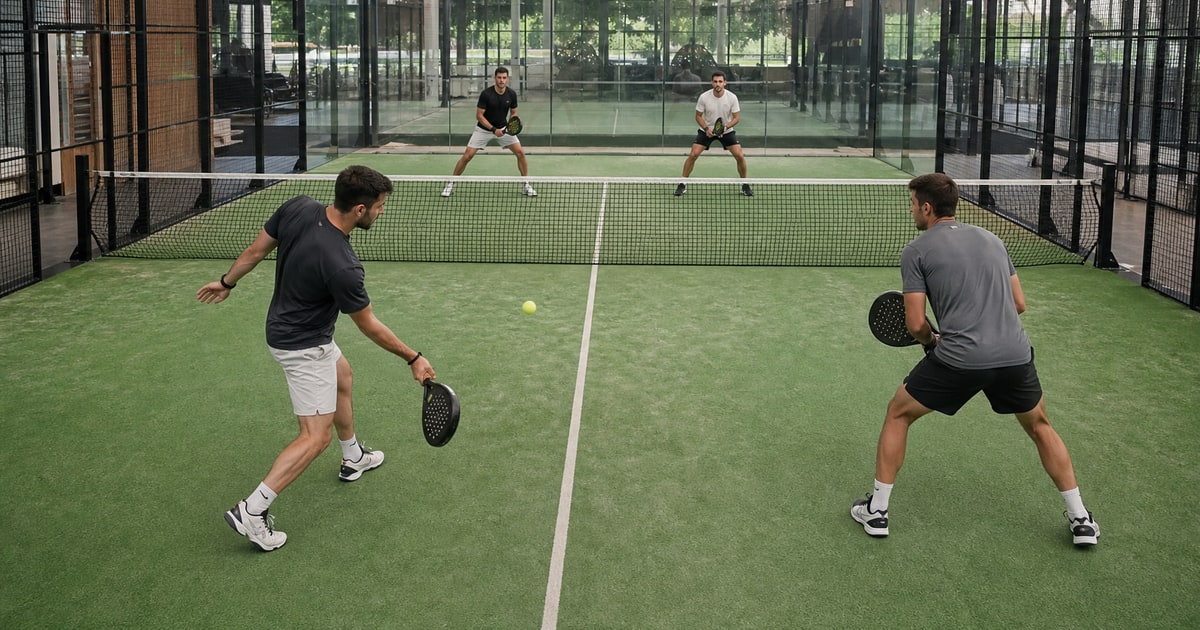
Both Back: How to Defend as a Pair in Padel
When pressure forces you away from the net, both players must retreat together. Learn when to switch, where to stand and how to win the net back.
 Technique
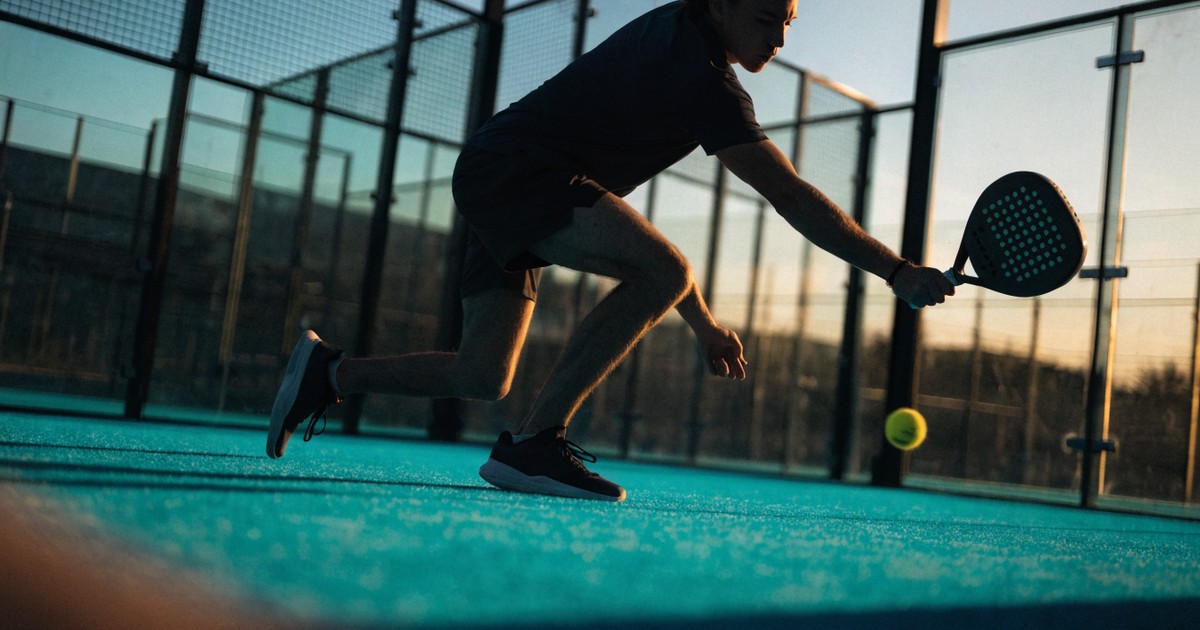
The Bote Pronto: Taking the Ball Early Without Losing Control
Bote pronto means meeting the ball right after it bounces off the court, before it reaches the glass. Here's the technique, timing and when to use it.
 Technique
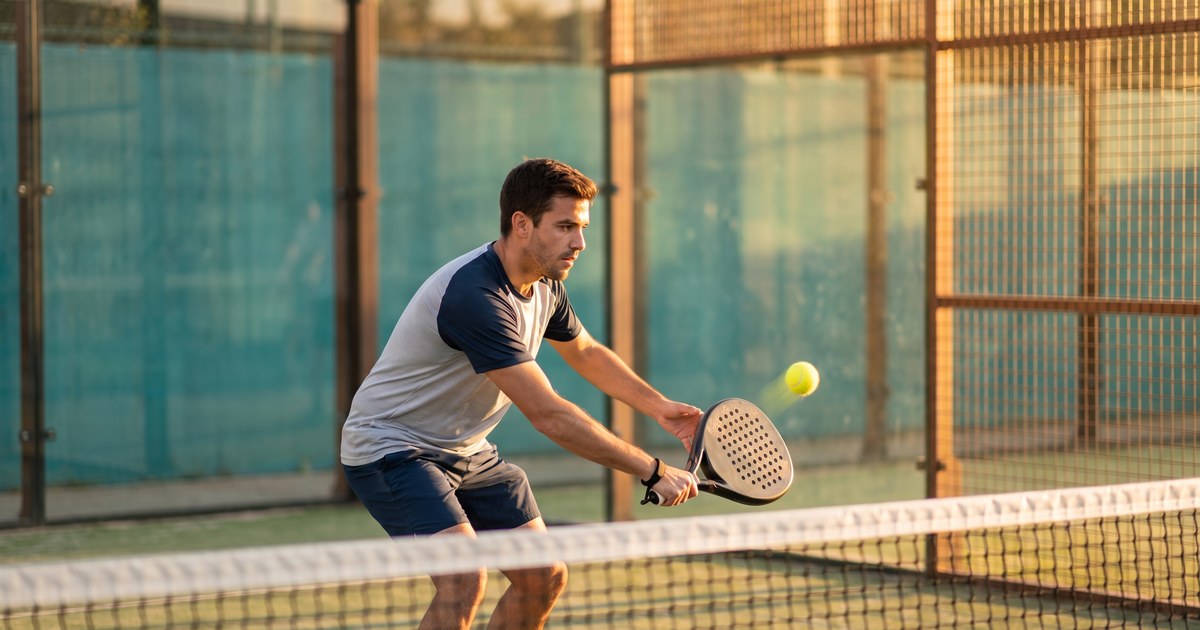
The padel dejada: the shot that switches off pace
The dejada is a short, soft, almost spin-free shot that kills the ball's speed instead of adding to it. We break down the grip, technique and when to play it.