Your first session, and the coach asks: "Which side do you want — left or right?" Most beginners have no idea how to answer and just walk to whichever half looks free. That's fine for one drill, but the side you play shapes almost every point that follows — from who chases the lob to who takes the ball down the middle. Let's break down how that choice actually works, so you pick a side on purpose instead of by accident.
What "left" and "right" actually mean
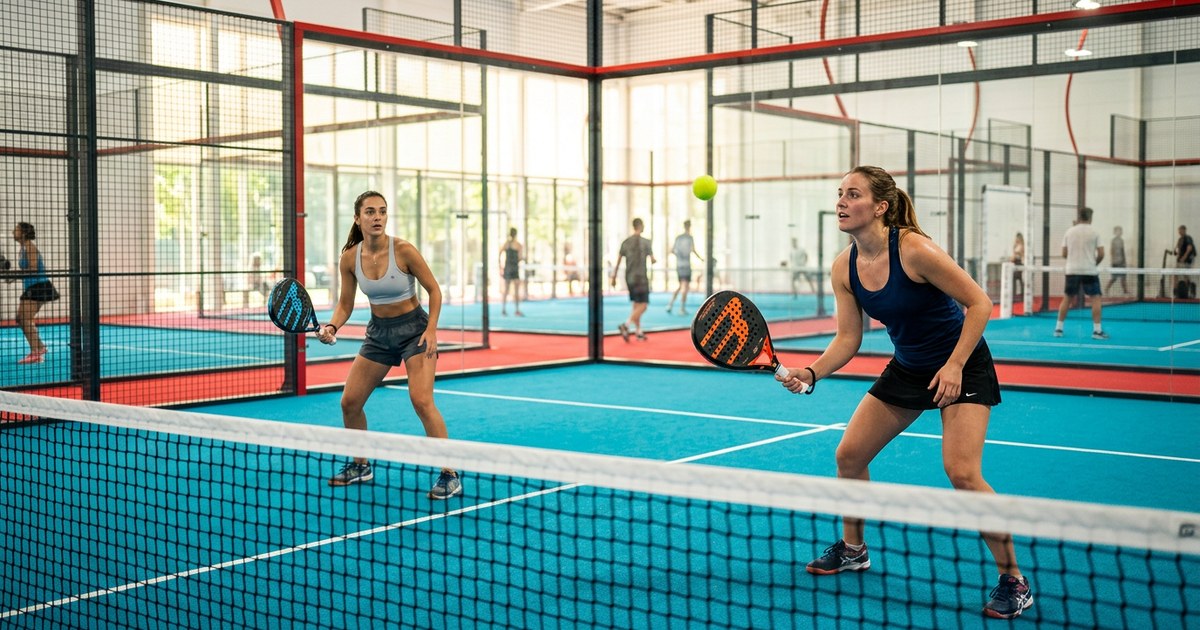
A padel court is split by the net, and each team has one player on each half (seen from your own side, facing the net). The two sides have settled names:
- The right side (drive side) — sees more of the opponent's attacking shots, usually serves first, and is sometimes called the "power side."
- The left side (backhand side, or reves side) — sees more back-glass play and more diagonal lobs.
These aren't hard rules, just a description of where the ball tends to come from. Which is exactly why picking a side isn't about preference — it's about which hand, and which direction, you actually hit best with.
It's worth saying upfront: the two sides don't carry equal or interchangeable workloads. A pair that lines up randomly — whoever reached the court first — usually only discovers the mismatch months later, once one side keeps leaking the same points in the same situations. Working this out early is a lot cheaper than relearning it later.
The starting rule: your hand decides your side
Here's a simple rule to start from: right-handed players usually play the left side, and left-handed players usually play the right side. It sounds backwards — surely a righty belongs on the right? — but the logic isn't about which edge of the court you stand on. It's about which shot, forehand or backhand, you'll be hitting on balls that come down the middle, which is where most rallies actually happen.
A right-hander on the left meets those middle balls with a forehand — their stronger, more reliable shot. The same right-hander on the right side would be meeting the exact same balls with a backhand, which for most players is weaker and harder to control, especially in the first few months. That's why "righty left, lefty right" is the most common setup in both amateur and professional padel.
Treat this as a starting point, not a verdict. Plenty of strong pairs deliberately play the "wrong" side — maybe a partner's forehand is even weaker, or the pair simply got used to it and it works. But if you're brand new and have no reason to pick otherwise, start with the rule.
Why it works: the forehand owns the middle
The logic isn't aesthetic, it's about where the ball actually goes. The overwhelming majority of padel points travel through the middle of the court — it's the easiest target, it carries less risk of clipping a side wall early, and it's exactly where opponents aim to split a pair apart. So the player whose forehand naturally faces the middle ends up meeting the ball with their best shot far more often than the player who has to reach across their body with a backhand.
The second factor is the smash and the bandeja. Lobs into the middle of the court are easier to handle with the arm that naturally rises overhead while rotating into the court, not away from it toward the side wall. That's tied to "home" side too: a right-hander on the left covers middle overheads more comfortably than the same right-hander on the right.
The right side: what it's responsible for
If you're on the right (drive) side, your role in the pair leans toward attack and serve:
- You usually serve first in the game (the serving order rotates, but the right side traditionally opens it).
- You'll see more straight shots down the back glass — opponents like to pin the right side into the corner rather than the middle.
- You're expected to finish with the smash and bandeja on balls closer to the right sideline.
- For a right-hander, this side means working the backhand more on shots along the wall — worth training that shot specifically if you play right regularly.
- The right side meets the opponents' attacking shots first after the serve exchange — if opponents spot a weakness here, they'll target it for the rest of the game.
- Reaction matters more than endurance: rallies on the right tend to be shorter and reward a sharp first step rather than long lateral coverage.
The left side: what it's responsible for
The left (reves) side leans toward control and finishing rallies through the middle:
- You'll see more diagonal lobs and more balls aimed at the middle — which is exactly why right-handers tend to fit better here.
- You're usually the one absorbing the opponent's first shot after your partner's serve, and setting the tempo for the exchange that follows.
- You're expected to stay steady off the back wall: take the ball off the glass calmly and send it back without giving up the pair's net position.
- This side more often finishes the rally with a bandeja or chiquita when the ball comes through the middle.
- Patience matters more than speed here: rallies on the left tend to run longer, and the job is waiting for the real opening rather than forcing an early winner.
- The player on the left is usually the one "reading" the game — it's the better vantage point for spotting where the opponents are about to hit and calling it out to your partner.
What if you're both right-handed (or both left-handed)
This is where it gets interesting: if both players in a pair are right-handed, someone has to play the "wrong" right side, meeting middle balls with a backhand. That's a completely normal, extremely common situation — most people are right-handed, and you don't get to order a partner to spec.
A few things worth weighing:
- Whose backhand is more confident. Not "who has the stronger forehand" — specifically who feels calmer meeting the ball with a backhand from the middle of the court.
- Who reacts faster at the net. The right side tends to demand sharp, short volleys — if one partner is clearly quicker, it makes sense for them to take it.
- Who stays composed under pressure. The right side is first to absorb the opponents' attack after the serve — you want someone there who won't unravel after losing a couple of points.
- Who's readier to take the initiative at net. If one partner reaches for the smash and bandeja at every chance while the other prefers to keep the ball reliably in play, the first player is usually more comfortable on the right, where there are more chances to finish the point.
There's no universally "correct" answer here — just a pair that has found a setup where both players feel more confident. Sometimes the fastest way to find out is to play a few sessions on each side and compare who makes fewer unforced errors.
How to pick a side as a total beginner
If you don't have a single match under your belt yet, you don't need to decide this forever on your first session. A practical plan:
- Start from the base rule — righty left, lefty right — just to have a starting point.
- Play both sides in your first few weeks. Even if the rule fits you, it helps to know what's happening on the other side — sooner or later you'll end up there for at least a few points anyway.
- Notice where you're less rattled, not where you look prettier — where you feel physically calmer making decisions under pressure.
- Ask a coach. An outside eye settles this faster than weeks of guessing on your own — a coach can spot which hand actually holds up under pressure even before you notice it yourself. If you don't have one yet, browse PlayPadel's coaches to find someone who can look at your pair specifically.
Three drills to test both sides in one session
You don't need to wait months to find out which side is yours. A single 60–90 minute session is enough to compare both positions honestly:
- Middle-ball feed, 10 minutes per side. Have your partner or coach feed balls straight down the middle — the exact zone where it's unclear whose ball it is. Count how many go out or into the net on each side; the difference is usually obvious within a handful of reps.
- Mixed lobs, 10 minutes per side. The coach mixes diagonal and straight lobs to the back glass. Watch not for a pretty swing, but whether you turn and get to the glass in time without panicking.
- A live set on each side. Play a short set with the same partner on each side. Don't just count points won — notice which shots made you hesitate or apologize to your partner; that's usually the tell for the "wrong" side.
These drills won't replace a coach, but they turn "I guess this feels more natural" into an actual number — and a number makes the decision a lot easier to trust. Jot the score down on your phone right after each block while the details are fresh — after a week of sessions it's nearly impossible to recall which side felt harder, but comparing two lists of numbers takes a minute.
Talking to your partner: switching sides mid-rally
Picking a "home" side doesn't mean you're glued to it for the whole rally. Sides swap constantly in padel — a deep lob that pulls a player across the middle onto their partner's half is a normal part of the game. In that moment, what matters isn't who "should" be standing on the left, but who calls the ball out loud:
- A short "mine!" or "yours!" solves 90% of net confusion.
- If you've crossed into your partner's side to chase a lob, say so out loud ("switching!") so your partner covers the half you just left instead of standing still.
- Get back to your "home" half at the first safe opportunity — a rally where both players end up on the same side of the court almost always ends with a ball nobody covers.
There's a whole piece on this topic in our post on switching sides in doubles — if you find yourself tangled up in movement more often than you'd like, start there.
Common beginner mistakes when picking a side
- Playing only one side for months. Comfortable, but it quietly builds a blind spot: the backhand on the other side never develops, and any partner change or mid-rally switch becomes genuinely hard.
- Picking a side because a more experienced friend stood there. A side fits your hand and your confidence, not someone else's habit.
- Ignoring footwork in favor of the "correct" side. Even on your ideal side, without a proper stance and a well-timed split step, the shot still goes astray — footwork fundamentals are covered in our split step breakdown.
- Staying silent during side switches. Even experienced pairs drop points because nobody said "switching" at the right moment.
- Treating the side choice as permanent. Forehands and backhands develop with practice — what feels awkward now can feel completely different after six months of regular training.
Where to go from here
Theory only works alongside real time on court. Book a slot at one of our venues and deliberately spend half the session on your "unusual" side — nothing shows you the right setup faster. If you want to test a pairing under real pressure, upcoming tournaments and Americanos are a great way to do it in a near-competitive setting. For more beginner-focused reading, check the PlayPadel blog.
Frequently Asked Questions
Does a right-handed player have to play the left side?
No — it's a common starting recommendation, not a strict rule. Plenty of pairs play a "mirrored" setup successfully; what matters more than matching hand to side on paper is how confident both players actually feel.
What if we're both right-handed?
One of you will end up meeting middle balls with a backhand from the right side. Try both setups over a few sessions and pick whichever leaves each player feeling more composed under pressure at the net.
How often should a pair swap sides?
Deliberately — almost never within a single match; a settled "home" side helps a pair move predictably. Temporary in-rally switches (chasing a lob or a passing shot) are a different thing entirely — they happen as the point demands and don't require redrawing your sides.
Does the side affect who serves?
Serving order is set by the rules of the game, not locked to a side, but by convention the first serve of a game tends to come from the right side of the court, which makes it easier for that player to orient themselves right away.
Should I train shots on my "wrong" side if I always play my usual one?
Yes. Even if you're firmly settled on one side, partners change, and temporary mid-rally switches happen in every match — being able to calmly return a ball from the unfamiliar side saves points that are otherwise lost to panic, not technique.
How long does it take to know a side choice is wrong?
Usually a few sessions of honestly tracking unforced errors per side is enough — if the gap shows up more than once and keeps repeating, that's already a sign worth trying a swap with your partner, at least on a trial basis.