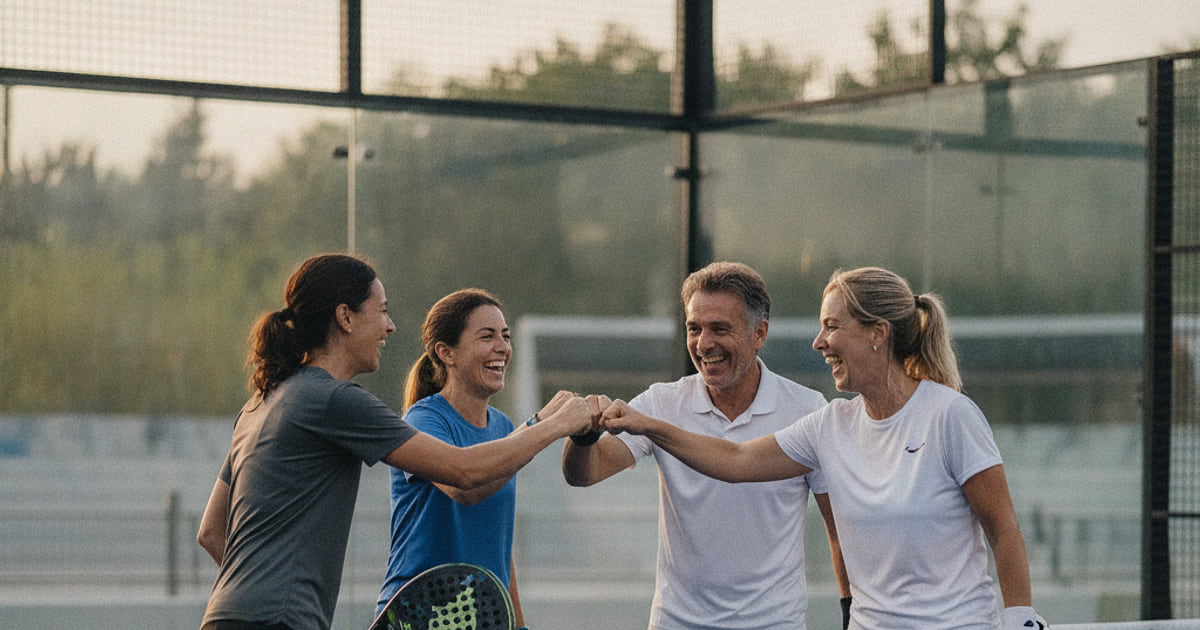
Nearly every amateur hits the same wall. You already love playing, your lessons are paying off — but signing up for a tournament feels like a step too far. "I'm not ready," "they'll destroy me," "it's all serious players over there." In reality, your first tournament isn't an exam — it's the fastest way to grow as a player and finally feel what padel is really about. Here's everything you need to know before your debut: the formats, how to choose the right event, how to prepare, and how to survive your first start without the nerves taking over.
Why you should play your first tournament
Lessons and casual games are the foundation, but a tournament gives you something nothing else can: the pressure of a score that matters. When a point actually counts, you instantly see your real weaknesses — not the ones you imagine during a warm-up, but the ones that surface when an opponent presses and your partner is looking to you.
Here's what you gain from your very first event:
- Honest feedback. You'll learn more about your game in one day than in a month of relaxed knock-ups.
- Playing under pressure. The easiest place to learn to handle nerves is in real conditions, not in practice.
- New partners and opponents. A tournament is the best way to widen your circle of players at your level.
- Progress. After a tournament, ordinary games feel easier — you already know what it's like when the tension is sky-high.
Players put off their first tournament for months, waiting to feel ready — but there is no such thing as ready. The tournament is what makes you ready: afterwards your level is always higher than before.
And one thing worth saying up front: at an amateur tournament, nobody expects a flawless performance. Everyone played a first one once, and everyone was nervous. Padel is one of the friendliest sports there is at the amateur level — the opponents across the net usually become court regulars you know, not enemies for a day. That's exactly why your first tournament is almost always remembered for the atmosphere, not the score.
Before you sign up, it helps to know how the tournament is run. The format decides how many matches you play, whether you need a fixed partner, and how beginner-friendly the day is. On Tashkent's amateur scene you'll meet three main formats.
| Americano | Round-robin (groups) | Knockout |
|---|
| Partner | Changes every round | Fixed | Fixed |
| Matches you play | Many short ones | Several guaranteed | Depends — out if you lose |
| Who wins | Sum of personal points | Best pair in the group | Whoever doesn't lose |
| Best for | Debut, solo players | Beginners and amateurs | More experienced, ranked |
| Atmosphere | The most social | Relaxed, group-based | The most intense |
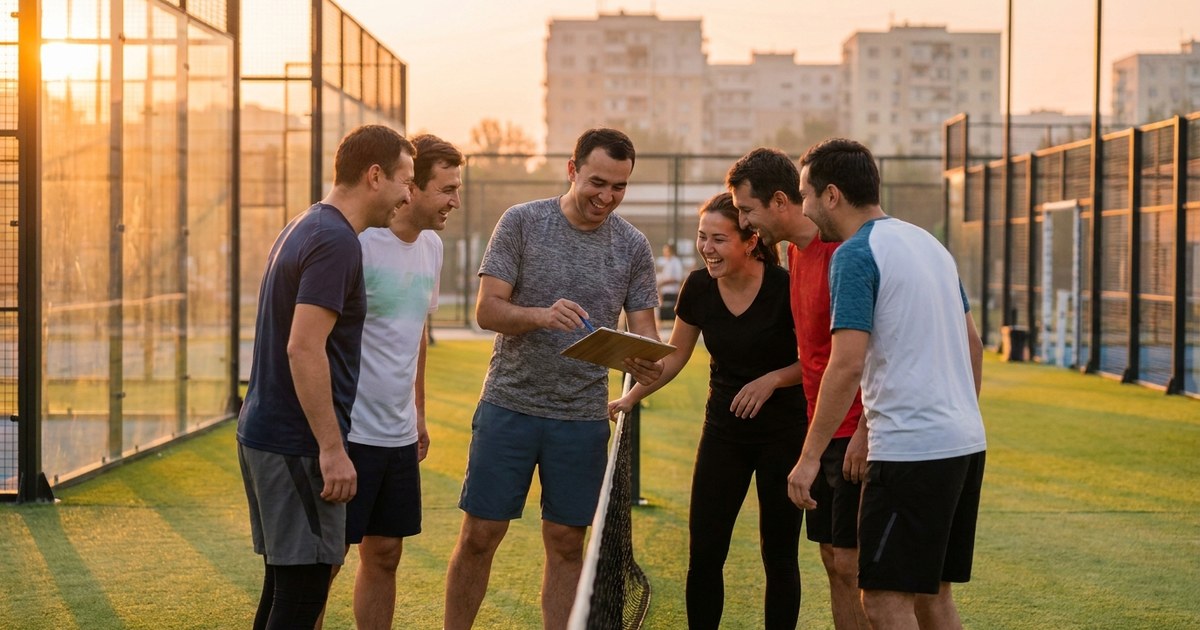
Americano is the ideal format for a very first tournament. You register on your own, pairs are formed on the spot and rotate every round, so across an evening you play with different partners and against different opponents. Points are scored individually, so a weak partner can't sink your whole day. It's the most relaxed, social format — at our Americano Night, everyone has dinner together after the matches.
Round-robin (group) format splits pairs into groups of three or four teams, and within the group everyone plays everyone. The big upside for a beginner: you're guaranteed several matches even if you lose the first. That's exactly how our Weekend Cup for beginners works — a soft landing into competitive padel.
Knockout (single elimination) is the classic bracket: lose and you're out. It's the most intense format, and it's usually reserved for ranked events a level up. It's the least suited to a debut — one loss can end your day before it's begun.
Which tournament to choose for your debut
The golden rule of a first tournament: choose by level, not by a flashy name. Every event lists a level range on the 1.0–7.0 scale; your job is to land in yours, not play hero two points above it.
Check the PlaySport tournaments section — each event shows its format, level, venue and entry fee. As a guide, our regular tournaments map out like this:
- Weekend Cup (beginners 2.0–3.0). Group format, medals and lesson vouchers. The best option for a very first start: calm, friendly, with guaranteed matches.
- Americano Night (all levels). Solo registration, pairs formed on the spot. Ideal if you don't have a fixed partner yet but want to try competitive padel.
- Summer Open (amateurs 3.0–4.5). Knockout under FIP rules with Head balls. This is the next step — once your first tournament is behind you and you want a real bracket.
If you're torn between two levels, take the lower one. Confident play in your own range does more for you — and is more fun — than getting blown out a level up. Not sure of your level? Any lesson with a coach will give you an honest read on your range.
How to read a tournament listing
Before you hit "register," run through the event description. Here's what actually matters:
- Level. The range on the 1.0–7.0 scale (or "beginners / amateurs"). The single most important line — it decides who you'll be playing.
- Format. Americano, groups or knockout — this determines whether you need a partner and how many matches you'll play (see the table above).
- Ranked or not. A ranked tournament affects your rating in the system; for a debut it's calmer to pick an unranked one — the Weekend Cup and Americano Night both are.
- Entry fee and prizes. Amateur entry in Tashkent is usually modest (from around 80,000 UZS). Prizes range from medals and vouchers to cups and a prize pool.
- How to register. As a pair or solo, via a bot, the club reception, or the organiser's phone. Americano is solo sign-up.
- Venue and time. Check where you're playing in advance against the list of courts, and budget time for travel and a warm-up.
If anything is unclear, message the organiser before the day, not on the morning of the event. Amateur organisers almost always reply like human beings and are glad to see newcomers.
Two weeks out: how to prepare
Preparing for a first tournament doesn't mean grinding yourself into the ground. It means showing up on the day with no surprises. A simple two-week plan:
- Find a partner early (for groups and knockout). Don't leave it to the last day. Pick someone you're already comfortable playing with — easiest through player search or shared games. For Americano you don't need a partner.
- Play 2–3 "competitive" games for score. In the week or so before, play a few normal games keeping score rather than just rallying. You'll get used to the pressure ahead of time.
- Polish reliability, not new shots. You won't build a new stroke in two weeks, but you can cut out the risk: fewer flashy smashes, more steady lobs and serves into the box.
- Agree on simple tactics with your partner. Who takes the middle, who calls "mine," when you move up to the net. A pair that simply talks is already stronger than a silent one.
- Check your kit. Racket, two or three pairs of socks, padel shoes with good grip, plenty of water. Nothing new on tournament day — play in what's already familiar.
- Sleep well the night before. Obvious, but it's sleep, not yesterday's extra session, that decides how you move by your third match.
Aziz Karimov, a national-team coach on the PlaySport team, adds: "You don't prepare for a first tournament like it's a final. You show up rested, with your usual racket and one simple idea in your head — play reliably. The rest takes care of itself."
What to bring on tournament day
A short checklist so you're not scrambling on site:
- Your racket (and a spare if you have one) — familiar, not brand new.
- A change of shirt — you'll sweat across a day of matches, and dry feels good.
- Water and a light snack — a banana, nuts, a bar. A tournament can stretch over several hours.
- Padel shoes with an outsole made for clay/artificial grass.
- A wristband and a cap — small things that pay off on a long day.
- A good mood and realistic expectations. A first tournament is about experience, not a trophy.
On the day: warm-up, nerves and etiquette
Arrive 30–40 minutes before the start. That's enough to register, find your court and warm up calmly — instead of running onto your first match with cold muscles.
Warm-up. Five to ten minutes of easy movement, then soft rallies: off the walls, volleys at the net, a few serves. The aim is to get warm and feel the ball, not to win the warm-up.
Nerves are normal. Everyone shakes before a first match, even experienced players. The best cure is a simple, clear job for the opening games: get the ball into play reliably and don't gamble. You don't get rid of nerves — you play with them: on the first points, don't try to win the tournament with one shot. Just put the ball back in the court and let your opponent miss — at the amateur level, that's how most points are decided.
Court etiquette is simple but matters:
- Call the score before your serve — loud and clear.
- A disputed ball among amateurs is a let, replayed, no drama.
- Don't send a ball onto a neighbouring court mid-rally; wait for a pause.
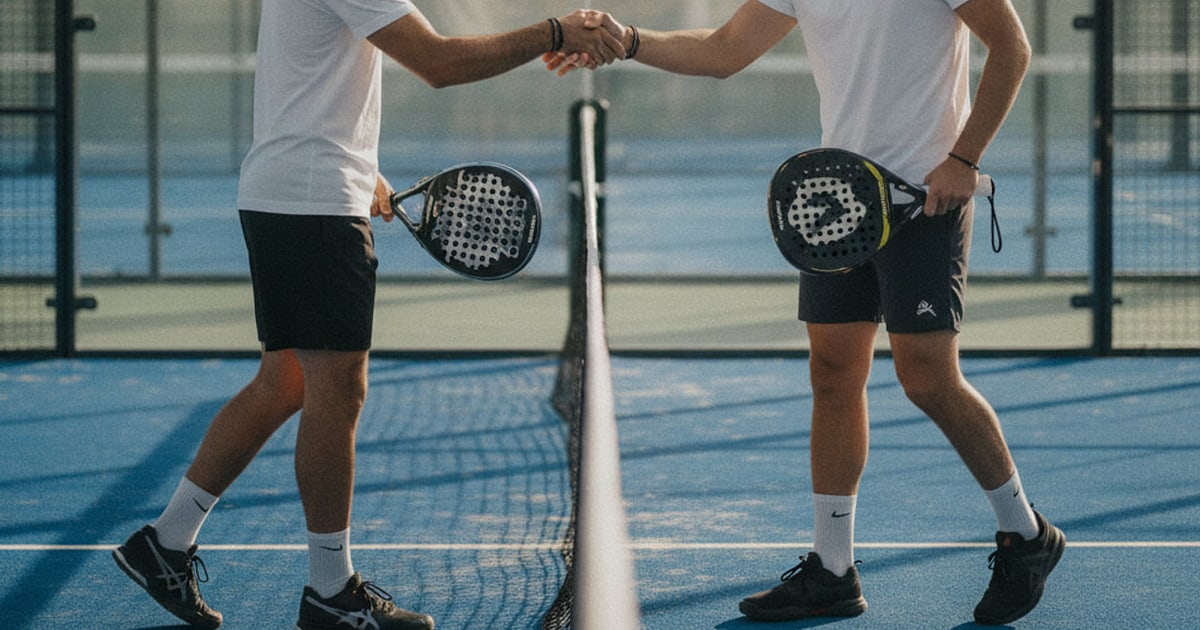
- After the match, a handshake or a racket tap at the net. That's padel.
What to do between matches
In Americano and group formats you'll play several matches back to back, and the trick is not to burn out by midday. Between games, don't sit and go cold: a little movement, a sip of water, a couple of bites of a snack — keep your muscles warm. Don't dissect the previous match right now: a short takeaway ("higher lob next time") beats ten minutes of self-criticism. And don't track everyone else's results — over the length of a tournament your own consistency matters more than the table after round two.
Simple tactics for a debutant
A first tournament isn't won by the most skilful player — it's won by the most disciplined. A few rules that work at any debut:
- Less risk, more reliability. A spectacular smash into the back fence delights you in practice and loses the point in a tournament. Get the ball back one more time than your opponent.
- The lob is your best friend. If your opponents pin you to the back wall, don't try to blast through — float a high lob and reclaim the net.
- Hold your position as a pair. Move as a "wall of two" and don't leave gaps in the middle. There's a full breakdown in our piece on court positioning.
- Hit to the weaker player or down the middle. No need to invent anything — send the ball where your opponents get confused: between them or at the less confident one.
- Breathe and reset the tempo. Don't rush between points. A deep breath, a calm serve, and the nerves step back.
After the tournament: what to do with the result
However the tournament ends, what matters isn't the result — it's the lessons. Right after the matches, while it's all fresh, answer three questions for yourself: what worked, what fell apart under pressure, and which one skill to sharpen before next time.
For beginners it's usually the same culprits: short lobs, unnecessary risk on easy balls, losing the connection with your partner. That's not a reason to be down — it's your personal training plan. Bring those takeaways to a coach, drill the weak spot, and at your second tournament you'll be a different player.
And do sign up for the next one. The first tournament removes the fear; real progress starts with the second, third and fifth — when competitive padel becomes normal. Browse the tournaments section, pick the nearest event at your level, and start building your circle of players.
Frequently Asked Questions
Can I play a tournament as a beginner?
Yes. That's exactly what "beginners 2.0–3.0" level events and the Americano format exist for. Choose an event in your range and your first tournament becomes the best accelerator for your progress, not a source of stress.
Do I need a fixed partner?
It depends on the format. For a group tournament and a knockout — yes, you need a partner sorted in advance. For Americano you don't: you register solo, and pairs are formed on the spot and rotate every round.
It's a tournament where you play short matches while constantly switching partners, and points are scored individually for each player. The most social and beginner-friendly format — ideal for a debut and for anyone without a partner.
How much does an amateur tournament cost?
In Tashkent, entry fees usually start from around 80,000 UZS and depend on the format and prizes. Ranked events with a prize pool cost more; friendly Americanos are cheaper.
The simplest way is to ask a coach in a lesson, or gauge it from the opponents you get even games against. If you're torn between two levels, sign up for the lower one — confident play helps you more than heavy defeats.
What should I bring to my first tournament?
Your familiar racket, a change of shirt, padel shoes, water and a light snack. Nothing new on the day — play in what's already proven in practice.


 Tournaments
 Tournaments