If you came to padel from tennis — or you simply stepped onto a court for the first time — there's one moment that throws almost everyone off. The ball sails past you, hits the back glass, and you instinctively drop your racket, certain the point is lost. Then the ball calmly bounces back into play. In that split second a good pair is already playing it back, while the beginner just watches it go. The good news is that playing off the wall isn't magic or some inborn talent. It's a skill that comes faster than you'd think — and it's where real padel begins.
Why the wall is what separates padel from tennis
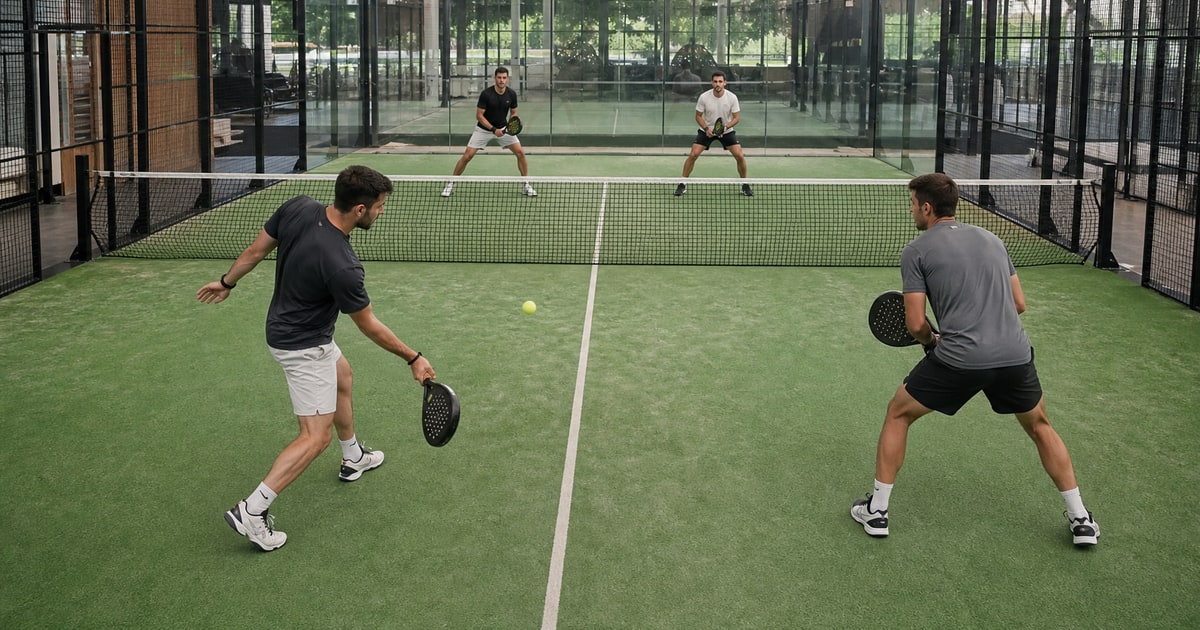
Padel is played on an enclosed 20×10 metre court, surrounded by glass and metal mesh. And — this is the key part — the walls are in play. A ball that has bounced off your own back glass is just as alive as if it had bounced off the floor. You are fully allowed to let it hit the glass and play it afterwards.
For someone coming from tennis, this flips the whole logic. In tennis, a ball past the line is a point won or lost, and instinct screams "deep means dangerous, get to it before the bounce." In padel it's the opposite: a deep ball at the back wall is often the most comfortable ball to defend. You don't need to lunge, volley, and risk an error. You need to step back calmly, let the ball pass, let it rebound off the glass, and play it at a friendly height.
That's exactly why a beginner should "make friends" with the wall as early as possible. As long as you fear it, half the court is working against you. The moment you start using it, that same wall starts working for you.
The golden rule: let the ball come to you
If you remember just one line from this article, make it this: don't chase the ball to the wall — let the ball come to you.
Here's the classic scene at training: an opponent hits deep, the ball flies toward the back glass, and the beginner sprints after it, ends up with their nose against the glass, and the ball rebounds behind them — nothing left to play. A good player does the exact opposite: they retreat toward the glass with the ball, keeping space, let it pass, wait for the rebound, and strike it as it comes back into the court on a falling path.
I often put it to students like this: imagine there should always be room for one more step between you and the glass. If you're pinned against it, you're late. The wall should be behind the ball — not behind you.
This is the difference in instinct you have to rewire. Patience here matters more than speed.
How the ball behaves off the glass
To stop fearing the rebound, it helps to understand what actually happens to the ball. The good news: glass is predictable. Unlike clay or grass, it has no bumps — the ball bounces by almost the same rules as off the floor, only now it's heading back toward you.
A few simple patterns:
- Glass bleeds off speed. A ball after hitting the wall almost always travels slower and friendlier than before it. A hard, driving shot becomes a calm, playable one.
- The higher the contact point on the glass, the deeper the rebound. A high, looping ball will bounce far toward the centre; a low, flat one stays near the wall.
- Angle of arrival equals angle of departure. A ball travelling diagonally keeps going on that same diagonal after the glass. That lets you read where it's headed in advance.
Different walls call for slightly different reactions. Here's a quick cheat sheet:
| Situation | What the ball does | What you do |
|---|
| Back wall | Rebounds into the court, losing speed | Step back, let it pass, play it on the drop |
| Side wall | Runs along the glass at a sharp angle | Turn sideways, let it pass, play down the line |
| Double wall (corner) | Side first then back (or vice versa) | Wait for the second bounce, don't rush |
You won't be calculating this mid-rally — the feel comes with repetition. But just knowing that the glass behaves predictably already removes half the fear.
Basic technique: playing the back wall, step by step
Let's break down the most common case — a deep ball heading toward your back glass. Here's the sequence I give beginners:
- Read the ball early and turn sideways. The moment you see it's deep, turn your shoulders sideways toward the side wall and start moving back with shuffle steps, not backpedalling. That way you never lose sight of the ball.
- Retreat with the ball, leaving space. Move toward the glass so there's at least a step of room between you and the wall. Don't pin yourself against it.
- Let the ball pass you. Allow it to go by, hit the glass, and start coming back. This is the strangest part — you have to consciously not hit the ball straight away.
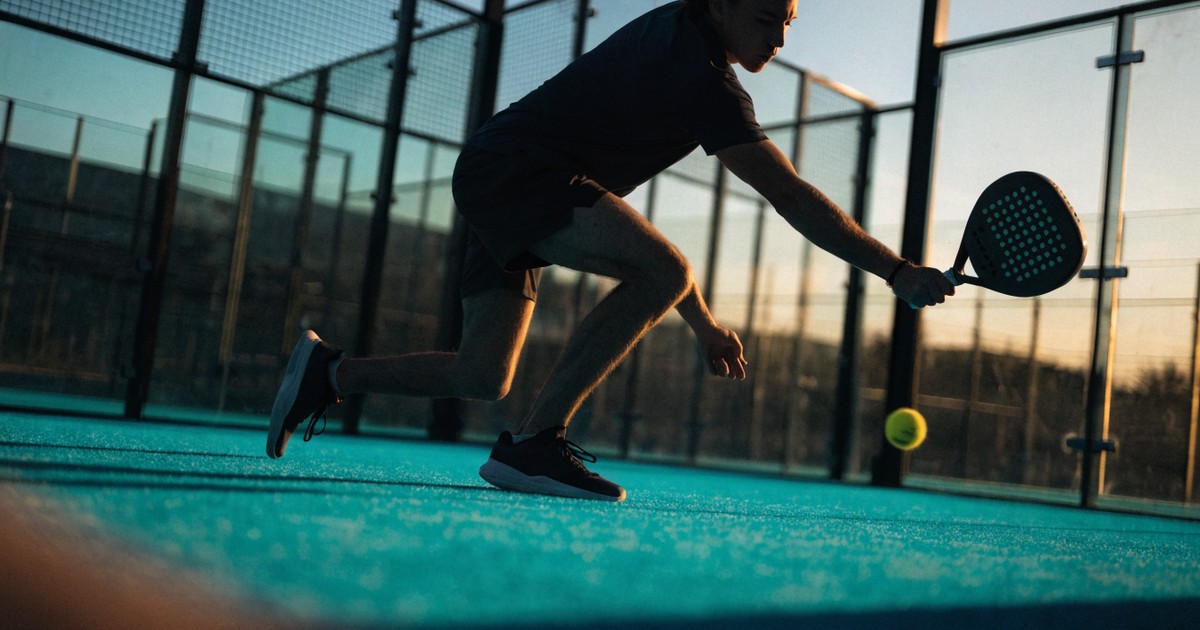
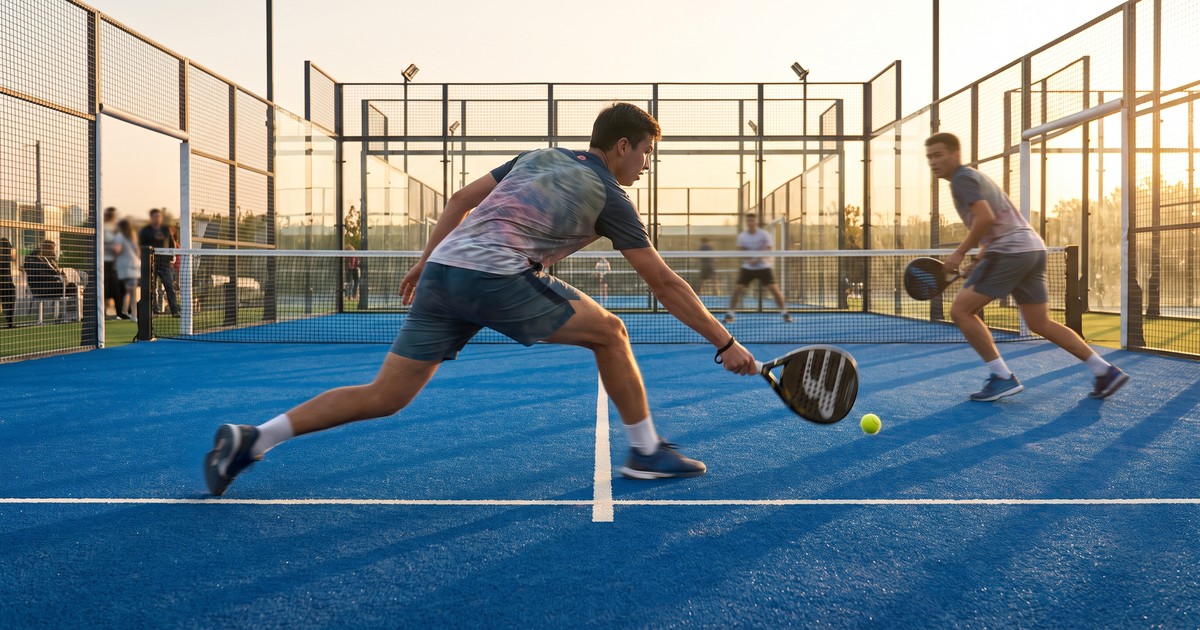
- Catch it on the drop, low. Strike when the ball has rebounded and is falling, roughly between knee and waist height. The racket moves low to high, with an open face.
- Play it simple and deep. From defence at the wall, don't try to win the point. The default answer is a calm globo (lob) or a solid deep ball to buy back time and reset your position.
That last point matters most. Playing off the wall is, above all, defence. Your goal isn't a flashy winner — it's to get back into the rally. More often than not, the best answer from the back glass is a high lob across the whole court that pushes your opponents off the net and gives you time to move forward again.
The side wall and the double wall
The back wall is the foundation. But in padel the ball often clips the side glass too, and that's where many beginners get lost.
The side wall
When the ball heads for the side glass, turn sideways to it and — again — let it pass and rebound. After the side wall, the ball usually runs along the line, so the most comfortable play is parallel to the wall, gently returning it into the court. Don't try to wrap your racket around your body — just wait until the ball comes off the glass and play it along its direction of travel.
The double wall (corner)
The hardest ball for a beginner is the one that flies into the corner and touches the side glass first, then the back (or the other way around). Here the rule is simple: don't rush. The double wall kills the ball even more — it slows right down and often rebounds almost to the centre of the court. Wait for the second bounce, let the ball come out of the corner, and play it calmly. Corner balls that look hopeless are actually some of the easiest, if you have the patience to wait.
If your wall game isn't working, 90% of the time the problem isn't your hand — it's your feet and timing. The hand does very little here; the ball is already slow after the glass. Everything depends on how you moved.
Compare the two instincts:
| Tennis instinct | Padel instinct |
|---|
| Run to the ball as early as possible | Retreat with the ball, keeping space |
| Hit as early as you can, on the rise | Wait for the rebound, hit on the drop |
| Deep ball = danger | Deep ball = comfortable wall ball |
| Stop and hit from a standstill | Constantly adjust with small steps |
The main footwork mistake is standing too close to the glass and freezing. When you're pinned to the wall, the ball has no room after the rebound and ends up jammed against your body. So keep working small adjusting steps right up to contact: better to take two steps too many than to stand frozen in an awkward spot.
And one more thing: after a shot off the wall, move forward immediately. You didn't defend at the back glass in order to stay there. You played your lob or deep ball — now go win the net back. That "defend at the glass → push forward" link is the basis of all positional play, which we covered in detail in our piece on court positioning and moving as a pair.
Common beginner mistakes at the back wall
Most wall problems come down to the same five mistakes. Recognise yourself, and you know what to fix.
- Hitting the ball before the glass, on the volley. Out of fear of missing it, the beginner snatches it out of the air and plays an awkward shot. Fix: consciously let a deep ball hit the glass — it's almost always easier after the bounce.
- Pinning yourself to the glass. The ball rebounds behind you with nothing to play. Fix: keep at least a step between you and the wall, and retreat early.
- Hitting on the rise, too high. The ball is still fast and you lose control. Fix: wait for the drop and hit low, around knee-to-waist height.
- Trying to win the point off the wall. You don't win rallies from defence. Fix: keep it simple — a lob or deep ball, aiming just to stay in the rally.
- Staying at the wall after the shot. You've handed the court to your opponents. Fix: train yourself on the rule "play off the glass → step forward."
We covered many of these in our general guide to the biggest first-month padel mistakes — wall play reliably tops the list for sheer beginner anxiety.
Drills to make friends with the wall
You can't "understand" the wall with your head — you have to feel it with your feet. Here's a simple progression you can run with just two people.
Drill 1. You and the wall (solo)
Stand facing the back glass a few metres away, calmly feed the ball into the glass by hand, let it rebound, and play it back with a soft shot. The goal is just to feel the bounce and the timing.
- 3 sets of 15 reps. Think not about power but about catching the ball on the drop.
Drill 2. Partner feeds deep
A partner at the net calmly feeds or drives the ball toward your back glass. You retreat with it, let it pass, and answer with a lob.
- 4 sets of 10 reps. Count a rep as good only if you let the ball rebound off the glass instead of volleying it.
Drill 3. Corners (double wall)
A partner directs the ball into the corner so it clips the side and back glass. You learn to wait for the second bounce and calmly work the ball out of the corner.
- 3 sets of 8 reps per corner. Patience matters more than precision here.
Drill 4. The "defend → push forward" link
A semi-live rally: your partner drives at you deep, you defend off the wall with a lob and immediately move to the net. Then you swap.
- 5–10 rallies in a row. Make sure you take a step forward after every shot off the glass.
With a coach, progress comes noticeably faster: they immediately spot that you've pinned yourself to the glass or rushed the shot, and correct it on the spot. You can find someone to work on wall play in the PlaySport coaches section, and practise it at any of the Tashkent courts with good, even glass.
A little expert context
Playing off the glass is especially alien to people coming from tennis. The hardest thing to un-teach in "tennis players" isn't a stroke but the habit of rushing: in padel, a deep ball is almost always worth waiting for the glass.
It also helps to get to know the wall with no opponent at all — alone with the back glass, feeding the ball by hand until the rebound stops being scary. The moment the ball off the glass stops being a "surprise," you become instantly calmer across the whole court.
Once defending at the wall feels natural, the logical next step is learning to answer your opponents' lobs with a bandeja, holding the net. We have a full breakdown of that shot: the bandeja in padel. The pairing of "confident wall defence + a reliable bandeja at the net" is essentially the foundation the whole amateur game rests on.
Padel is one of the fastest-growing sports in the world, and the wall is what makes it unique. A player who fears it is permanently on the back foot. A player who has mastered it turns every deep ball from the opponent into a calm second chance.
Frequently Asked Questions
Can you play the ball after it bounces off the wall in padel?
Yes. After bouncing off your own back or side glass, the ball stays in play, and you're fully entitled to hit it — just as after a bounce off the floor. The only thing you can't do is let the ball bounce on the floor twice.
Why is a ball at the back wall considered comfortable?
The glass bleeds off speed: a hard driving shot becomes slower and more predictable after the wall. If you've stepped back early and let the ball rebound, it's usually easier to play than taking it on the volley.
How do I stop the ball from rebounding behind me?
Don't pin yourself to the glass. Retreat with the ball, keeping at least one step between you and the wall, and let the ball pass so you can catch it on the drop in front of you.
What should I hit off the back wall on defence?
Most often a high lob (globo) across the court or a solid deep ball. The goal isn't to win the point but to buy back time and get to the net again. Flashy shots from defence almost always end in an error.
How do I play a ball in the corner that clipped two walls?
Don't rush. The double wall kills the ball heavily, so wait until it comes out of the corner after the second bounce and play it calmly. These balls look hard but are actually slow and friendly.
How long does it take to stop fearing the wall?
With regular training (2–3 times a week), basic calm at the back wall comes in a couple of weeks, especially if you start with simple solo drills. Confident play out of corners and double walls takes longer — but the fear disappears fast.