

The Padel Serve: The One Shot You Fully Control
The only shot you hit with no pressure from your opponent. The rules, the grip, step-by-step technique, placement and the mistakes every beginner makes.
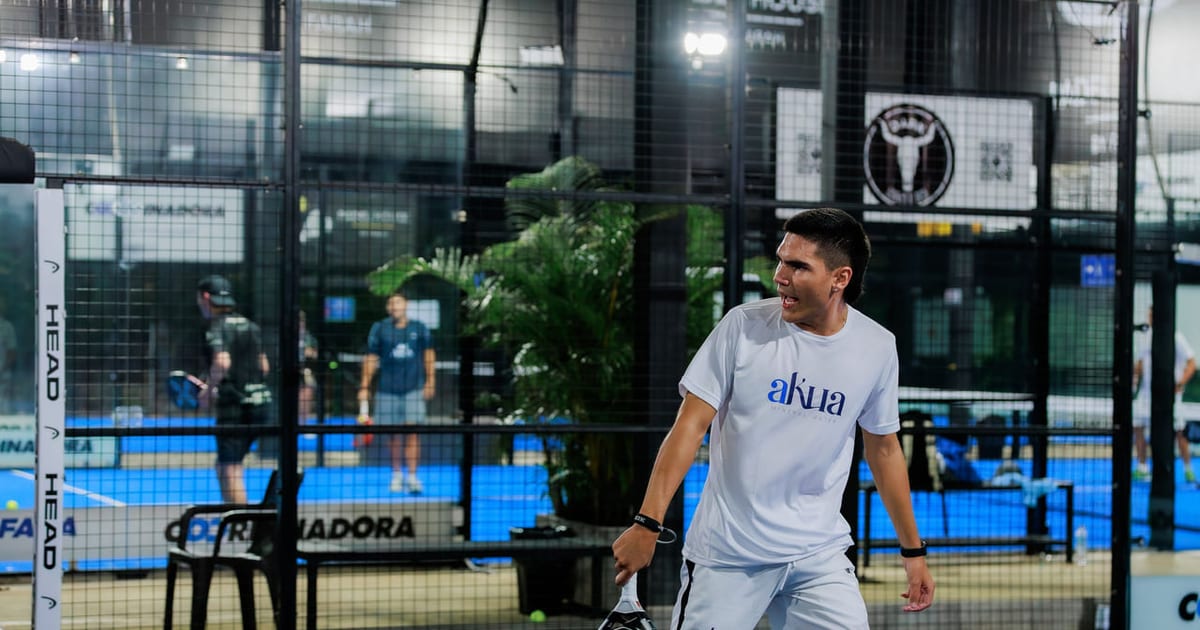
Contents
- Why the serve is padel's most underrated shot
- The serve rules every beginner needs to know
- Grip and stance
- How to serve, step by step
- Where to aim: placement beats power
- The serve into the side wall
- The body serve
- The serve down the middle (the "T")
- Serve and move to the net
- The second serve and tactics
- Common beginner mistakes
- Drills to practise the serve
- Where to practise in Tashkent
- Frequently Asked Questions
- Can I serve overhead like in tennis?
- How many serve attempts do I get?
- What happens if the ball hits a wall after my serve?
- Do I have to run to the net right after serving?
- Where should a beginner aim the serve?
- How can I practise the serve alone?
Every point in padel starts with a serve — and it's the one moment in the game when the ball is entirely in your hands. Nobody rushes you, nobody pressures you: you choose the pace, the direction and the height. It's strange, then, that the serve is the shot most beginners learn last and almost never practise. A steady, thought-out serve is the simplest way to start winning more points in your very first games.
If you've just switched from tennis, or you've never held a racket at all — start here. In padel the serve is hit underarm, and habits from other sports tend to get in the way more than they help. Let's go through it in order: the rules, the grip, the technique, the tactics and the common mistakes.
Why the serve is padel's most underrated shot
In tennis the serve is a weapon: a big flat overhead can win the point outright. In padel it's the opposite. The court is small (20×10 metres), there are walls, the ball is slower, and you can only serve underarm. So "blasting" a serve past anyone is almost impossible — even a fast serve is easily reached, and a tricky bounce off the glass actually helps the returner.
What the serve gives you instead is the initiative. The serving pair moves to the net by default, and in padel the net means control of the point. A good serve doesn't kill your opponent — it calmly sends you forward into a winning position. We covered this in our guide to court positioning: the serve is the start of that move forward.
The takeaway is simple: the goal of a padel serve isn't power, it's placement and a clean run to the net. Once that clicks, the shot gets far more reliable.
The serve rules every beginner needs to know
Before you work on technique, learn the rules — otherwise a technically pretty serve will still be a fault. Here's what matters:
- Underarm only. You contact the ball at waist height or below. An overhead toss-and-swing like in tennis is illegal.
- The ball bounces first. You don't toss the ball up — you drop it on the court behind the service line and strike it after one bounce.
- One foot on the ground. At the moment of contact at least one foot must touch the floor; you can't jump or step on the line.
- Serve diagonally. The ball must land in your opponent's service box, the one diagonally across from you.
- Two attempts. Just like tennis: you get a first and a second serve, and two faults in a row is a double fault — point lost.
A word on walls and the fence. If the ball, after bouncing in the correct box, hits the metal mesh fence, that's a fault. But if it touches the side glass wall after a valid bounce, the ball is in play — keep going. And if the serve clips the net cord and still lands in the right box, it's a let and you replay it, exactly like tennis.
| Aspect | Padel | Tennis |
|---|---|---|
| Swing direction | Underarm only | Overhead |
| Ball delivery | Bounce off the ground | Toss in the air |
| Contact height | Waist or below | Above the head |
| Role of the serve | Get to the net | Attack, aces |
If that difference from tennis surprises you, we have a full breakdown of how padel differs from tennis and why it's so much easier to pick up from scratch.
Grip and stance
For the serve, use the continental grip — the classic "hammer" hold: take the racket as if you were about to hammer a nail with its edge. The racket sits in your fingers, not buried in your palm. This grip is versatile and lets you add slice easily.
The stance:
- Stand behind the service line, roughly halfway between the centre line and the side wall.
- Side-on to the net, feet shoulder-width apart, weight slightly on the back foot.
- Ball in your free hand, racket drawn back at waist height.
- Shoulders relaxed: the padel serve is not an explosive lunge, it's a calm, controlled motion.
Don't stand right next to the centre — from there it's awkward both to serve diagonally and to move forward quickly. Find a spot that makes it easy to both strike the ball and take your first step in.
How to serve, step by step
Let's break the serve into simple moves. Drill them slowly without a ball, then put them together:
- Set up. Side-on to the net, ball in your free hand, racket drawn back at waist height.
- Bounce. Calmly drop the ball onto the court in front of you, behind the service line. Don't slam it down — just let it go.
- Contact. As the ball drops back to waist height or below after the bounce, strike it with a smooth forward motion. Make contact in front of your body, not out to the side.
- Slice. Brush slightly under the ball to add a little backspin — that keeps it low and awkward after it bounces in the box.
- Transfer your weight. As you hit, shift your weight from the back foot to the front, sending the motion toward your target.
- Move forward. The instant you've hit, start moving to the net — the serve and the first step forward should be a single action.
The key is rhythm, not power. The best serve is the one you can repeat ten times in a row identically. Speed comes later; consistency comes first.
Where to aim: placement beats power
Since you can't blast past anyone, placement wins. A beginner has three reliable options:
The serve into the side wall
The most valuable serve in padel. The aim is for the ball, after bouncing in the box, to drift into the side glass and die in the corner. That bounce is very hard to handle: the returner is trapped between the ball and the wall. It takes precision, but it's exactly the skill worth practising first.
The body serve
Simple and underrated. Aim the ball straight at the returner — they have to scramble out of its line, and a clean return is almost impossible. A great option when you just need a safe start to the point.
The serve down the middle (the "T")
The ball travels close to the centre line. That narrows the angle of the reply and helps your pair close down the middle at the net. A good choice against an opponent who loves wide cross-court returns.
Don't serve to the same spot every time. Even at the amateur level, an opponent quickly reads a predictable serve. Mix up your directions — and don't telegraph with your swing where the ball is going.
Serve and move to the net
Remember the serving pair's golden rule: serve, then go forward. The net gives you control in padel, and the serve is your free ticket there, because your opponent isn't attacking — they're only returning.
So don't linger on the back line admiring your serve. The instant you've hit, move to the net with your partner — together, as a "wall of two". A good return will probably be a lob over your heads — that's normal; learn to read it and recover backward. But if you stay back, you've handed over the initiative for free.
At first, combining the hit with a quick move forward is hard: your feet tangle, your breathing goes. It's a matter of repetition. The calmer your serve, the easier it is to run forward right away — one more argument against the power serve.
The second serve and tactics
The second serve exists so you don't give the point away, but that's no reason to dink it with no purpose at all. Make it a touch safer: less risk, a little less speed — but still with a move to the net. Double faults are a common and painful way to gift points at the amateur level.
It's worth knowing about the "golden point" (punto de oro): in many amateur formats and tournaments, at deuce (40–40) a single deciding point is played, and the receiving pair chooses which side to return from. In those formats a reliable second serve is twice as valuable — there's no margin for error. If you're preparing for your first tournament, check the format with the organisers in advance.
Common beginner mistakes
Almost every beginner trips over the same set. Check yourself against it:
- Serving overhead out of tennis habit. The most common error for tennis converts — the arm wants to go up. Contact strictly at waist height or below.
- Tossing instead of bouncing. The ball must be dropped and struck after the bounce, not thrown up into the air.
- Hitting too hard. A powerful serve comes back easily off the wall and wrecks your own run to the net.
- Contact above the waist. Even by a couple of centimetres, it's a fault. When in doubt, hit lower.
- Foot fault. A foot steps on the service line before contact. Stand 20–30 cm behind it.
- Staying back. You serve and admire it — the opponent takes the net. Serve, then run forward.
- Predictability. Every serve to the same spot. Vary your directions.
We've covered many of these in our piece on first-month mistakes — the serve stands apart on that list, because it's the easiest fault to fix on your own.
Drills to practise the serve
The good news: you can work on the serve with no partner and no pressure. A few simple drills:
- Corner targets. Put a cone (or a ball can) in two corners of the service box and hit 20 serves aiming for them. Count your hits.
- Serve + first volley. Serve, immediately move to the net, and play a set volley. This ties the shot and the move forward into one.
- Side-glass serves. Practise making the ball die in the side wall on its own. It'll land rarely at first — that's normal.
- Consistency ladder. Count how many legal serves in a row you can land in the box. Beat your record next session.
Ten minutes of this at the start of every game, and within a month the serve becomes your most reliable shot.
Where to practise in Tashkent
The serve is easy to drill in your warm-up: arrive 15 minutes early and hit a basket of balls while the court is free. You can book a court at any of Tashkent's clubs — choose one with panoramic glass walls so you get used to the bounces straight away.
If you want to speed things up, take a couple of lessons: a coach will fix your grip, your contact height and a foot fault in ten minutes — the things that are nearly impossible to spot in yourself. And once your serve is solid, put it to the test — at an amateur tournament or simply in a game with partners at your level.
Frequently Asked Questions
Can I serve overhead like in tennis?
No. In padel the serve is underarm only: you contact the ball at waist height or below, after one bounce off the ground. An overhead serve counts as a fault.
How many serve attempts do I get?
Two, just like tennis. If your first serve doesn't land in the correct box, you get a second. Two faults in a row is a double fault, and the point goes to your opponent.
What happens if the ball hits a wall after my serve?
If the ball first lands in the correct service box and only then touches the side glass wall, it's in play. But if it hits the metal mesh fence after the bounce, that's a fault.
Do I have to run to the net right after serving?
Yes, it's the basic tactic. The serving pair moves forward by default: the net gives you control of the point, and during the return your opponent can't threaten you. Serve, then move to the net with your partner.
Where should a beginner aim the serve?
The safest option is straight at the returner's body — it's hard to cleanly return a ball coming right at you. Once you're comfortable, add the serve into the side glass so the ball dies in the corner.
How can I practise the serve alone?
Set targets in the corners of the service box and hit 20–30 balls per set, counting your successes. The serve is the only shot you can fully drill without a partner, so progress comes quickly.
An honest diary for absolute beginners: first lessons, the mistakes nobody warns you about, choosing your first racket and your first steps on court. Thinking about your first game? Start here.
Related articles
 Technique
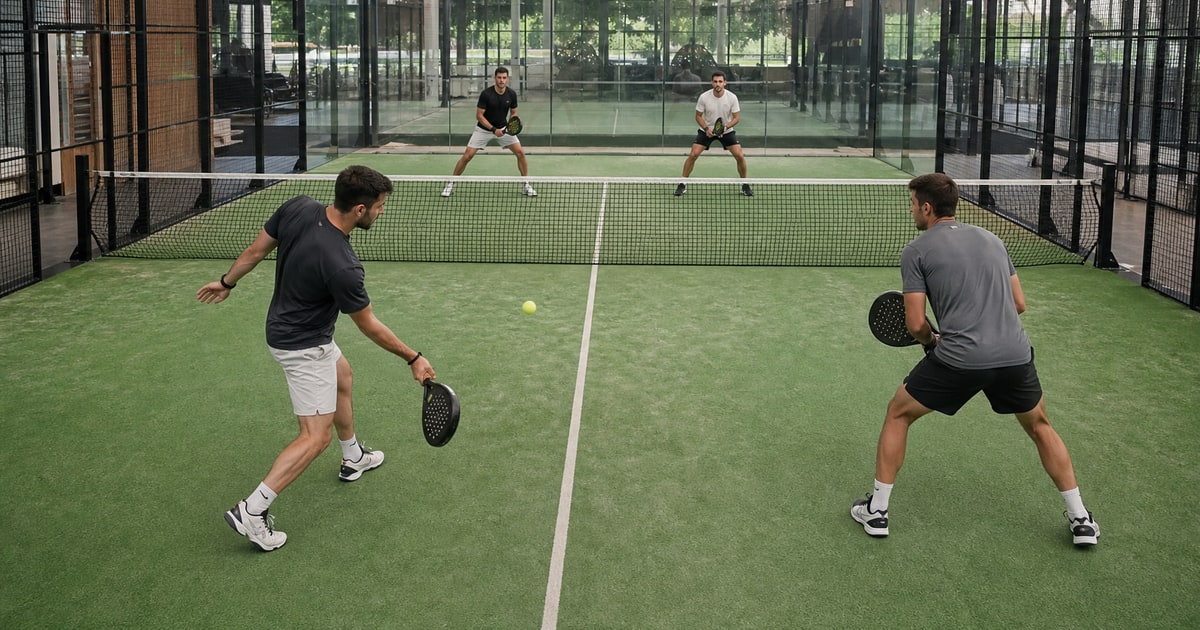
Both Back: How to Defend as a Pair in Padel
When pressure forces you away from the net, both players must retreat together. Learn when to switch, where to stand and how to win the net back.
 Technique
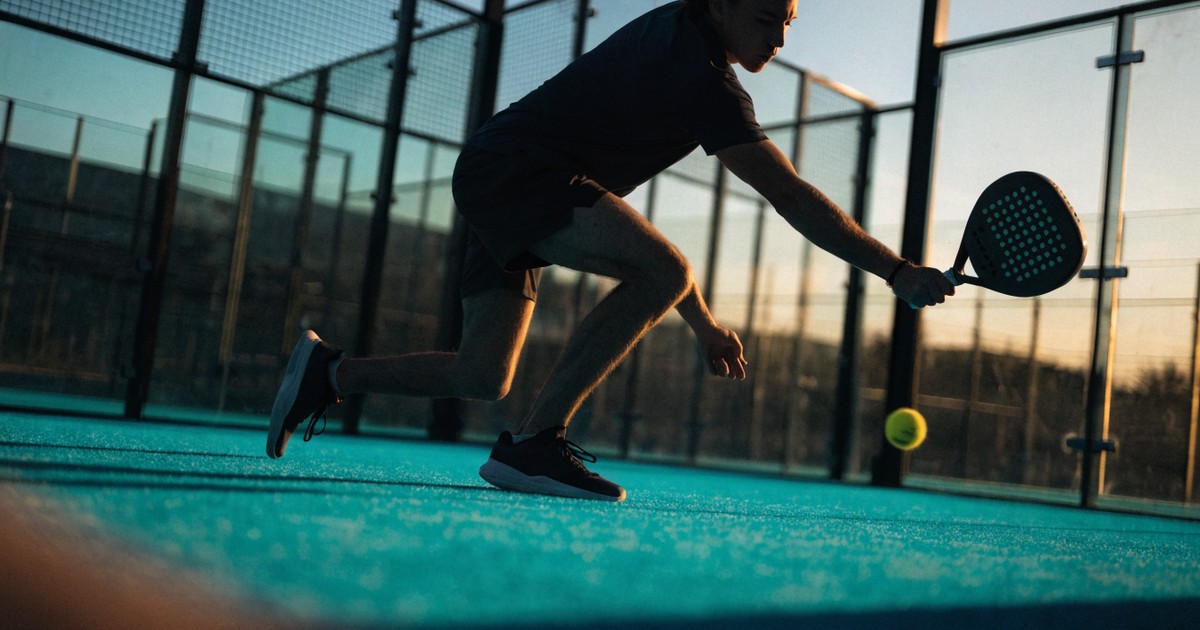
The Bote Pronto: Taking the Ball Early Without Losing Control
Bote pronto means meeting the ball right after it bounces off the court, before it reaches the glass. Here's the technique, timing and when to use it.
 Technique
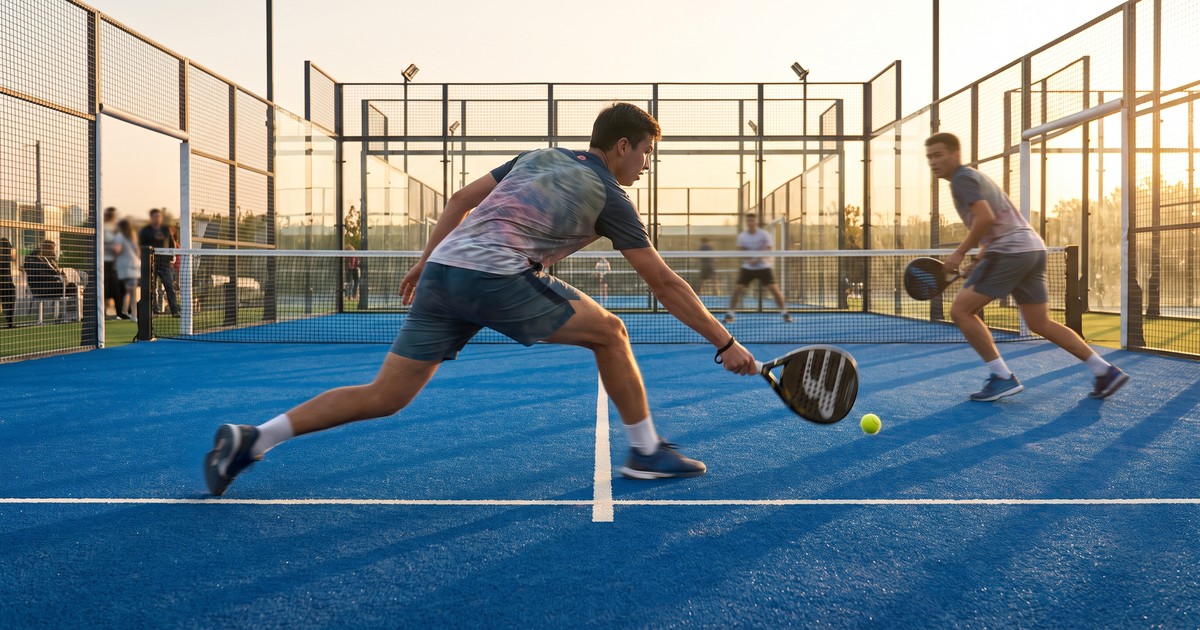
Poaching in Padel: When to Cross and Steal the Point
A net poach can win the point in one shot — or tear your side of the court wide open. When to cross the middle, how to read it, and where to move after.