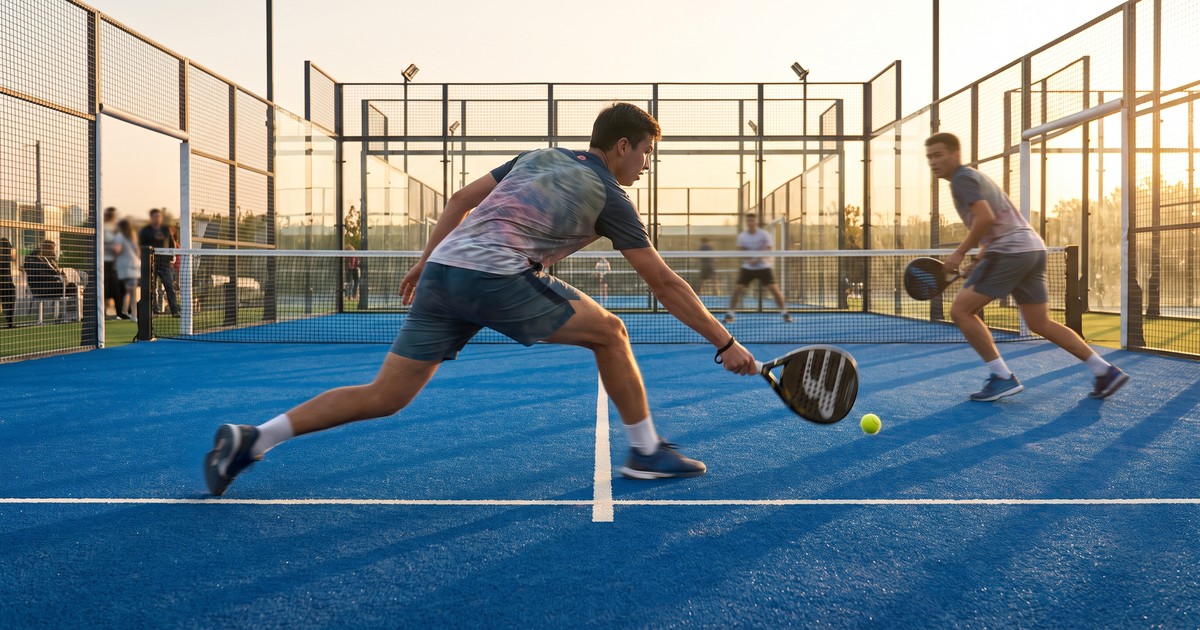
The Padel Smash: Finish the Point, Don't Give It Away
The padel smash isn't a tennis-style kill shot. Here's the technique, target selection with the walls in mind, common mistakes and drills that fix them.
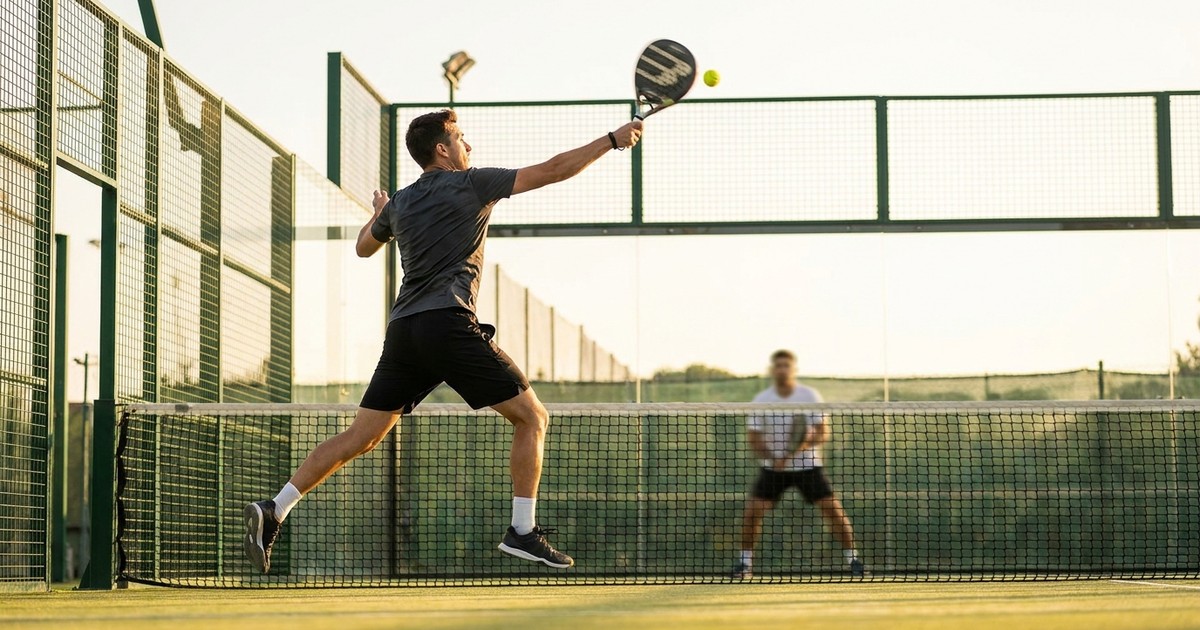
Your opponent's lob climbs high, you drift back to line it up, and here it is — the moment the whole rally was building toward. The smash looks like the simplest shot in padel: wind up and swing hard. In practice it's one of the most wasted opportunities on an amateur court — the ball either sails long past the back glass, or comes back just as soft as it arrived. Here's why the padel smash works differently from tennis, and how to hit it so the rally actually ends in your favor instead of starting over.
The padel smash isn't a tennis serve — it's an attack with a safety net
In tennis, the smash is a clean knockout: the ball leaves the court and the point is over. Padel is different, and the reason is the walls. Your smash, even one your opponents can't reach cleanly, often bounces off the back glass and stays in play. So the job of a padel smash isn't to "kill" the ball at any cost — it's to create the biggest problem for your opponents at the smallest risk to yourself.
That changes the whole philosophy of the shot. An aggressive but sloppy smash that sails out gives away a free point — and on a padel court, which is shorter than a tennis court (20×10 m), with the back zone squeezing your margin for error, missing is easier than it looks. A good padel smash isn't really about power — it's about controlling angle and depth: the ball should either leave your opponents no realistic reply, or, if it does come back off the glass, come back weak and high — which is exactly the ball you want for your next smash.
That's exactly why experienced players hit the smash noticeably calmer than beginners do — they know that missing costs more at the net in padel than in almost any other racket sport, because winning the point back from your opponents is much harder than just waiting for the next lob.
When to go for the smash — and when not to
Not every high lob is worth attacking. The first skill worth building is reading the ball fast, before it even lands.
Height and depth of the ball. If the ball is high and clearly landing beyond the back of the court, you have time to set up and swing fully. A short, low lob is a different signal — a bandeja or a víbora is a better call, since a full smash swing may not have time to develop.
Your court position at contact. A smash from deep in the court, nearly with your back to the glass, is a completely different shot from one hit closer to the net. The closer you are to the net at contact, the sharper the angle and the less room your opponents have left.
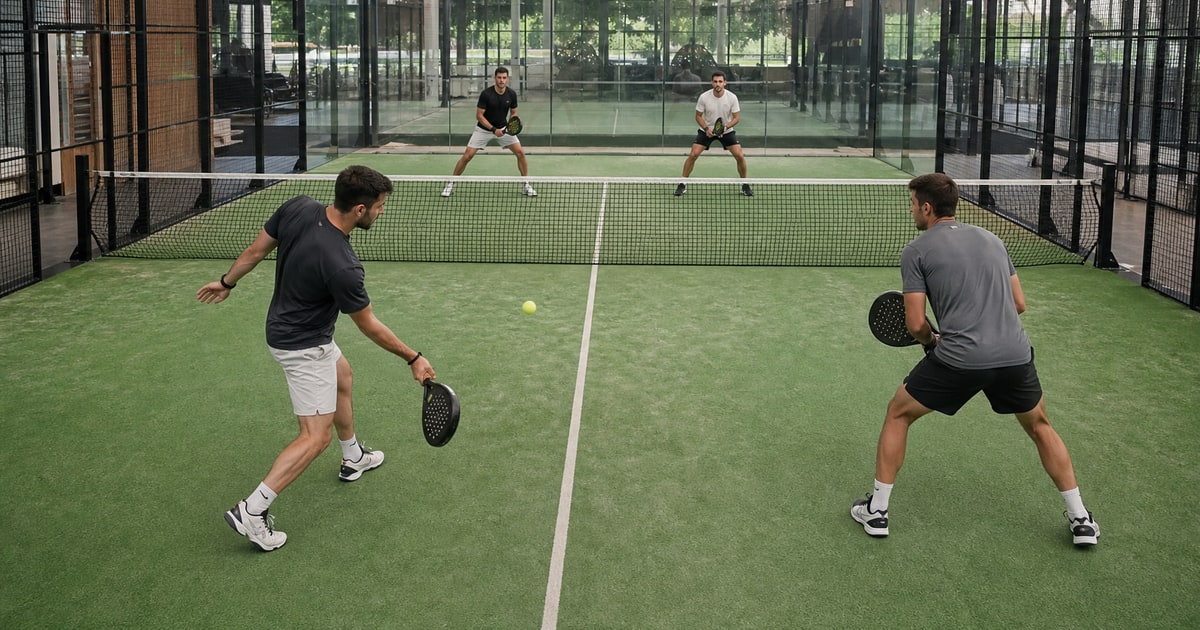
Where your opponents are standing. If both opponents are at the net, aim at their feet or into the gap between them. If one has dropped back to cover the lob, aim into the space they left or at the player who stayed up.
Your own balance. A smash off the wrong foot, off-balance or falling backward is the number-one source of unforced errors on this shot. Sometimes the right call is a controlled lob or a block, waiting for a better chance instead of forcing a shot you're not set up for.
A useful rule of thumb: if you're not confident you'll land nine out of ten, dial back the power rather than gambling the whole shot. We covered how to read your opponents' position before the ball even arrives in our piece on court positioning.
Stance and grip: preparation decides more than the arm
A missed smash rarely comes from a weak arm — far more often it comes from poor body preparation. The sequence that works:
Turn side-on. The moment you see a high ball coming your way, turn your shoulders and body side-on to the net — the same setup as your serve. The racket is already up, and your free arm points at the ball to help you balance and track it.
Move your feet, not just your arm. Small adjustment steps should get your contact point slightly in front of your body and off to the side, not directly overhead. Most amateur smashes are hit standing straight underneath the ball — which is exactly why they lack weight and direction.
Grip. The smash, like every overhead shot in padel, is played with the continental grip — the same one you use for volleys and the bandeja. A separate "power grip" for the smash isn't necessary and only slows your reaction at the net. If your grip still isn't automatic, that's worth fixing first — we go into it in detail in our piece on the continental grip.
The free hand. It's not just for show — pointing at the ball and rising slightly helps rotate your body and time your swing to the ball's flight, much like a tennis serve.
The stroke, step by step
Contact happens fast, but it breaks down into a clear sequence worth drilling on its own, separate from the overall setup.
Backswing. The racket drops behind your back, head down, elbow up, free arm still pointing at the ball. This position looks a lot like your serve setup, just higher and more compact.
Contact in front of your body. Hit the ball slightly ahead of your body and a touch to the side — not straight overhead. That's what sends the angle down and forward instead of just driving the ball into your own feet.
Wrist snap. At contact, the wrist "snaps" from top to bottom — that's what puts light topspin on the ball, which pulls it down toward the court after the bounce instead of letting it float back up as an easy reply.
Full follow-through. The racket keeps moving down and across your body toward the non-hitting side — cutting the swing short right after contact costs you control over direction at the last instant.
Recover to the net. The smash isn't necessarily the final word in the rally — it's a likely one. Get straight back into your ready position at the net in case the ball does come back off the glass.
When your body is properly turned and contact happens in front of you, power arrives naturally — trying to force it with the wrist alone, separately from the body, almost always costs you both power and accuracy at once.
Smash vs. bandeja: neighboring shots, opposite jobs
Beginners often confuse the smash with the bandeja — both are hit overhead, both at the net. But their jobs are opposite, and mixing up the decision between them is a far more common source of errors than bad technique on either shot.
Ball is high and clearly deep enough for a full backswing
Ball is high but too short or fast for a full setup
Goal
End the point, or leave opponents with no realistic reply
Hold your net position without losing tempo
Power
Close to maximum, with a focus on angle and depth
Controlled, often deliberately soft — placement over pace
Risk if mishit
High — a forced shot often sails long
Low — the shot is designed to be the "safe" option
The rule of thumb: if the timing and the ball let you turn fully and swing hard, that's a smash. If the lob is shorter and you don't have that luxury, don't force a smash — switch to a bandeja instead. Confusing these two decisions costs far more points in a match than poor technique on either shot alone.
Where to aim: targets, angles and playing the glass
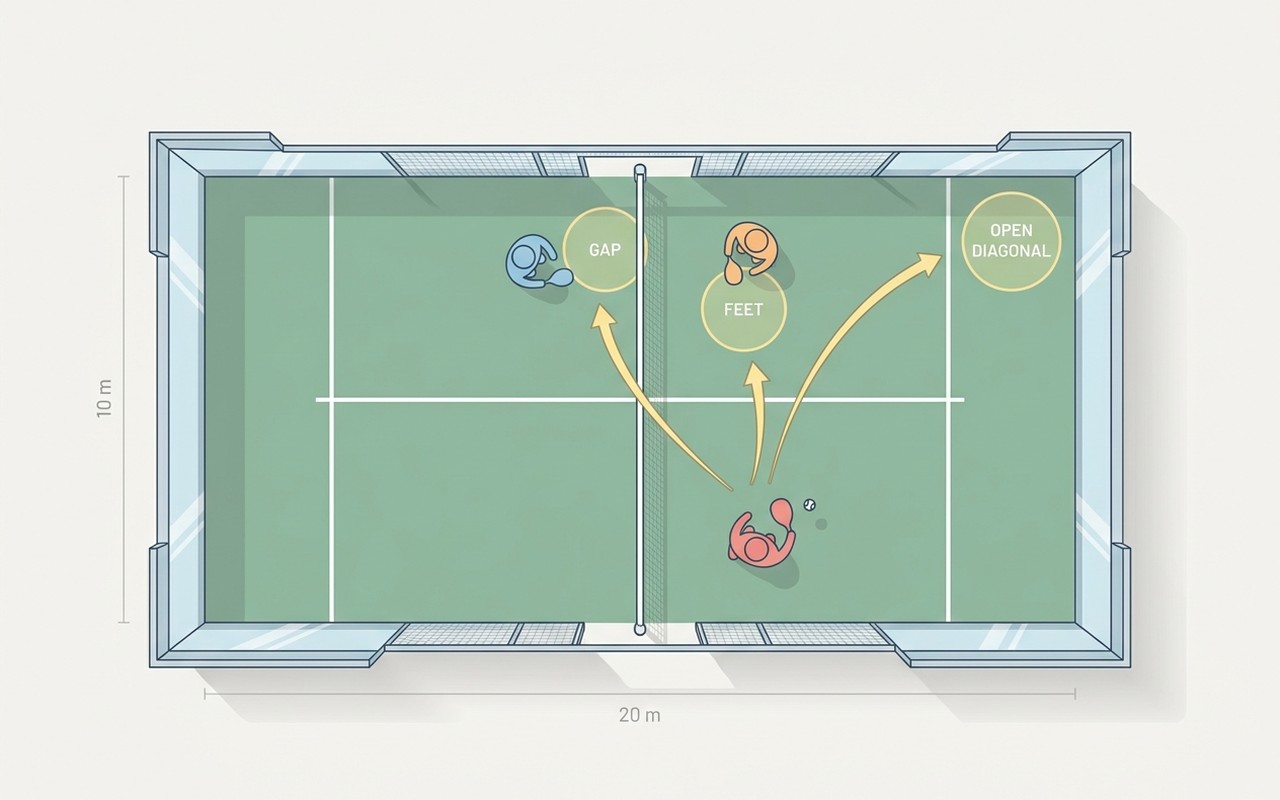
Direction matters more than speed on a padel smash — it's what decides whether the ball comes back, and how well. Three targets cover most situations:
Diagram of three smash targets: the gap between opponents, the nearer opponent's feet, and the open diagonal
The gap between your opponents. The most effective target when both are near the middle: a ball splitting them forces a split-second decision about who takes it — and often nobody does.
At the feet of the nearer opponent. A sharp smash at the feet of the player closest to the net leaves almost no time for a clean reply — the reflex block usually pops up weak and high, setting up your next smash.
Crosscourt into the open space. If one opponent has dropped back to cover a lob, a diagonal smash into the space they vacated often wins the point outright, without the back glass even coming into play.
A separate, more advanced option is smashing deliberately into the side glass, aiming for a high, awkward bounce toward your opponent. It's a real weapon at a higher level, but it demands a precise feel for the court — the bounce angle off the glass depends heavily on contact point and ball speed, and it's easy to miscalculate. Beginners and intermediate players are better off mastering the three targets above before experimenting with the glass.
The smash off the back wall and after a deep lob
There's a harder version of this shot: when your opponent deliberately pushes you deep with a long lob toward the back glass. The same principles apply, with a few adjustments:
Let the ball come off the glass if it's deep enough — that buys you an extra half-second to set up and turn, instead of swinging while still moving backward.
Lower your ambition. A smash from deep in the court, especially with your back turned toward the glass, isn't the moment for a highlight-reel winner. It's often smarter to play a controlled, slightly softer smash deep into the court, or even switch to a defensive lob to reclaim your net position.
Watch your partner. While you're defending from deep, your partner at the net should drop back temporarily to cover — otherwise a short, sharp smash from your opponents into the open net space wins the point instantly.
This is often exactly where control of the rally gets decided: the pair that recovers cleanly to the net after being forced into defense almost always takes back the initiative.
Common smash mistakes
Hitting straight overhead, with no body turn. The racket meets the ball "flat on," and the power drives straight down into your own feet instead of forward across the court. Fix: turn side-on and make contact in front of your body, the same way you would on a serve.
Trying to blast every lob at maximum power. Even an awkward, short lob gets swung at full force — and sails out. Fix: dial back the power whenever your setup isn't clean.
Not recovering to the net afterward. The player admires their own smash instead of resetting into the ready position. Fix: treat the smash as a likely point-ender, not a guaranteed one.
Flat contact, no topspin. The ball flies without any spin, and the bounce off the court runs long and uncontrolled. Fix: add a light top-to-bottom wrist snap at contact.
Ignoring where your opponents are standing. The smash goes wherever, with no read on your opponents' position. Fix: the split-second it takes to check their position before your backswing pays off almost every time.
Drills to train the smash
Drill 1. Smash off a hand feed
A partner or coach feeds high lobs by hand from the same spot. 3 sets of 10 swings, focused purely on technique: turn, contact in front of the body, full follow-through. Speed and placement are secondary at this stage.
Drill 2. Smash to targets
Mark three zones on the far side of the court: the middle (splitting imaginary opponents), the near corner, the far corner. Hit 10 smashes into each zone and track your accuracy. The goal is consistency of direction, not power.
Drill 3. Smash → recover to net
Hit a smash and immediately, without pausing, reset into your ready position at the net as if expecting a return off the glass. Repeat 15–20 times until it's automatic — the habit of recovering needs to hold up under real match pressure, not just in a quiet drill.
Progress on this shot is fastest under a coach's eye, since they'll spot a poor body turn or a late contact point before it becomes a habit. You can find a specialist in the PlayPadel coaches section, and drill it at any of the Tashkent courts. Once the shot holds up in training, test it under real pressure at an upcoming amateur tournament in the events section — that's exactly where you'll find out how solid your smash really is outside a calm practice session.
Frequently Asked Questions
How is a padel smash different from a tennis smash?
In tennis, the smash almost always ends the point — the ball leaves the court. In padel, the walls keep the ball in play even after a hard smash bounces off the back glass. So the padel smash is mainly about controlling angle and depth, not about maximum power at any cost.
What grip should I use for the smash?
The same continental grip you use for the volley, the bandeja and the víbora — no separate grip is needed. Switching grips for a specific shot at the net only costs you time in a fast rally.
What's the difference between a smash and a bandeja?
A smash is played when the lob is high enough, and you have enough time, for a full backswing and a hard swing. A bandeja is played when the lob is too short or fast for a full setup, and the shot is hit softer, with the priority on holding your net position rather than ending the point.
Where's the best place to aim a smash?
Three reliable targets: the gap between your opponents, at the feet of the nearer opponent, and crosscourt into open space if one opponent has dropped back. Smashing deliberately into the glass is a more advanced option that requires a precise feel for the bounce.
Why does my smash keep sailing long?
Usually it's not a power problem — it's a lack of body turn, combined with contact straight overhead instead of in front of your body. Dialing back the power on awkward balls instead of forcing a full-power swing also helps a lot.
Do I need to recover to the net after a smash?
Yes, always. Because of the walls, the ball often stays in play even off a strong smash. A player who admires their own shot instead of resetting into position regularly gives away the very next point for free.
The blog's deepest column: advanced shots (bandeja, víbora), positional play, periodised training and honest gear breakdowns — grounded in the experience of Tashkent's playing coaches.
Reviews
Log in to leave a review
Bote pronto means meeting the ball right after it bounces off the court, before it reaches the glass. Here's the technique, timing and when to use it.