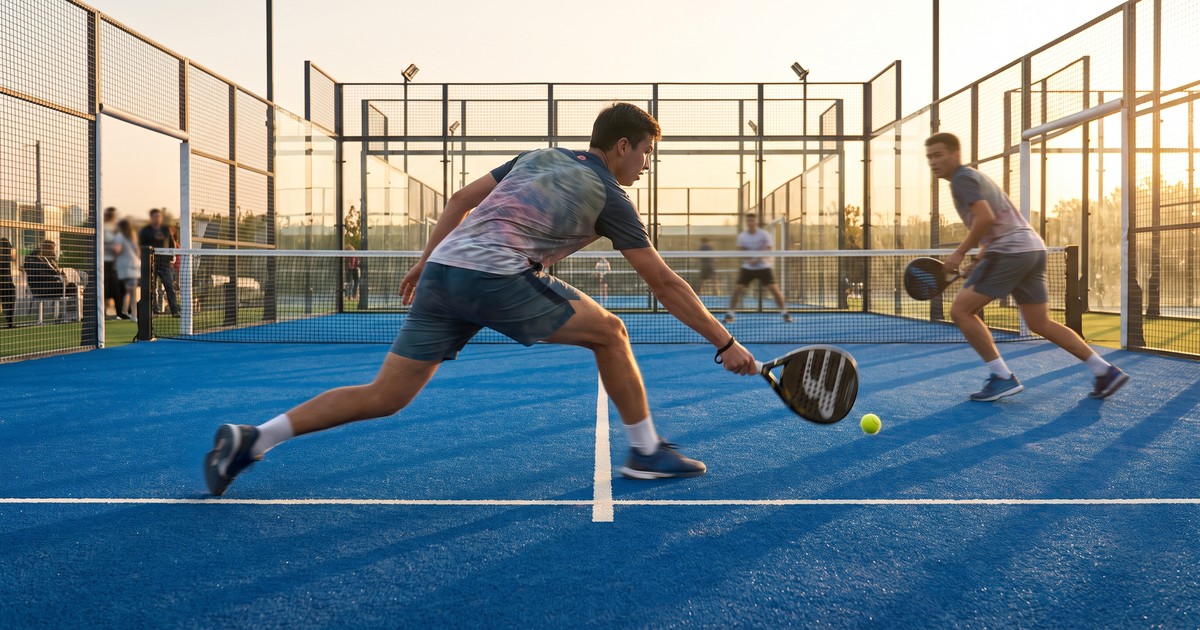
Your opponent's lob climbs high and short — and for a split second you have a choice: play it safe with a bandeja, or end the point with one shot. That single moment is why amateurs spend hours drilling overheads. The smash (Spanish remate) is the most straightforward of them: no fancy spin, just power, timing and the right contact point. And it's exactly because it looks simple that so many players get it wrong — spraying it into the net or straight back to their opponent. Let's break the smash down the way we coach it at PlayPadel: phase by phase, no myths, with concrete drills.
What the smash is and why it crowns the attack at the net
The smash is the aggressive overhead you use to close out a point once your opponent's lob comes back short and comfortable. Unlike the bandeja and víbora, which are there to hold the net and keep applying pressure, the smash has one job: finish the point right now, before your opponent has time to react.
It's the most spectacular shot in padel, and also the most deceptive one. An amateur sees an easy lob and thinks "just hit it harder." In reality, a good smash rests on three things — early preparation, precise footwork, and a clean contact point overhead — not raw arm strength. A player with near-perfect technique and average power converts more smashes than one who relies purely on muscle.
It's worth separating the smash from "hitting for the sake of hitting": if the lob is awkward — deep, wind-affected, drifting behind you — chasing a smash isn't worth it. That ball is almost always better played as a bandeja or víbora, keeping your net position intact. We covered that decision logic in detail in our piece on the víbora — the smash slots into the same decision tree.
Smash, bandeja and víbora: keeping the three overheads straight
The three overheads solve three different problems, and mixing them up is a classic amateur mistake. The easiest way to keep them straight is a table:
Shot
When to play it
Contact point
Spin
Goal
Smash (remate)
Short, high, comfortable lob
High above the head
Minimal, almost flat
Win the point now
Bandeja
Lob drifting deep behind you
Head height, to the side
Top to bottom
Hold the net, return deep
Víbora
Medium-depth lob
Above the head, slightly in front
Sideways (slice)
Apply pressure, keep the net
The logic is simple: if the ball is short and comfortable, hit the smash. If the lob drifts behind you, play the bandeja, which we covered separately in our bandeja guide. If the lob is medium depth and you want to attack but a smash is too risky, take the víbora. Confusing these three decisions is behind half of the mishit overheads you see at amateur level.
When to hit the smash — and when not to
The smash only wins points when conditions favor it. Play the smash when:
The lob is short and high, and you have time to get fully under the ball and stabilize your body.
You have at least a second to prepare the racket before contact.
Your opponents are standing close to the net or in an awkward position to defend a smash.
Don't play the smash when:
The lob drifts behind you or toward the side wall — the contact will be awkward, and the odds of a mistake outweigh the chance of winning the point.
Wind or sun make it hard to read the ball's flight accurately (a real factor on Tashkent's outdoor courts during the hot season).
Your body isn't fully balanced yet — a shot hit off an unstable stance almost always sails long or wide.
A good rule for amateurs: the smash is a bonus, not an obligation. A less powerful shot that lands in court beats a spectacular smash that ends up in the net or over the back glass.
Grip and ready position
The smash, like the bandeja and víbora, is played with the continental grip (the "hammer grip"): hold the racket as if you were driving a nail, with the base knuckle of your index finger on the second bevel of the handle. This grip opens the string face just enough to hit the ball flat and hard while keeping control.
Ready position at the net, before the lob:
Feet shoulder-width apart, weight on the balls of your feet, knees slightly bent.
Racket up in front of you, roughly chest height.
Your free hand ready to rise and point at the ball the moment you turn.
Eyes on your opponent — the earlier you read the swing into the lob, the more time you have to prepare.
Equipment matters too: a heavier, head-heavy racket makes the smash physically easier but demands better control of the contact point. If you're still choosing your first racket, see our guide to picking your first padel racket — it breaks down which balance suits beginners versus players already confident overhead.
Footwork: getting under the ball
The smash is decided seconds before contact, by how quickly and correctly you move under the lob.
See the lob — turn your shoulders. The moment your opponent lifts the racket into a lob, turn side-on to the net. Your free hand rises to point at the ball — both an aim and a balance point.
Move back quickly with side steps. Shuffle backward without turning your back to your opponent, so you don't lose sight of the ball or the court.
Get directly under the ball. Use small adjusting steps to bring the contact point right above your head, or slightly in front of it — not to the side, as with a bandeja or víbora.
Plant and stabilize. Your back leg takes the weight just before contact, torso upright, eyes fixed on the ball right through the strike.
Recover to the net. Step forward immediately after the shot. A smash played while falling backward often loses both power and position — you hand the net back to your opponent at the exact moment you should be claiming it.
The stroke in four phases
Once your footwork has put you in position, the stroke itself breaks into four phases:
Preparation. The racket goes back behind the shoulder early, elbow up, racket head pointing down and back — the same "throwing position" as a serve.
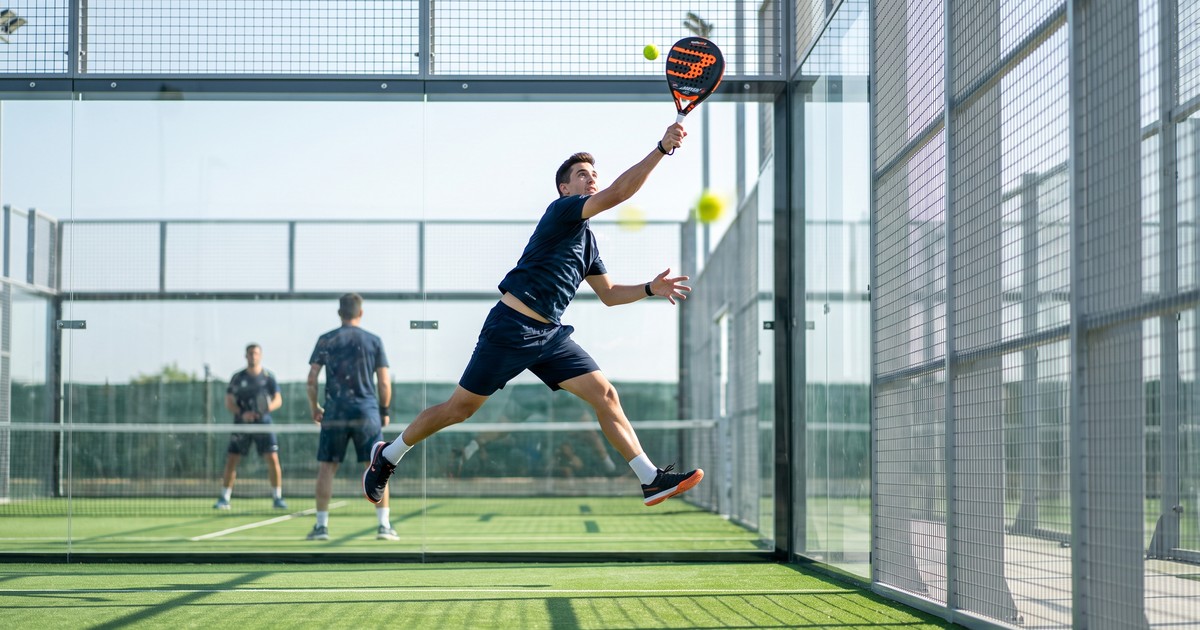
Contact. Strike the ball at the highest point you can reach, directly overhead or slightly in front of it. Your arm extends fully, and the wrist adds a short, sharp snap at contact — that's what gives the ball its speed.
Body drives the direction. Your torso rotates through with the arm, and your weight shifts from the back leg to the front one — this adds power without breaking your balance.
Follow-through and recovery. The racket briefly follows the direction of the shot, then returns immediately to a ready position at the net.
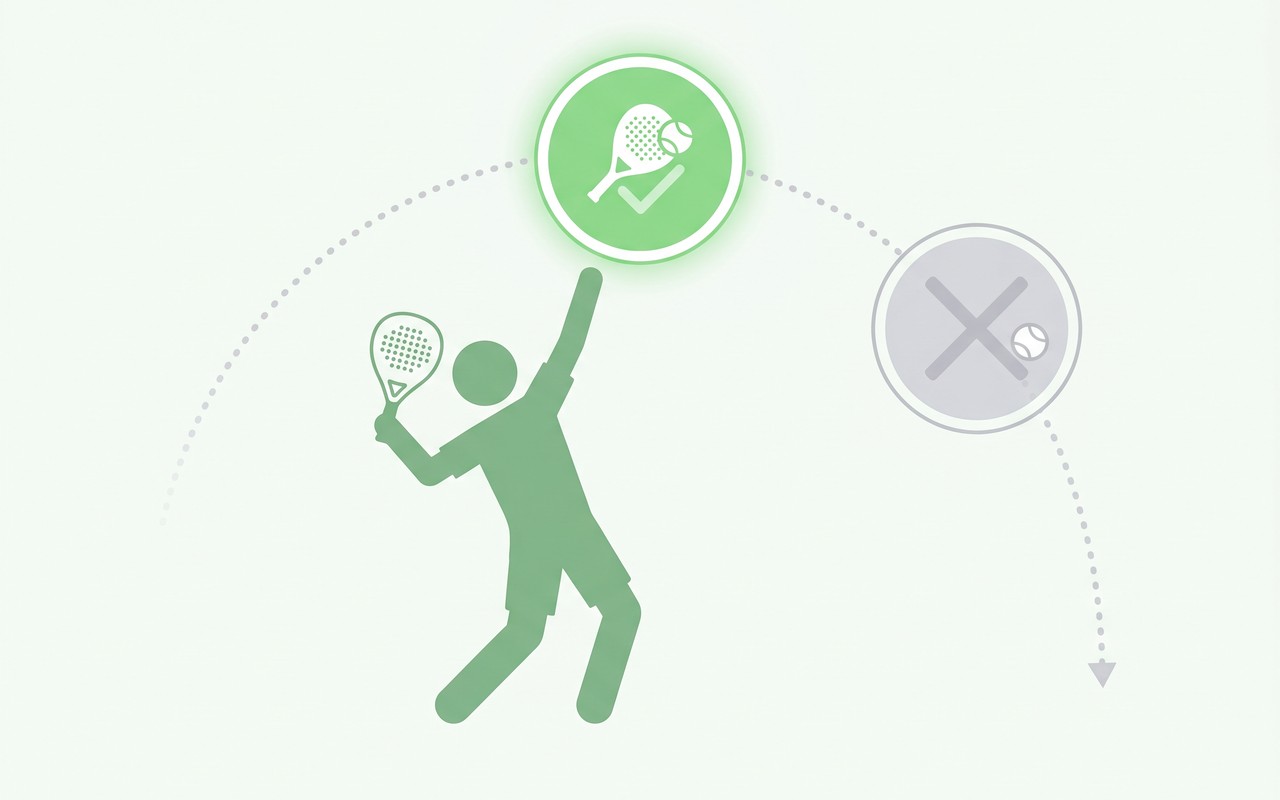
A common mistake is waiting too long, hitting the ball after it has already started dropping behind your head: the stroke then goes up instead of down, and the ball sails over the back glass. The right timing is to strike the ball at the peak of its arc, not after it.
The smash should be struck at the peak of the ball's arc overhead, not after it starts dropping
Where to aim the smash: targets and strategy
Power matters less than direction. On a 20×10 metre court where the walls are in play, blind power often just sends the ball into the back glass, setting your opponents up for an easy return. Three reliable targets:
Between your opponents. A ball aimed straight down the middle creates confusion over who takes it — a classic, reliable target.
Into the closer opponent's body. A smash at the body is nearly impossible to return cleanly — there's no room to get the racket around it.
Into the open diagonal corner. If the pair is standing narrow at the net, a diagonal smash to the open corner forces a sprint and often wins the point without any need for spin.
Avoid smashing straight at a player standing by the back wall: the ball often bounces off the glass back to a comfortable height, and a point that should have ended keeps going. A good strategic habit is pairing the smash with reading your opponents' position, something we covered in our article on court positioning — a pair that correctly covers the middle and the diagonal gets caught out by an easy smash far less often, and loses fewer points of their own.
Common mistakes and how to fix them
Late contact. The ball is struck after the peak of its arc, sending the shot up and over the back glass. Fix: move your feet faster so you're hitting at the peak instead of chasing a dropping ball.
Smashing "for power," with no target. Hitting as hard as possible straight down the middle is an easy target to counter. Fix: pick your zone first — between opponents, at the body, into the corner — then add power.
Stopping your feet before the shot. A flat-footed smash almost always gives an unstable contact. Fix: keep adjusting with small steps right up to the moment of the strike.
Not recovering to the net. A beautiful smash followed by standing still gives away your position, even if you won the point. Fix: train the habit of "hit, then step forward."
Smashing an awkward lob. Trying to muscle through a deep or spinning lob instead of playing an honest bandeja. Fix: if the ball drifts behind you or toward the glass, play a bandeja or víbora — don't gamble your position for the risk.
Drills: from hand-fed balls to a live rally
Like any overhead, the smash can't be learned "in your head" — it needs repetitions.
Drill 1. Contact with no movement
A partner hand-feeds comfortable lobs to one spot right over you. The only job is technique: early racket preparation, contact at the peak, a short wrist snap.
3 sets of 15 reps. Count only the shots that land in court as successful — not just the hardest-hit ones.
Drill 2. Smash with footwork
Your partner tosses the lob slightly to one side of your starting position. Move with side steps, get under the ball, and hit.
4 sets of 10 reps. Pay attention to recovering to the net immediately after the shot.
Drill 3. Smash to a target
Mark three zones on your opponent's side with cones: between the players, at the body, into the far corner. Your partner feeds lobs while you aim at each zone in turn.
3 sets of 10 reps per zone. Accuracy matters more than power here — count hits, not ball speed.
Drill 4. Live sequence — "lob to smash"
A semi-live rally: your partner occasionally tosses an easy lob into an otherwise normal net exchange, and you have to spot the moment and convert it without breaking your rhythm.
8–10 rallies in a row. Count how many easy lobs you converted into a point.
Progress goes noticeably faster with a coach — they'll spot late contact or stalled feet instantly and correct it on the spot. Find one in our PlayPadel coaches section. As for court conditions, look for high ceiling clearance and open space above the net when drilling this shot — browse options in our guide to courts in Tashkent.
How the smash fits into net play
The smash isn't a standalone trick — it's the finishing tool within positional play at the net. The logic is simple:
The pair holds the net, trading bandejas and víboras until the opponent's lob breaks down.
The moment a lob comes back short and comfortable, one player takes over and finishes the point with a smash.
The partner doesn't relax in that moment — they stay ready to pick up a rebound or finish the point if the first smash doesn't end it.
To get into these situations regularly, you need partners willing to drill exactly this combination — lob, bandeja or víbora, smash. Our find games on PlayPadel section helps you gather players at your level for regular practice. And if you're new to the blog, browse the rest of our overhead-shot guides through the PlayPadel blog, covering the bandeja, the víbora and other technical elements.
Padel remains one of the fastest-growing sports in the world, and the level on Tashkent's courts rises every season. A pair that doesn't just return lobs, but confidently finishes the easy ones with a smash, wins more points without unnecessary risk — and that's exactly what's worth a slice of every practice session.
Frequently Asked Questions
How is the smash different from the bandeja and víbora?
The smash is a finishing shot for a short, comfortable lob: contact is as high as possible, spin is minimal, and the goal is power and precise direction. The bandeja and víbora are for tougher lobs, where the task isn't to win the point immediately but to hold the net and keep applying pressure.
What grip do I use for the smash?
The continental grip (the "hammer grip") — the same one you use for the bandeja and víbora. It opens the string face for a clean, powerful, controlled shot and means you never have to change grips between different overheads.
Why does my smash often fly over the back glass?
Most often it's late contact: you're hitting the ball after it has passed the peak of its arc, so the swing pushes it up instead of down. Work on getting under the ball faster so you strike it right at the highest point.
Where's the best place to aim a smash?
Three reliable targets: between the opponents, at the closer player's body, and into the open diagonal corner. Avoid hitting straight at the back wall — the rebound off the glass often gives the ball back at a comfortable height.
Do you need to be physically powerful to hit a good smash?
No. A good smash rests on getting under the ball early, striking it at the peak, and choosing the right direction — power comes from the body and wrist, not the arm alone. A player with precise technique and average strength converts more points than one who relies purely on power.
How quickly can a beginner learn the smash?
The basic version in a few sessions, if you drill it in order: contact with no movement first, then footwork, then accuracy by zone. Consistent, match-ready execution comes with repetition — ideally under the eye of a coach.
The blog's deepest column: advanced shots (bandeja, víbora), positional play, periodised training and honest gear breakdowns — grounded in the experience of Tashkent's playing coaches.
Reviews
Log in to leave a review
Bote pronto means meeting the ball right after it bounces off the court, before it reaches the glass. Here's the technique, timing and when to use it.