Everyone loves to talk about the serve, and almost nobody talks about the return. That's a mistake: the return is where it's decided who runs the rally. In padel you can't blast an ace from overhead the way you can in tennis, so the serving team never gets free points — but the receiving team gives them away far too often. One rushed swing into the net or a soft ball dropped at the net player's feet, and the initiative is lost on the very first shot.
The good news is that the return is a skill you can sharpen faster than most. It doesn't need explosive power; it needs a clear head, an early setup and three or four reliable options. Let's go through them.
Why the return is half the game
In padel the serve is hit underarm: you drop the ball onto the court first, then strike it at or below waist height. There's no big overhead weapon like in tennis. That means the receiver almost always has time — the ball arrives on a predictable, not-too-fast path.
The conclusion is simple: on the return you're not defending, you're answering. The serving team wants to rush forward and seize the net, and your job is either to stop them or to get to the net first yourself. Whoever wins the battle for the net wins most rallies. If you haven't yet looked at why the net matters so much, start with our guide to court positioning — the return makes the most sense read alongside it.
Compare it to the serve itself: the server is only trying not to lose the initiative, while the returner can genuinely seize it. Statistically, that makes the return a more valuable shot than a beginner assumes.
The real goal: control, not a winner
The most common amateur mistake is trying to win the point straight off the return. A hard, flat swing at a rising ball nearly always ends in the net or flies long off the back glass. That's not how points are won in padel.
The goal of the return is simpler and more dependable: send the ball back so your opponent can't attack easily, while you get a chance to move forward. It's a shot that's neutral in power but smart in direction. Think "where and why," not "how hard."
Rushing is the return's worst enemy. Nine errors out of ten here come not from a lack of technique but from too much force and the urge to end the rally on the first ball.
Our coaches share this logic. Anna, from the Padel UZ team, came to padel from tennis (a Master of Sport title, trained in the Spanish school) and reminds players that a full tennis backswing on the return is wasted motion. In padel a short, controlled stroke does the job. If you want to groove it correctly from the start, a couple of lessons go a long way — see the coaches page.
Where to stand and how to get ready
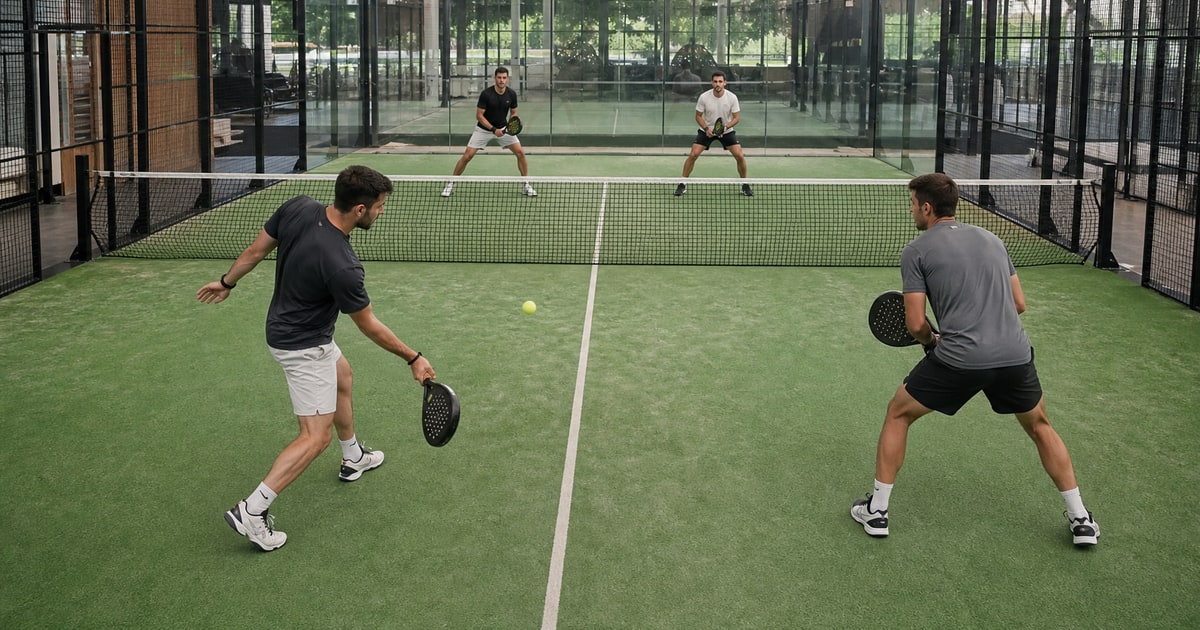
The return position is the foundation. Stand at the back of the court, roughly level with the service line, closer to your own corner. You need to see the server and have room to play the ball even after it rebounds off the back glass wall if it gets there. You don't need to hug the glass — leave yourself a step back.
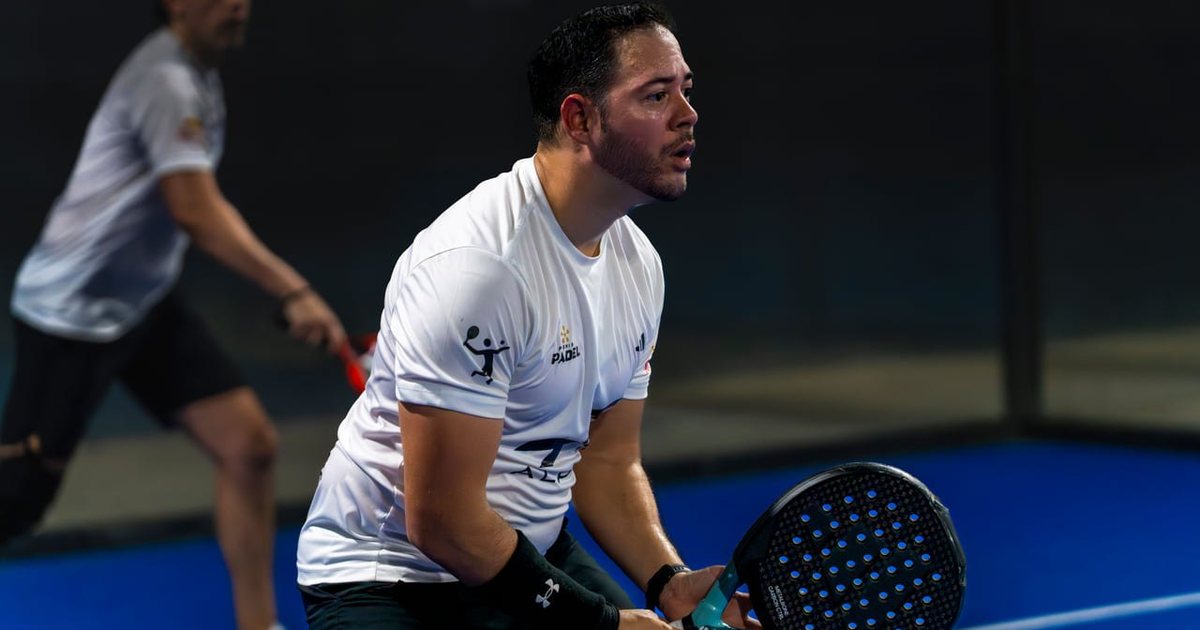
Hold the paddle in front of you with both hands, weight on the balls of your feet, knees soft. Don't stand like a statue: your body should be ready to push off in any direction. And one more thing — agree with your partner in advance about who moves where after your return (more on that below).
A quick readiness checklist before every serve:
- Stand near your corner, level with the service line, with room to the back wall.
- Turn your torso slightly toward the expected return side (forehand or backhand).
- Hold the paddle in front with both hands, weight on your toes.
- Make a small split-step the moment your opponent strikes the ball.
- Step into the ball — don't reach for it standing still.
Three return options: where to send the ball
You almost always have a choice of three basic answers. A good player doesn't swing at random; they deliberately pick one based on the serve and where the opponents are.
| Return option | When to use it | What it gives you |
|---|
| Deep cross-court drive | Comfortable serve, opponents still at the back | Pins the opponent to the back wall, denies an easy run to the net |
| Lob (globo) over the net player | Opponents already charging the net | Sends them back, hands you the net, breaks up the attack |
| Chiquita at the incoming player's feet | One opponent moving to the net | Forces a low up-shot, sets up your attack |
The deep diagonal return is the safest default. The lob is your weapon against a pair that sprints forward aggressively — more on it in our globo guide. And the chiquita is the advanced, low, short return that steals the initiative. Start with the first, add the others as your confidence grows.
How to read your opponent's serve
Half of a good return happens before contact. An experienced receiver "reads" the serve early and is rarely late.
- Watch the server, not the ball in their hand. Body position and swing reveal the direction before the ball is on its way.
- Remember the glass. If the serve travels close to the side or back wall, the ball will rebound — don't attack it against the glass; let it bounce and play from a comfortable spot.
- Note their habits. An amateur almost always serves to the same zone. Two or three rallies and you'll know where they're aiming.
- Don't guess too early. Lean one way before the strike and a smart server will send it to the open corner.
Reading the game is experience that builds in matches. The more you play against different opponents, the faster you learn their serves; tournaments are the best practice ground — check the schedule under events.
Forehand, backhand or into the body: returning by side
The serve always travels diagonally into your box, but the opponent varies exactly where — to your forehand, your backhand or straight at your body. That changes your return, and it pays to know the answer in advance.
- To the forehand (open corner). The most comfortable return for most players. Calmly play a deep cross or a lob — you have both the time and the room to swing.
- To the backhand. For many amateurs this is the weaker side. Don't try to blast it: shorten the swing even more and play it safe — diagonally or with a short chiquita.
- Into the body. The most awkward serve, with the ball coming straight at you. Step quickly to the side, clear your torso and take it on the backhand: it's steadier than twisting onto the forehand at the last moment.
And keep the glass side in mind: if the serve drifts toward the side wall, let the ball bounce and don't get cramped right against the glass. The sooner you read which side the ball is coming to, the calmer you'll pick one of the three options above.
Step-by-step return technique off the bounce
Let's put it all into one repeatable move. These steps work the same on the forehand and the backhand — only the side changes.
- Split-step. As your opponent strikes the ball, make a small hop and land on the balls of your feet, ready to push off either way.
- Early shoulder turn. Rotate your torso toward the shot and take the paddle back early, while you're still approaching the ball.
- Short backswing. No big tennis swing — the paddle goes back just enough to control the ball.
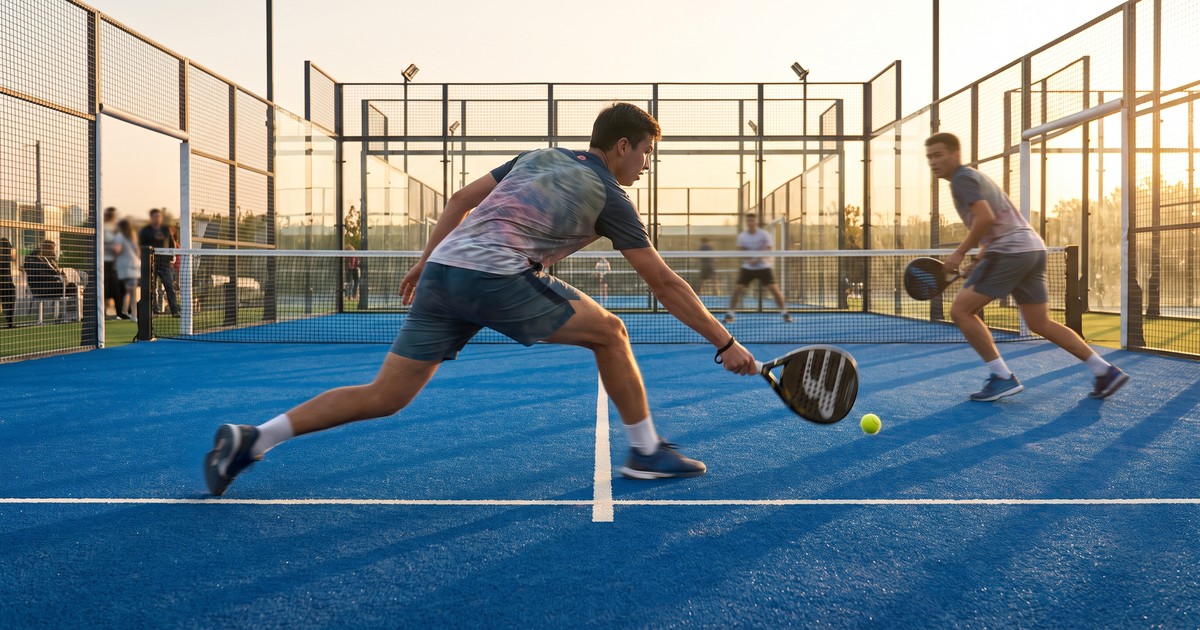
- Step into the ball. Move toward the contact point, transferring your weight forward rather than leaning back.
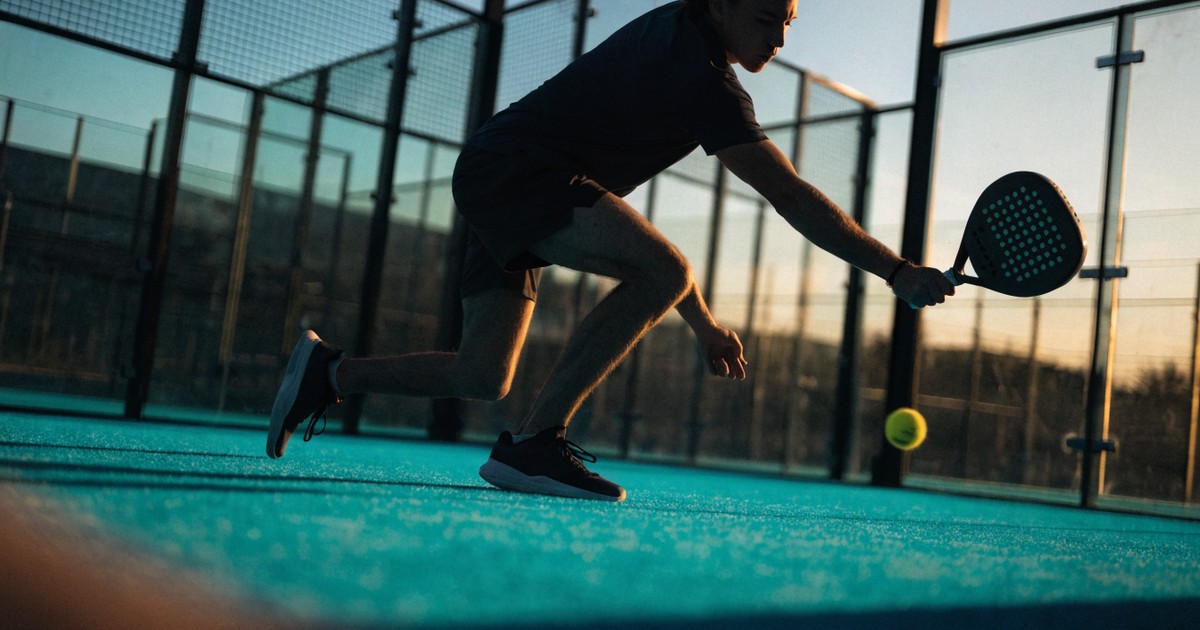
- Contact out in front. Meet the ball ahead of your body at a comfortable height after the bounce, paddle slightly open.
- Follow through to the target. Send the paddle toward your chosen zone — diagonally, up as a lob, or short at the feet.
- Recover and advance. Right after the strike, start moving forward with your partner into position for the next ball.
Break the return into these seven points and drill them slowly; your body will memorise the sequence and it'll become automatic in a match.
Common return mistakes
- Hitting too hard. Trying to blast a winner off the return is a direct path to an error. Control first, power later.
- No split-step. Without the hop you start late and arrive behind the ball, especially in the corners.
- Playing the ball in the glass. Don't hit a ball that's still rebounding off the wall — let it come off and play from a comfortable point.
- Return and freeze. Many players hit and then stand still. After the return you have to move forward — otherwise your opponents take the net.
- Ignoring your partner. You're not returning alone: your partner reacts to your return. Silence and being out of sync cost points. See our guide to sides and partnership in a pair.
How to drill the return
The return is perfect to build on a basket of balls — a coach or partner feeds a series and you rehearse one scenario at a time.
A simple 20-minute session:
- 10 minutes — deep cross-court only. Target: 8 of 10 balls into the back third of the court, diagonally.
- 5 minutes — lob return only. Target: clear an imaginary net player and land the ball in the back zone.
- 5 minutes — return plus net approach. Every good return ends with two or three steps forward.
Book the court in advance so you have time to actually drill, not just play — courts and schedules are under clubs and courts. And to vary your kit and pick a paddle built for control, browse the shops.
The return and your partner: take the net together
Padel is always four players and a doubles game, so the return can't be separated from your partner. While you receive, your partner stands closer to the net, ready either to attack a weak reply or to drop back if your return comes up short.
The main rule is simple: after a good deep return, the pair moves to the net together, as one line. If the return is short and the opponent attacks, you both retreat — together again. A gap between partners is a corridor your opponent will happily fire through.
Agree on a couple of gestures and calls in advance: "going," "back," "mine." That small habit saves more points than any flashy shot. For more ways to improve, browse the PlaySport blog — and the best way to test a new return for real is to sign up for the nearest amateur tournament.
Frequently Asked Questions
Do I return the serve as a volley or after the bounce?
In padel the serve is almost always returned after the bounce — the rules require the ball to land in the service box first. Volleying the serve is neither needed nor allowed on the serve itself.
Can I play the return off the back glass wall?
Yes. If the served ball rebounds off the back wall, you have every right to let it bounce and play from there. It's often more comfortable: the ball loses pace and you strike from a settled position.
Where should a beginner aim the return?
By default — deep and diagonal (cross-court). It's the safest, most versatile return: it pins the opponent to the back wall and rarely leads to an error. Add the lob and chiquita later.
Why does my return keep going into the net?
The usual cause is too much power and too big a backswing. Shorten the swing, meet the ball in front of you, and open the paddle face slightly to give the ball height over the net. Control beats power.
Should I move to the net right after the return?
If the return was deep and clean — yes, move forward with your partner to seize the net. If the return is short and your opponent is ready to attack, it's better to stay back and defend as one line.
How quickly can the return be trained?
A solid, reliable return comes together in a few focused basket sessions. Accurate serve-reading takes longer — it builds over matches and tournaments against different opponents.