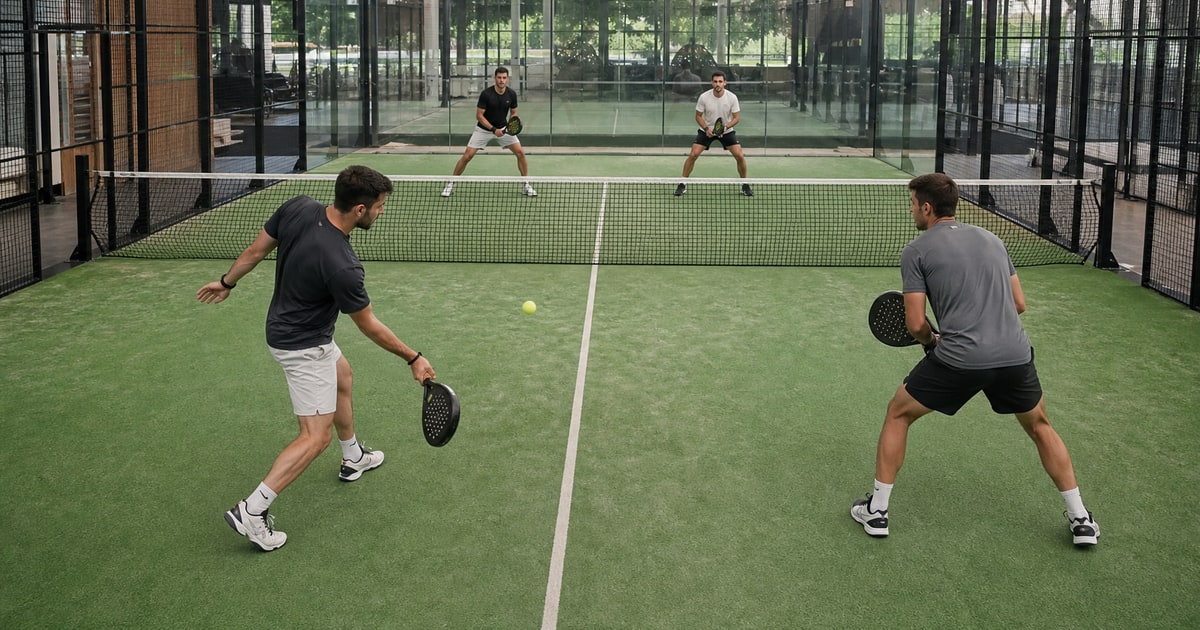
Padel Court Surfaces: How Turf and Sand Change Your Game
Artificial turf, sand infill, drainage and carpet age — what a padel court is actually made of, and why the same surface plays differently from club to club.
You show up to a court you've never played on, warm up for two minutes, and your first lob lands half a meter past where you expected. Or the opposite happens: the ball feels like it dies on contact, and your usual bandeja dumps straight into the net instead of clearing it. It isn't you, and it isn't your racket — it's the floor. Court surface is the most underrated variable in padel. Players will argue for hours about racket shapes and ball brands, but rarely stop to consider that the artificial turf under their feet shapes bounce, ball speed and leg fatigue just as much as any piece of gear. Here's what a padel court is actually built from, why one carpet plays "fast" and another "slow," and how five minutes of warm-up can tell you which one you're standing on.
What's actually under your feet
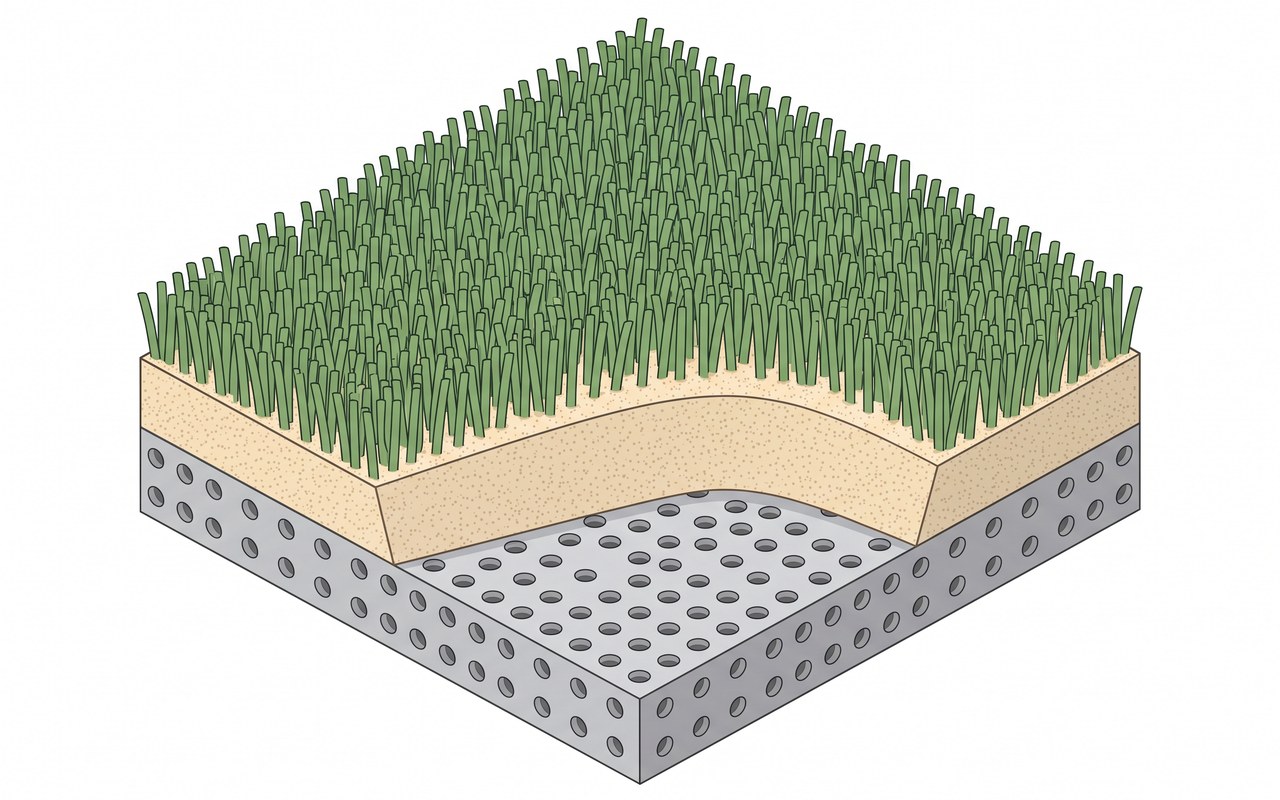
It isn't just "turf" — it's an engineered, multi-layer system, and every layer does a specific job.
The base slab — concrete or asphalt with a slight slope (often a fraction of a percent) so water runs off toward the edges of the court. How flat and consistent this slab is decides whether bounce stays predictable across the whole surface or drifts noticeably from corner to corner.
The drainage layer — either perforation built into the slab itself, or a separate geotextile backing under the turf that carries water down and away instead of letting it pool on top.
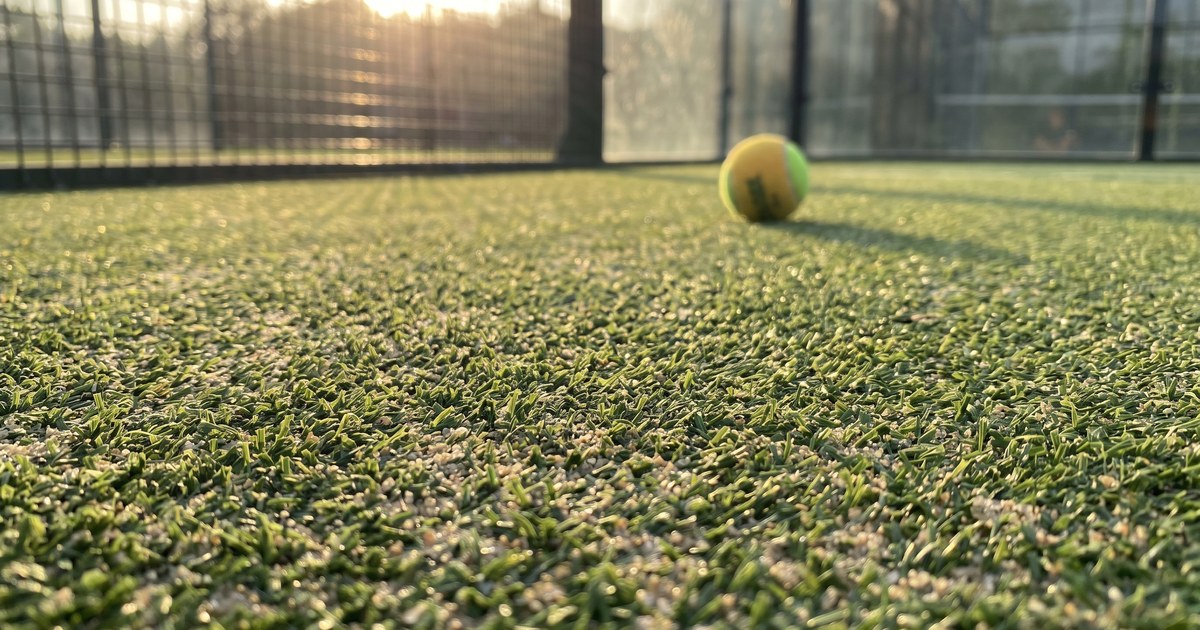
The artificial turf — synthetic fibers, usually polyethylene or fibrillated polypropylene, tufted into a backing in rows. Pile height on padel courts typically runs 6–12 mm, noticeably shorter than a football pitch, where the turf is built to mimic real grass several centimeters tall. Short pile is a deliberate choice: it gives a more controlled, faster bounce, closer to a hard court than a lawn.
The sand infill — quartz sand of a specific grain size, brushed in between the fibers so they stand upright, keep their shape, and don't collapse under the weight of shoes and repeated ball contact.
Change any one of those four layers and the way the court plays changes with it — ball speed, bounce height, how the surface responds to a hard stop-and-turn. That's exactly why two courts with identical-looking green turf at the same club can feel completely different to play on. It isn't a difference in your game; it's a difference in surface physics.
Cross-section of an artificial padel court surface: turf pile, sand infill and the drainage layer beneath it
Pile and infill: why the ball bounces differently
Two variables drive almost everything about how the ball behaves, and they work together.
Short, tightly-packed pile with plenty of infill produces a fast, predictable, fairly low bounce — the ball barely "grabs" the turf before leaving it. That favors first-time hitting, aggressive net play, and shortened shots like the chiquita, since your opponent gets less time to prepare.
Longer pile with less infill slows the ball noticeably and pushes the bounce higher — the turf "catches" the ball briefly before it comes off the surface. That surface rewards building a point from deeper court, and a lob becomes a stronger option more often, because the attacker has less time to close and finish with a smash on the rise.
Under-filled turf is a common problem on aging courts: the fibers lean over instead of standing upright, the ball rolls unevenly across the surface, and bare synthetic without its sand "cushion" heats up faster in direct sun.
Over-filled or unevenly distributed sand, on the other hand, makes the surface harder and raises the risk of skin abrasions on a diving save — well-maintained clubs brush and level sand regularly for exactly this reason, not just to top up quantity.
Good clubs brush the surface and top up sand on a recurring schedule — this isn't a one-time job done at installation, it's ongoing maintenance, comparable to sharpening skates or restringing a racket. Skip it for a couple of seasons and even a great original surface starts playing like a different court.
Watering, heat and drainage: why the same court feels "alive" one day and "dead" the next
On Tashkent's outdoor courts, right after rain or a scheduled watering, the court plays noticeably faster for a while: damp sand packs the turf down more firmly from below, and the ball comes off lower and quicker than it does on dry turf. An hour or two later, once the top layer dries out in the heat, the bounce softens and rises again. If you're playing two sets back to back — one early morning, one in the evening, same court — a real difference in ball speed is entirely possible, and it isn't fatigue or rustiness; it's the surface responding to changing moisture.
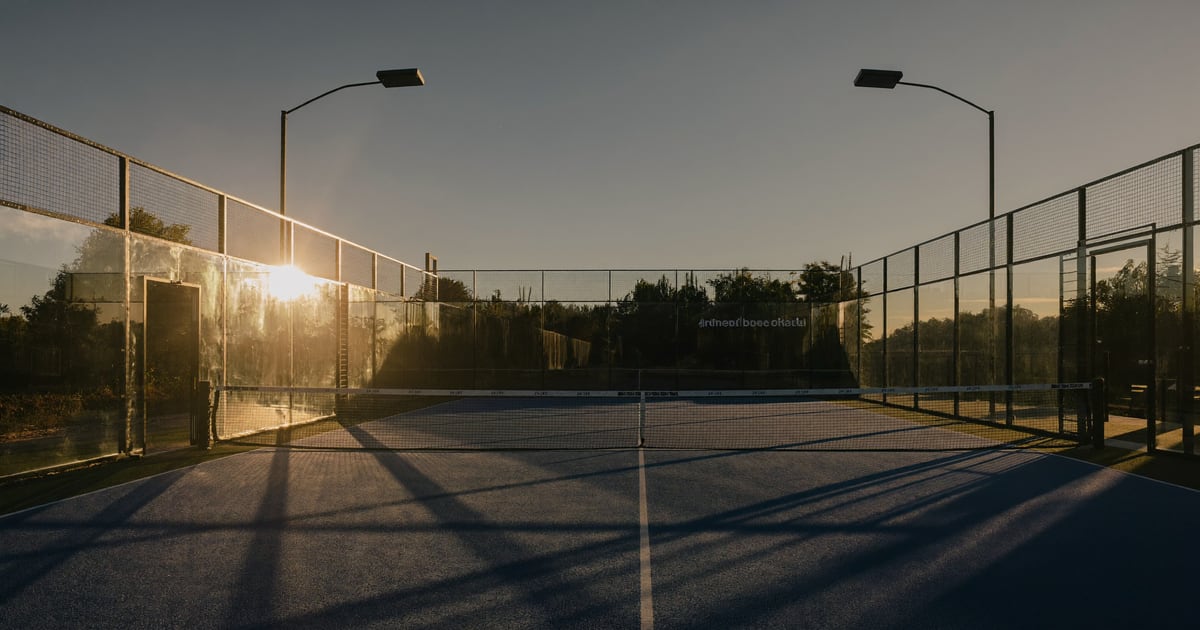
Summer heat adds its own variable: dark green synthetic turf under direct sun heats up noticeably more than the surrounding air, sometimes enough that the same surface under a roof and the same surface in full midday sun feel different underfoot within the first few minutes. This ties directly into when the sun gets in your eyes versus when it's simply too hot to play well — worth weighing both factors together when you pick a time slot.
Drainage matters in the other direction too: on a court with poor runoff, water pools in the corners and along the back glass after heavy rain, and that area turns slippery and noticeably slower to react to a shot. A well-built court grades the slab and perforates it so water clears the surface in 15–20 minutes rather than sitting in visible puddles. If you're playing outdoors right after rain, check the corners near the back wall first — that's where standing water collects most often, and where a hard turn is most likely to slip out from under you.
New carpet versus worn carpet: what actually changes
Surface age is a variable almost nobody asks about when booking a court — which is a mistake, since it affects play more than the difference between two rackets in the same weight class.
Surface condition
How it plays
What to adjust as a player
New (0–1 year)
Even, predictable bounce across the whole court; pile is springy and holds its shape
Play your normal game — almost no adjustment needed
Mid-life (1–3 years)
Light bald patches near the side lines and back wall, where load is highest; bounce is slightly less consistent
Track the ball a fraction of a second longer before contact, especially near the lines
Worn (3+ years)
Pile flattened in one direction, infill unevenly distributed, occasional hard patches or seam bumps
Budget for an off bounce and play a touch more conservatively near the lines
A worn carpet isn't a reason to avoid a venue — plenty of strong Tashkent clubs resurface on a planned schedule and are upfront when a court is nearing the end of its cycle. But if you're preparing for an important match or tournament, it's worth training on the exact court you'll compete on beforehand — getting used to one specific surface genuinely saves points in the first set, while your opponent is still adjusting to it.
More than the floor: glass, mesh and the court frame
Surface is only half the story of how the ball behaves. Bounce off the back glass depends on the material (tempered glass versus chain-link mesh on the sides) and on how rigidly the metal frame is anchored into the ground: a slightly more flexible structure absorbs part of the ball's energy on impact, giving a duller, slower rebound off the glass than a court with a stiffly concreted frame. The difference shows up most in playing off the back wall — on some courts the ball comes off the glass at nearly the same speed and line, on others it noticeably loses pace, and your defensive shot needs to be built differently.
The mesh — the wire lattice on the sides of the court, where balls end up just as often — adds its own variable: a ball hitting it at a sharp angle can catch in the weave for a fraction of a second and drop almost straight down, an effect solid glass simply doesn't produce. Experienced pairs in Tashkent use this deliberately, sending a defensive ball into the mesh rather than the glass specifically because they know it'll come off slower and at a tighter angle, buying an extra beat to recover position.
Same shot, different surface: adjusting your tactics on the fly
Switching courts mid-tournament, or just between sessions, is routine — here's a quick five-minute warm-up checklist that pays for itself early in a match:
Hit a couple of lobs from the baseline and watch how high and how fast the ball comes off the turf itself, not just the glass.
Check a couple of glass bounces on the side and back walls — does the glass sound "live" and stay fast, or does it visibly kill pace?
Walk and plant a few hard stops — feel whether the surface slides under your shoes or grips hard enough to jolt your foot on a sudden turn.
Adjust your contact point: on a fast court, take the ball earlier and play more compact, deciding quickly at the net; on a slow one, let the ball travel a touch further and add your own pace, since the surface will eat some of it anyway.
Reconsider how often you lob: on a slower, "grabbier" surface the lob pays off more reliably, because an attacker has less time to get under a smash while it's still rising.
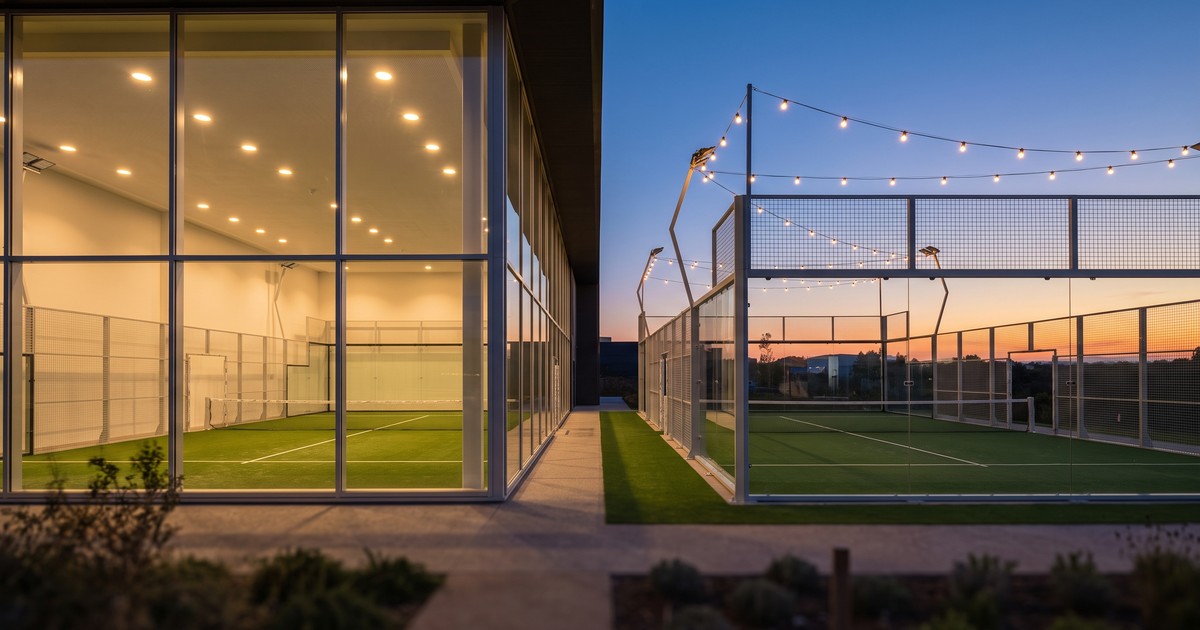
It's the same logic used when choosing between an indoor and an outdoor court — the variable just isn't the roof overhead this time, it's what's directly under your feet.
What to check before booking in Tashkent
Every venue page in the PlayPadel courts directory shows surface type and court orientation — treat that the same way you'd treat price or the schedule, especially ahead of a tournament or an important match. If you're unsure, ask the club's front desk when the turf was last topped up with sand — most clubs are happy to answer, since a well-kept surface is a visible part of their reputation with regulars. Before serious tournament prep, it's also worth checking the upcoming events section — it's usually more useful to train on the exact court a tournament will be played on than to adapt to an unfamiliar surface mid-bracket.
Footwear is part of the surface equation too: an outsole pattern built for short, dense padel turf behaves differently on a worn court or one that unexpectedly "grabs" harder than you're used to. If it's been a while since you replaced your shoes, or you're heading to an unfamiliar surface for the first time, it's worth a look at our guide to choosing padel shoes — and a suitable pair is usually easy to find through our partner shops.
Surface and injuries: what to watch for
An overly hard, worn surface with thin infill puts extra load on knees and ankles specifically during hard stops and direction changes — the exact movements padel is built from at every level. An overly slick surface (wet from watering or rain) raises the risk of slipping on an approach to the net or a turn near the back wall. A worthwhile habit for the first minute on any new court: spend it not hitting balls, but doing a few hard stops and change-of-direction steps a stride from the service line, to feel how these specific shoes grip this specific surface before you push things at full speed. That matters even more if you're returning from a recent knee or ankle injury, or you simply take prevention seriously.
Frequently Asked Questions
Is there a "correct" padel court surface?
There's no official requirement tied to a specific brand or manufacturer, but tournament-grade courts typically use artificial turf with a 6–12 mm pile and even quartz sand infill — that combination gives the most predictable bounce for competitive play at any level.
Why does one court at my club play faster than the one next to it?
Usually surface age and infill level: even courts installed side by side at the same club aren't always resurfaced or maintained at the same time, so pile wear and sand consistency can differ noticeably even when both courts look equally green from the outside.
Is a damp court dangerous?
A court that's damp but not soaked is safe, and actually plays a touch faster thanks to moisture-packed sand. The danger shows up when water pools visibly — that spot gets slippery fast, especially near the back glass on outdoor courts right after heavy rain.
Do I need a different racket for different surfaces?
No — a padel racket isn't tied to surface the way tennis strings are tied to a type of court. Adjusting your shot timing and net positioning is usually enough to adapt to the vast majority of courts without changing equipment.
How do I tell a court's surface needs replacing?
The clear signs are visible bald patches near the lines and back wall, pile flattened in one direction across the whole court, and a noticeably uneven bounce between different zones of the same court. If it's obvious even to a casual player, it's well past due for the club to address.
Does surface really affect the match score?
At amateur level, moderately but noticeably — a handful of off bounces over a set can easily cost a couple of games, especially if your opponent adjusts to an unfamiliar surface faster than you do. Five minutes of the warm-up checklist above solves most of that problem before the first point is even played.
The blog's deepest column: advanced shots (bandeja, víbora), positional play, periodised training and honest gear breakdowns — grounded in the experience of Tashkent's playing coaches.