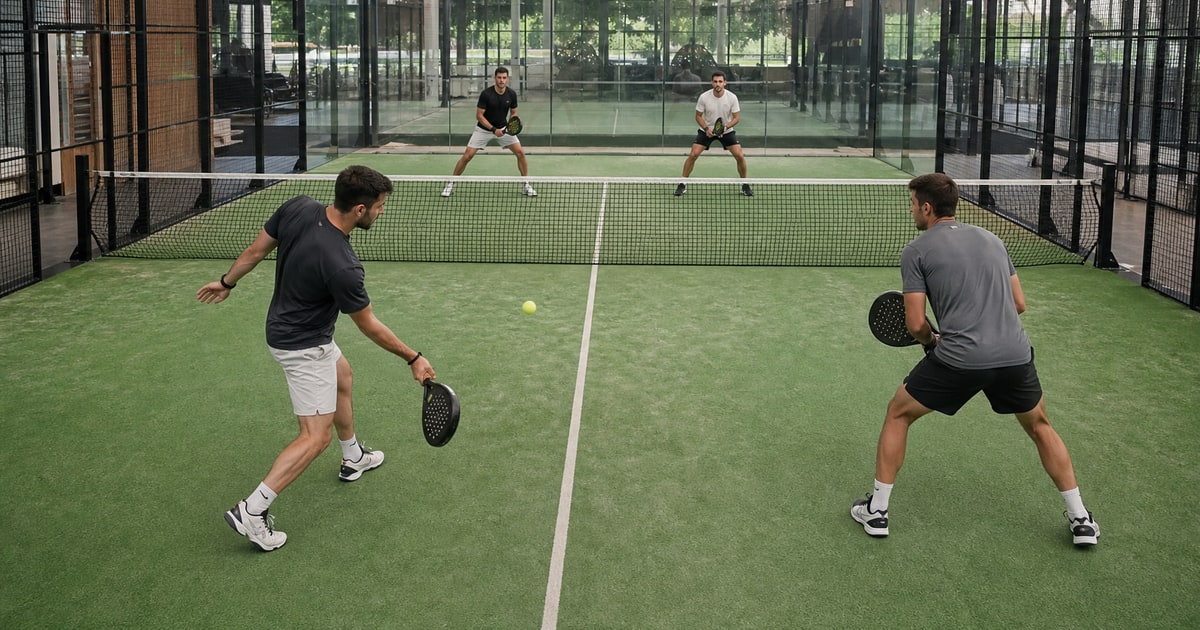
The same shot that lands cleanly in the corner indoors sails a metre long outdoors — and it isn't you. Padel is built so the walls and glass are part of the game as much as the racket, which means anything about the court's structure — a roof or none, a breeze or dead air, the type of glass around it — changes how the ball bounces, how a shot sounds, and how tired you are by the third set. In Tashkent this isn't abstract: some courts in the city are fully open-air, some sit under a canopy or indoors, and the same club often runs both side by side. Here's what physically differs, how it changes tactics, and what to check before you book a court for the evening.
What the difference actually comes down to
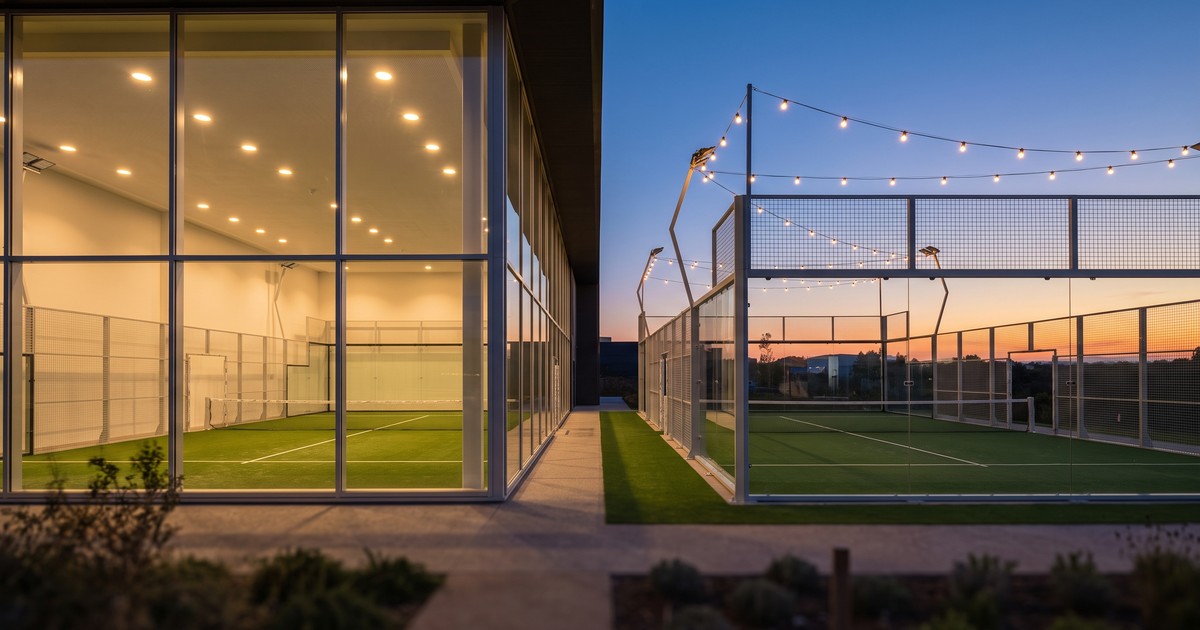
On paper, indoor and outdoor courts share the same dimensions — 20 × 10 metres, walls in play, the net at the usual height. But underneath that standard sit some real differences:
- A roof, or none. An indoor court (and a covered court, partly) takes rain and most wind out of the equation, but adds a ceiling that a very high ball can occasionally clip on venues with lower clearance.
- The enclosure material. Outdoors you'll often see chain-link fencing on the sides paired with glass at the back and part of the sidelines; indoors it's usually panoramic glass around most of the perimeter, since there's no wind to guard against.
- The air around the court. Indoors, the air is still and holds a steady temperature nearly year-round; outdoors it shifts with a breeze, humidity, and the swing between day and night, season to season.
- The light source. Indoors, even fixed-height lighting rigs give uniform coverage; outdoors, the sun moves across the sky, and floodlights at night sit at a different angle than daytime sun ever did.
- Acoustics. An indoor hall bounces the sound of a shot and your partner's voice back at you differently than open air, where sound simply rises and disperses.
Each point looks minor on its own. Together they add up to a noticeably different game — which is exactly why every venue listing in our Tashkent venue guide shows the court type: open-air, covered, or indoor.
The ball behaves differently: temperature and bounce
The official padel ball is more temperature-sensitive than most players assume: the rubber core stiffens in the cold and softens in heat, which shifts internal pressure and, with it, bounce height. In an air-conditioned hall, temperature stays steady year-round, so the ball behaves predictably from warm-up to the final game. Outdoors, it's a different story:
- On a hot day the ball heats up, pressure rises, and the bounce gets higher and faster — plenty of players notice their smashes and víboras carry noticeably further.
- On a cool evening or in winter the ball goes flat, the bounce drops, and shots that would normally sail long suddenly stay in play.
- Humidity adds extra weight to the ball as a match goes on, especially past the one-hour mark.
The practical takeaway is simple: if you're used to indoor courts and step outdoors on a hot afternoon for the first time, don't be surprised when your first few smashes fly long — the ball is genuinely faster than your muscle memory expects.
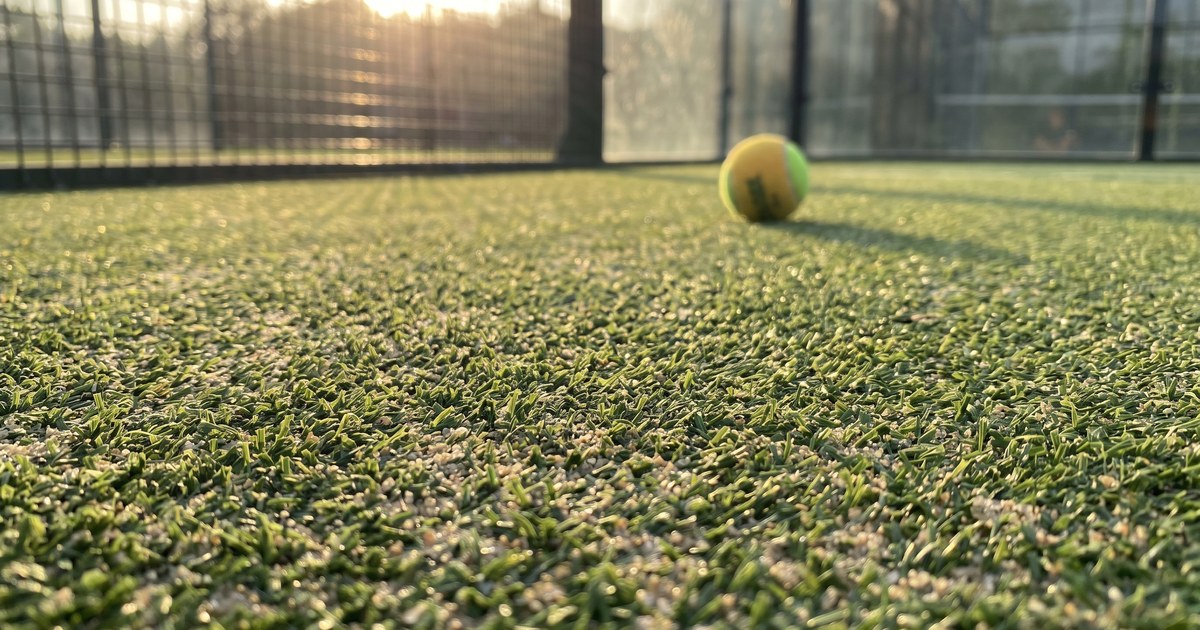
Artificial turf with sand infill is the standard surface on the vast majority of padel courts, but how it behaves under your feet also depends on whether the court is covered:
- Outdoors, the surface heats up in the sun and cools overnight, so grip shifts slightly through the day: the turf pile softens a touch in the heat, and stays damper and a bit slicker for a while after rain, even once the court looks dry.
- Indoors, temperature and humidity stay constant, so grip is predictable from the first game to the last — a real plus if you move hard to the net and back.
- Sand infill on open-air courts washes out with rain and blows away with wind a little faster, so those courts typically need more frequent brushing — if the lines look "bald," that's normal outdoor wear, not a sign of a poorly kept venue.
It's another reason padel shoes aren't a one-size-fits-all piece of gear: an outsole that grips perfectly on cool, dry indoor turf can behave differently on sun-warmed outdoor turf in the afternoon.
Wind: the invisible fifth player
Indoors there's no wind at all, and that's one of the biggest tactical differences. Outdoors, even a light breeze — 3–4 m/s — noticeably changes the game:
- The lob is the shot most sensitive to wind: a tailwind carries it past the back wall, a headwind shortens the flight and drops the ball earlier than you planned.
- The smash drifts sideways off target in a crosswind.
- Overhead shots off the back glass get less predictable, since wind changes the angle the ball comes off the glass.
Experienced outdoor players generally play a touch more conservatively on high balls when the wind is noticeable — lower lobs, flatter shots, less reliance on a precise bounce angle. If you sense the wind favors your opponents (blowing at their back on serve, say), it's worth factoring into how you pick ends after a side change.
Light: even indoor coverage vs. low sun
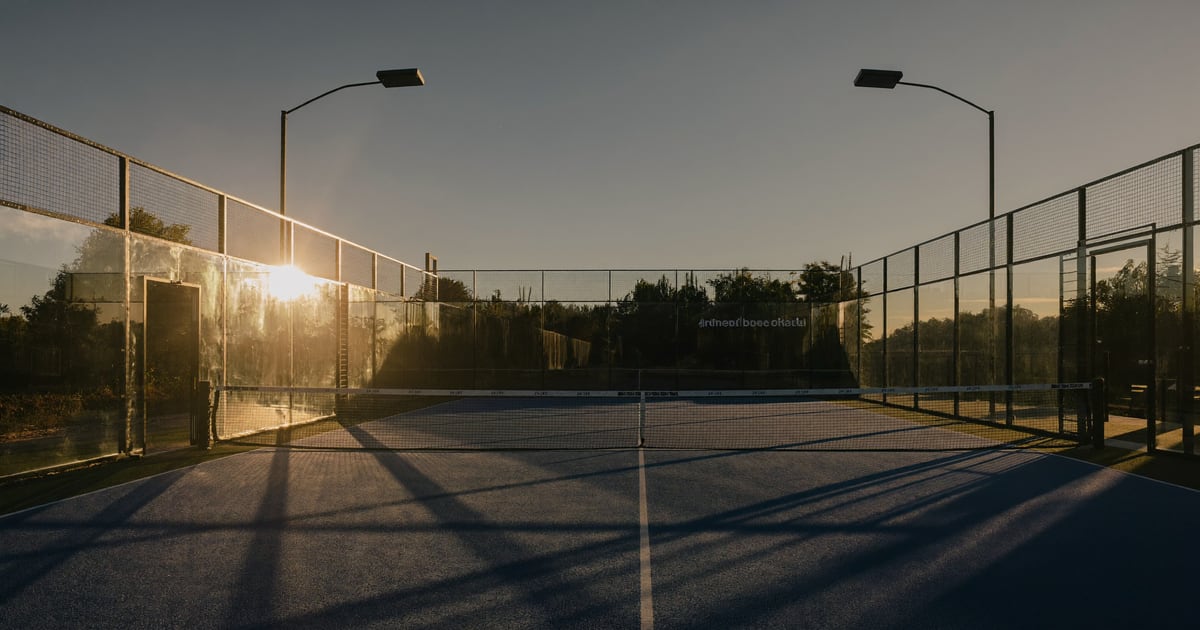
This is where the gap is sharpest. Indoors, lighting is uniform and doesn't move — fixture shadows don't get in the way of tracking the ball anywhere on court. Outdoors, everything depends on time of day and court orientation: low sun at sunrise or sunset can shine straight down the court's long axis and blind a player on one side, while high midday sun is more of a heat problem than a glare one. We covered this in detail in Sun on Court: When It Blinds and When It's Too Hot, which also explains how every venue card on PlayPadel shows which hours a given court is comfortable and which aren't.
Covered or indoor courts generally get much less natural light, and floodlights switch on for evening sessions — positioned differently than daytime sun, so your eyes need a couple of games to adjust to the new light source and new shadows. If it's your first evening session on a given court, give yourself a couple of warm-up games for your eyes, not just your body.
Sound and atmosphere: why an indoor hall is harder to think in
Acoustics are something players rarely plan for. An indoor court, especially one of several sharing a hall, bounces the sound of shots and neighbouring games back into the room — it's louder, carries further, and it's sometimes harder to hear your own partner over the court next door. Outdoors, sound rises and disperses, so it's generally quieter, but you hear more of the outside world instead — traffic, wind, spectators talking.
For newcomers, an indoor court can feel more "intense" at first — louder, brighter, more compact. If you rely on calling shots out loud with your partner ("mine," "yours," "switch"), it's worth agreeing on simple hand signals as a backup in a noisy hall — especially useful on the points that matter most.
Tactics: adjusting your game to the court type
The good news: adapting doesn't take new technique, just a few conscious adjustments.
Outdoors:
- Check wind direction in the first game rather than guessing mid-match — try a test lob or two smashes during warm-up.
- If the wind is strong, play a touch lower — a moderate attacking lob instead of the highest one you've got.
- Track where the sun moves through the session: what was tolerable at the start can blind you specifically forty minutes later.
- Dress and pack gear for the weather: light, breathable layers and enough water in the heat; something you can shed after warm-up on a cool evening — check our shops for the right gear.
Indoors:
- Lean on the ball's predictable bounce — this is where you can target corners more precisely and trust your technique instead of compensating for wind.
- Expect a faster game: without wind resistance the ball tends to travel a touch quicker for the same effort, especially for stronger hitters.
- Agree on hand signals ahead of time if the hall is loud — don't burn a point asking your partner to repeat themselves.
Reading conditions is its own padel skill, just as much as shot technique — which is exactly why it's a regular topic in lessons with PlayPadel coaches.
Tashkent's seasons: when outdoor is a joy, and when it's a slog
Tashkent's climate is sharply continental, and that directly shapes which court type makes sense on the calendar:
- Summer (June–August) daytime heat outdoors can be draining by the middle of the first set — the per-venue comfort widget mentioned above earns its keep here. Early morning and late evening slots are noticeably more comfortable than midday.
- Winter (December–February) outdoor courts tend to run cold and windy, the ball goes flat, and hands chill fast — most regulars shift to indoor courts or heated covered courts.
- Spring and autumn the comfort gap between indoor and outdoor narrows to almost nothing, and the choice usually just comes down to schedule and slot availability.
If you're planning a tournament or a training block months out, it's worth thinking ahead about which court type will suit the season, rather than booking out of habit.
Choosing a court for your game: comparison and checklist
If you're on the fence, here's an honest side-by-side on the parameters that matter:
| Factor | Indoor court | Outdoor court |
|---|
| Wind | None | Ranges from a light breeze to strong gusts |
| Ball temperature | Stable year-round | Shifts with season and time of day |
| Lighting | Even, independent of time of day | Depends on the sun and court orientation |
| Weather (rain, heat) | No effect | Can cancel or spoil a session |
| Acoustics | Louder, sound bounces back | Quieter, sound disperses outward |
| Perceived ball speed | Generally a touch faster | More variable |
| Best time in Tashkent | Winter, hot summer midday | Spring, autumn, summer mornings/evenings |
Before you book, ask yourself three questions: what season and time of day is it, how much does ball predictability matter to you right now (training in tournament-like conditions ahead of a tournament is worth the trouble), and do you have any personal sensitivities — bright sun, say. Every venue card in our Tashkent venue guide shows court type, orientation, and — for open-air and semi-open courts — today's sun forecast, so the decision takes under a minute.
Whichever court you're on, your footing matters just as much — grip on indoor and outdoor surfaces can wear differently depending on age and surface temperature, so shoes are worth choosing for the specific conditions; we cover this in depth in How to Choose Padel Shoes. And if one court or venue doesn't feel right, that's fine — Tashkent has enough options to find what suits you, including venues hosting open tournaments and events.
Frequently Asked Questions
Does the ball's bounce really differ between indoor and outdoor courts?
Yes. The ball's rubber reacts to temperature: warmer means higher internal pressure and a faster bounce, colder means the opposite. A hall with a steady temperature keeps the ball behaving consistently year-round; outdoors it shifts with the weather.
Which court is better for a beginner to learn on?
There's no fundamental difference for basic technique, but an indoor court without wind and with even lighting is usually easier for early lessons — fewer variables to blame a miss on.
Is it true that indoor courts play faster than outdoor ones?
On average, yes, because there's no wind resistance, but the difference is modest and mostly noticeable to players with a strong hit. For most recreational players it isn't a big factor.
How do I know if the sun will be a problem on an outdoor court?
Court orientation and time of day are the key factors: low sun along the court's long axis causes the most glare. PlayPadel calculates this automatically for every venue, for today.
Should I train on the same court type as the tournament I'm preparing for?
Yes, if you have the choice: ball behaviour, light, and — outdoors — wind differ enough that a few sessions in similar conditions genuinely help you adjust.
What should I wear on an outdoor court in a Tashkent winter?
Layers: a warm-up layer you shed after the first couple of games, a breathable base layer, and something to cut the wind between points. Cold hands are a common cause of misses in winter, so a short wrist warm-up before your first serve is worth the minute it takes.


 Courts
 Courts