

Tashkent's Padel Scene: How the Community Really Works
From empty courts a couple of years ago to booked-out evening slots: how and where Tashkent's padel community actually lives and grows.

Contents
- From a couple of courts to a city-wide scene
- Where people actually play: the city's geography
- Who's actually on the court
- How the chats and player groups actually work
- Open-play evenings and skill ladders
- Settling in if you've just arrived in the city
- The unwritten rules of the local courts
- Amateur tournaments as part of the scene
- Gear: from rentals to your first racket
- Summer heat and how the scene adapts
- Frequently Asked Questions
- Do I need to be in good physical shape to join the local scene?
- How long does it usually take to find regular playing partners?
- Do I need to buy my own racket right away?
- Are there tournaments in Tashkent for beginners, not just experienced players?
- How do I choose a club when there are several nearby?
- Can I start playing padel without any lessons first?
Not long ago, padel in Tashkent was a curiosity — "wait, is that tennis in a cage?" Today, weekday evenings see courts packed shoulder to shoulder, and weekend slots need to be grabbed days in advance. At PlayPadel, we watch this scene from the inside every day: who shows up, at what hour, and why the same faces keep turning into long-term playing friends. Here's how the city's padel community is actually structured — from club geography to the chats where regular foursomes really get formed — and how to plug into it if you're still on the sidelines.
From a couple of courts to a city-wide scene
Padel didn't spend years building a reputation the way football or tennis did — it arrived in Tashkent almost overnight. The first courts opened as an experiment tacked onto existing sports complexes, with owners unsure whether a game that people kept confusing with tennis or squash would actually stick. What happened next is the same thing that happens with padel everywhere: it's quick to explain, easy to start, and nearly impossible to walk away from after your first doubles match.
Within a few seasons, the scene changed in kind, not just in size. Clubs built specifically for padel — not repurposed from something else — started appearing. Courts got glass walls, proper fencing mesh, evening floodlights. Players stopped having to explain the rules from scratch to friends — chances are, someone in their circle already plays. That's the mark of a mature scene: not a handful of enthusiasts, but overlapping networks — coworkers, neighbors, former tennis players, parents from the same playground.
Where people actually play: the city's geography
Clubs in Tashkent aren't spread evenly — which makes sense for a growing sport: wherever there's open land for a few courts and parking, a club tends to follow. Nearly every district in the city now has at least one reasonably convenient option, and in some areas you'll find several clubs practically next to each other, which on its own creates local competition for schedules and players.
If you're picking somewhere to play regularly, don't just look at distance from home — factor in surface type, court orientation (indoor, outdoor, covered), and how comfortable that spot is at the time of day you'll actually be playing in summer. We keep a full venue guide with filters for amenities, court type, and location — handy for comparing options before you drive across town for a single game.
Who's actually on the court
One of the most underrated things about Tashkent's padel scene is how mixed it is. On neighboring courts on the same evening, you'll find a student who just learned how to hold a racket next to someone who spent ten years playing competitive tennis and is now methodically breaking down padel as a new technical puzzle. The age range is just as wide — the game comes just as easily to teenagers as to people for whom running around a court is a pleasant workout rather than serious competition.
That mix is exactly what keeps the scene alive. Unlike sports where a beginner is scared to face an experienced player, padel forgives a gap in skill level — the walls bring the ball back into play, and even a weaker pair can hang on for a set. So mixed-level groups are the norm here, not the exception.
Watch a typical evening on the courts and a few recognizable groups stand out:
- Coworker crews — show up as the same team after work, often booking the same slot week after week.
- Former racket-and-ball athletes — ex-tennis players, former volleyball and football players, who pick up the technique fast thanks to existing coordination.
- Couples — playing together against other pairs, a rare shared sport for many where both partners are genuinely into it.
- Solo players — show up alone specifically to meet people and land a spot in a new foursome through open play.
How the chats and player groups actually work
Formally organized club communities are still less common in the city than informal chat groups — which is normal for a scene that's still taking shape. Most day-to-day coordination happens in messaging apps: a group for a specific club's regulars, a "need a fourth for tonight" chat, a chat built around a particular coach or skill level. That's usually where a missing spot in a foursome gets filled an hour before the game — faster than through any formal listing.
For a newcomer, this isn't always obvious at first — it feels like you should just be able to show up on court, but in reality most of the convenient evening slots are already claimed by regular groups through exactly these chats. Getting into one or two of them is often a faster route to regular games than waiting for an open spot in a public listing. The easiest way to find them is to ask a club's coach or the front-desk staff — almost every club has at least one active chat built around it.
Open-play evenings and skill ladders
Beyond private bookings with friends, the city has gradually settled into an open-play format — evenings you can show up to alone or with one partner and get matched with players of a similar level. It's the fastest way to find regular partners if you're new to the city or just don't feel like rounding up a foursome yourself every time.
The easiest way to track these evenings, americano-style leagues, and amateur tournaments is the events section — it pulls together everything happening across the city's scene, from one-off evenings to ongoing leagues with a results table.
| Format | What it is | Best for |
|---|---|---|
| Open play | Show up solo or with a partner, get placed on a court | Newcomers to the city, anyone looking for partners |
| Skill ladder | An ongoing ranked player list with "challenge someone above you" matches | Players who want to climb steadily |
| Americano | A mini-tournament where partners rotate every round | Anyone who wants to play against everyone in one evening |
| Private booking | A classic foursome with a set lineup, booked in advance | Established groups of friends |
Settling in if you've just arrived in the city
Expats and recent arrivals in Tashkent are often surprised at how quickly they can find a regular playing group — faster than in many cities where padel has been around for a decade and local circles have long since closed to newcomers. Here, the scene is still forming, and new players are usually welcomed: a fresh face is one more potential fourth on the court.
The most reliable path is to start with a few private or group lessons to pick up the basics and the vocabulary, while checking out the coaches section — many club coaches know the local scene well and can introduce you to players at your level. We've covered this in more depth in our piece on finding padel partners in Tashkent, which goes deeper into groups, chats, and first steps.
The unwritten rules of the local courts
Every scene has its own etiquette — nowhere written down officially, but you'll pick it up fast from how people around you react. In Tashkent, that means things like acknowledging the neighboring court if your ball rolls over instead of quietly pocketing it, not running over your booked time when another foursome is waiting, and not loudly critiquing someone else's game from the viewing area by the glass.
If you want the full rundown — from who's expected to collect the balls after a match to how to politely decline a game that's out of your league — we have a dedicated piece on padel court etiquette. It's a short read that'll save you a few awkward moments in your first weeks.
Amateur tournaments as part of the scene
Tournament life in Tashkent is growing right alongside the player base — from small one-evening club americanos to multi-group tournaments with a weekend final. For a lot of amateurs, that first tournament is the moment padel stops being "hitting a ball around with friends" and becomes "a sport I do." Nerves before your first tournament are completely normal, and we've written in detail about what a first amateur tournament actually looks like from the inside, while the americano format gets its own breakdown in our piece on americano and mexicano.
Tournaments are also the scene's social glue — they're where players from different clubs across the city, who'd otherwise never cross paths because they play in different parts of town at different hours, actually meet.
For club organizers, a tournament is also a way to fill courts during off-peak hours: weekday daytime groups, for instance, often form around a tournament bracket rather than a regular booking. If you're eyeing your first tournament, a sensible starting point is the americano format, where partners rotate every round — in a single evening you'll play against a real spread of skill levels and get a genuine read on where your game stands, instead of guessing based on how practice sessions feel.
Gear: from rentals to your first racket
At the start, almost nobody buys a racket right away — most clubs offer rentals, which is a smart way to try different models before spending money. But once the game hooks you, the question of your own gear comes up fast: a racket that suits your hand, shoes with the right grip for the surface you're playing on, clothing that doesn't restrict quick lateral movement.
Local infrastructure for this is gradually building out too — from specialty shops to sellers who can advise on racket shape based on your playing style. You can browse these spots in our padel shops section.
The things players tend to focus on most when they move from rentals to their own gear:
- Racket shape — round shapes forgive more mishits, teardrop and diamond shapes give more power but demand a cleaner strike.
- Sole grip — hard-court shoes and clay-court shoes behave differently on a padel court, especially on outdoor courts after watering.
- Racket weight — beginners are usually more comfortable with a lighter model for quicker reactions at the net.
- Heat-ready clothing — quick-dry fabrics matter a lot on outdoor courts during the summer months, more on that below.
Summer heat and how the scene adapts
Tashkent summers are their own scheduling challenge. By midday, outdoor courts become nearly unplayable, while evening windows turn into the city's most valuable resource — that's when bookings vanish fastest. Clubs and players have long since adapted: many shift activity to early morning or late evening, favor covered or fully enclosed courts during the hottest months, or simply track which side of a given court is shaded at the time they need it.
If you're curious how you can actually gauge sun exposure on a specific court at a specific time in advance, we have a piece on how we predict sun on court — it's a genuinely useful tool for picking your playing time in summer, not just a fun bit of tech.
There's a flip side too: in winter, covered and heated courts become the city's most valuable resource, while open-air courts noticeably empty out in the evenings. Experienced players on the scene usually keep two or three clubs with different court types bookmarked for exactly this reason — so they're never stuck relying on one court when the weather changes the rules of the game.
Frequently Asked Questions
Do I need to be in good physical shape to join the local scene?
No. Padel forgives a wide range of fitness levels thanks to the walls and four-player format — plenty of people come specifically for the light cardio, not because they were already fit.
How long does it usually take to find regular playing partners?
Based on how players in the city describe it, anywhere from a few weeks to a couple of months with regular court visits — especially if you use open-play evenings and club chats rather than counting on chance encounters alone.
Do I need to buy my own racket right away?
No, almost every club offers rentals. It makes more sense to buy once you know your preferred shape and weight — usually after your first month or two of playing.
Are there tournaments in Tashkent for beginners, not just experienced players?
Yes, americano formats and mini-leagues are often split by level, so beginners don't have to jump straight into matches against strong pairs.
How do I choose a club when there are several nearby?
Compare schedules, court type (indoor/outdoor), and amenities through the venue guide — the deciding factor is often less about distance and more about which club actually offers convenient playing times.
Can I start playing padel without any lessons first?
You can, but a couple of introductory lessons with a coach will save you months of trial and error — especially when it comes to basic technique and reading the ball off the glass.
For players who are in it for fun: how to actually improve between lessons, find partners at your level, court etiquette, and what your first amateur tournament is really like.
Related articles
 Padel culture
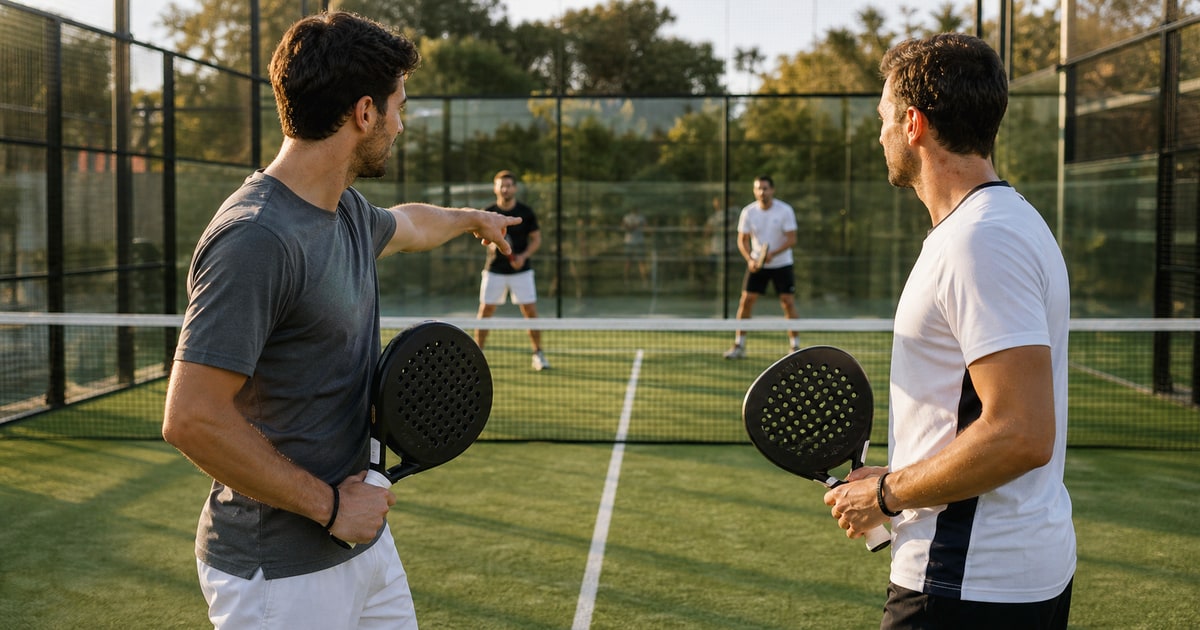
Padel Partner Communication: Calls That Save Points
Padel is always doubles. Learn to sync with your partner through clear calls and simple hand signals — habits that save more points than one big shot.
 Padel culture
How to Build a Padel Crew That Actually Sticks Together
A single match is a nice introduction. A standing four is a habit. Here's how to build a padel crew in Tashkent that lasts months, not one Saturday.
 Padel culture
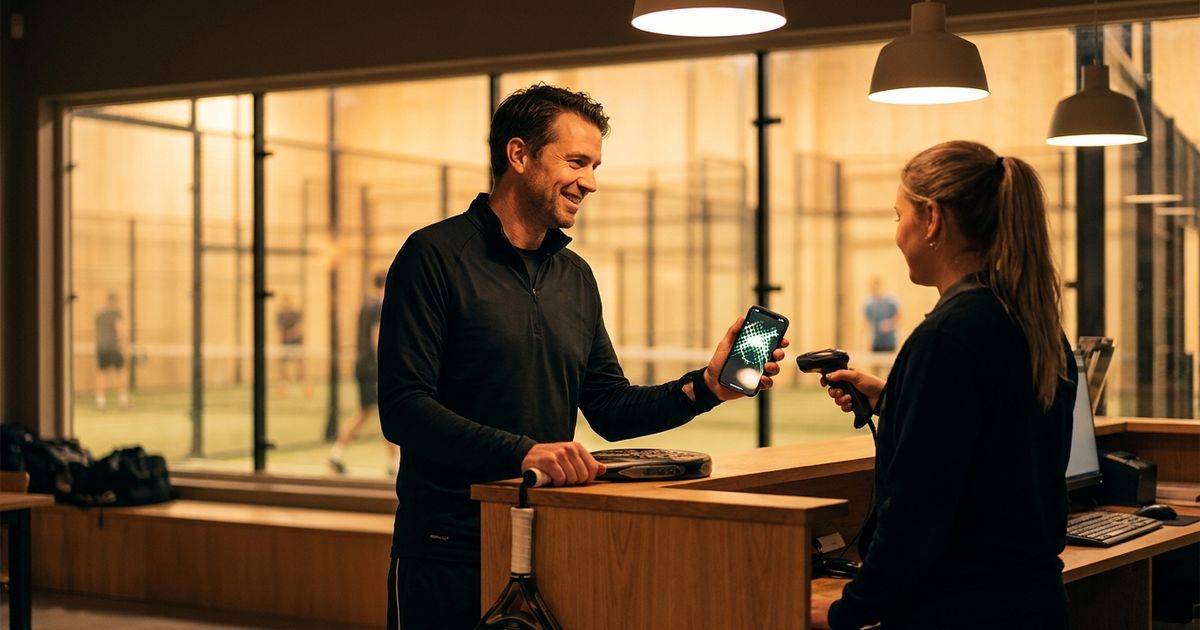
Court Booking Etiquette: Cancellations, No-Shows and Splitting the Bill
Booking the slot is the easy part. Here's how to handle cancellations, no-shows, splitting payment for four, and playing as a guest at another club.