

Stronger or Weaker Partner? How to Play Padel Together
Not every pair is evenly matched. Here's how the stronger player avoids overpowering the game, the weaker one keeps up, and what actually closes the gap.
Contents
- A skill gap is normal, not a problem
- How to gauge the real gap
- If you're the stronger player: five rules for not steamrolling the game
- If you're the weaker player: how not to hold the pair back
- On-court tactics for a mismatched pair
- Drills that close the gap fastest
- Formats where a skill gap works in your favor
- When it's time to talk about a different partner
- Finding a better-matched partner in Tashkent
- Frequently Asked Questions
- How big a skill gap is still comfortable for a pair?
- How can the stronger player avoid upsetting their partner during a match?
- What should I do if I'm a beginner playing with a much more experienced partner?
- Are there game formats that smooth out a skill gap?
- Should I replace my regular partner because of a skill gap?
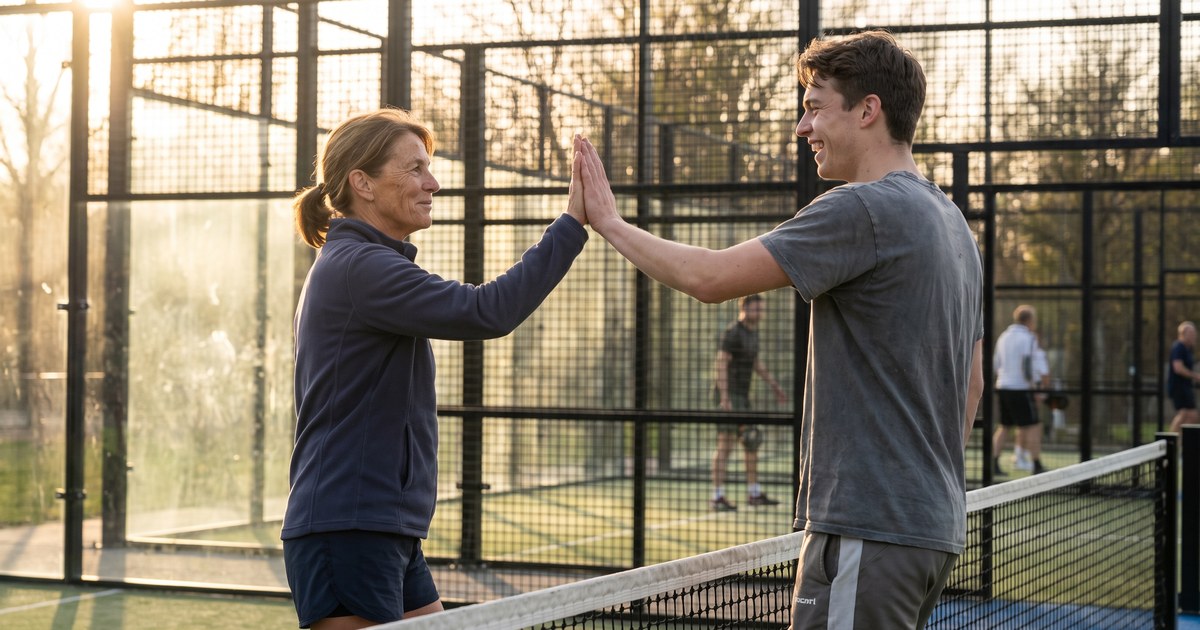
Sooner or later, almost every player has one of those evenings: your partner turns out to be noticeably stronger or weaker than you. Some people spend the whole match apologizing. Some get quietly frustrated at every unforced error. Some just stop having fun. But a skill gap isn't a broken pairing — it's a normal part of amateur padel, especially in a growing community like Tashkent's, where beginners and experienced players share the same courts. Here's how to play with a partner at a different level so the match stays enjoyable for both of you, instead of letting the scoreboard decide everything.
A skill gap is normal, not a problem
Padel is always played four-to-a-court: two pairs, each partner sharing one half of a 20×10 metre court and constantly interacting with the other. In tennis, a skill gap between partners barely exists — there's no partner to have one with. In padel, it exists almost by default, and that's fine.
A few reasons why:
- The sport is young here. Padel has only recently taken off in Tashkent, so any given club has players who picked up a racket a month ago training alongside people who've been on court for two or three years.
- Doubles brings different kinds of people together. Couples, coworkers, friends who decide to try a new sport together — they rarely start out at the same level.
- Everyone improves at a different pace. Even two people who start on the same day can end up on different rungs six months later: one has logged more match time, the other has built a stronger physical base.
So if your regular partner plays differently than you do, that's not a reason to find new company — it's a reason to figure out how to work with it. And if the gap is really showing up as miscommunication on court — who takes what, who covers where — read our piece on communication in a pair first: half of what looks like a "skill gap" problem is actually a coordination problem.
How to gauge the real gap
Before you change anything about how you play, it helps to know how big the gap actually is — gut feeling tends to exaggerate it.
Padel uses the international 1.0–7.0 rating scale (we covered it in detail in our guide to padel skill levels). A simple rule of thumb:
- Under 0.5 points apart — barely noticeable on court; a comfortable pairing.
- 0.5 to 1.0 points apart — noticeable, but the pair is perfectly workable, especially with the adjustments below.
- More than 1.5 points apart — the match will feel like a training session for one player and a trial by fire for the other; this pairing benefits from deliberately switching formats (more on that further down).
If you've never had your level formally assessed, ask a coach at your next session, or go by feel: can you sustain a rally past a few shots, do you feel confident at the net, is your serve consistent? Our coaches directory is a good place to get an honest outside read instead of guessing.
If you're the stronger player: five rules for not steamrolling the game
The more experienced player usually wants to help — and that instinct is exactly what tends to ruin the match. Here's what actually works.
- Take more of the court, but not all of it. At the net and through the middle, you can and should take the initiative — that's a fair way to offset the experience gap. But don't shut your partner out of the game entirely: go a whole match without touching the ball, and even a patient partner will lose interest within half an hour.
- Attack the opponents' weak side, not your own partner. Instead of hitting every ball as hard as possible, direct your attack at the weaker player on the other team. It raises your odds of winning the point and stops the match from turning into a demonstration of power over your own partner.
- Give simple, achievable tasks. "Just keep the ball in play" works better than "hit it where nobody's standing" — the second instruction demands a level of confidence and precision your partner may not have yet.
- Praise effort, not just results. A good move to the net is worth acknowledging even if the point is lost. A partner who gets credit for trying new things starts trying them faster.
- Don't comment on every mistake. One piece of feedback per rally, max. A running commentary of corrections doesn't help mid-match — it just switches off any partner, however experienced.
If you're the weaker player: how not to hold the pair back
On the other side of the net are different worries: fear of letting your partner down, the temptation to attempt shots you're not ready for, the sense that you're "ruining" the match. A few mindset shifts take the pressure off.
- Your job is consistency, not winners. Your partner closes out attacks; you hold your half of the court and keep the ball in play. That's a full contribution to the result, not a lesser version of the game.
- Don't try to hit like your partner. Attempting a víbora or a smash that isn't in your toolbox yet almost always ends in an unforced error. A simple, reliable shot into the court beats an ambitious miss nearly every time.
- Ask for specific feedback. Instead of a vague "how am I doing?", ask something like "what should I do with balls down the middle?" or "where should I stand on a lob?" A specific question gets a specific, useful answer.
- Stop apologizing for every ball. A constant stream of "sorry," "my bad," "I'm ruining this" wears your partner down more than the actual mistakes do. A quick "next one" and moving on works better.
- Get separate practice at your own level. A fun social pairing and dedicated training sessions for improvement aren't in conflict — they're just two different goals, handled separately.
On-court tactics for a mismatched pair
Once a pair has accepted the gap, the next step is tactics — concrete calls that make the game comfortable for both players while also improving your odds of winning the point.
| Situation | What the stronger player does | What the less experienced player does |
|---|---|---|
| Ball down the middle | Takes it if clearly better positioned | Holds their own side, doesn't reach across the partner |
| Rally at the net | Keeps the initiative, targets the opponents' weaker side | Covers their zone, ready for a simple volley |
| Lob over the partner | Actively covers the lob | Calmly switches sides, doesn't panic |
| Serve and return | Takes the tougher return side | Handles the easier, more predictable serve |
| Pressure points (30-40 and similar) | Doesn't force it, plays it safe, gives the partner support | Plays simpler than usual, avoids risk |
The principle behind this table is simple: the more experienced player takes on risk and initiative, the less experienced one takes on stability and discipline. Neither role outranks the other — without a solid defense of your own half, even the best net attack can't save the point.
Drills that close the gap fastest
A skill gap doesn't shrink through conversation — it shrinks through a specific kind of practice together. These drills genuinely work for mismatched pairs:
- Cooperative rally counting. Instead of playing for points, count how many consecutive shots the pair can keep the ball in play, trying to beat your own record. It removes the pressure to "win" and teaches the weaker player to hold the ball steady.
- Target zones for the stronger player. The more experienced partner plays only into a specific zone (crosscourt only, for example), deliberately limiting their own options. This evens out the pace of the rally and gives the weaker partner time to react.
- Fixed roles for 10 minutes. One player defends the baseline only, the other attacks the net only, with no switching for a short block of time. Each person focuses on one job instead of trying to do everything at once.
- A joint session with a coach. A coach watching from outside sees the gap objectively and can give each player a drill suited to their level within the same session — faster than trying to sort it out on your own. You can find a suitable coach in our coaches directory.
Twenty minutes of these drills once a week produces a noticeable effect within a month — the gap doesn't vanish overnight, but the game stops feeling lopsided.
Formats where a skill gap works in your favor
Sometimes the right answer to a skill gap isn't in-match tactics at all — it's picking a different format.
- Americano and Mexicano. In these formats, partners and opponents rotate every round, so you end up playing with and against both stronger and weaker players in turn — the gap averages itself out. We covered the format in detail in our guide to Americano and Mexicano.
- Handicap play. The weaker side starts with a lead in games or points — a simple way to even out the result without changing how the game itself is played.
- Level-based groups at the club. Many clubs and open-play sessions form groups within a similar rating range — if the constant gap is what's bothering you specifically, it's worth looking for games within your own group rather than only playing with your regular partner.
- Mixed training pairs in class. In group lessons, coaches deliberately pair players of different levels for specific drills — a controlled setting where the gap works for learning instead of against enjoyment.
You can check current tournaments and open-play sessions around the city, including more forgiving formats for mixed-level pairs, in our events section.
When it's time to talk about a different partner
A skill gap on its own isn't a reason to part ways with a partner. But there are honest signs that it's time to either change the format or have a direct conversation:
- One of you regularly leaves the court frustrated rather than pleasantly tired.
- You find yourself avoiding matches with this partner instead of looking forward to them.
- The stronger player is effectively playing one against two, and the weaker one barely touches the ball.
- Conversations about technique turn into criticism instead of help.
If any of that sounds familiar, you don't need to either suffer through it silently or cut ties abruptly. A short, honest conversation is usually enough: "Let's play together for fun, and look for separate partners when we want to compete." That's not the end of the friendship on court — it's just separating two different goals, socializing and competing, that don't have to live in the same match.
Finding a better-matched partner in Tashkent
If, after all the tactical adjustments, the skill gap is still getting in the way of your enjoyment more often than you'd like, a reasonable next step is finding a second partner closer to your own level — without giving up your first one.
- Ask around at your club. Most venues in Tashkent know who plays and how often, and can point you toward players of a similar level — check out our list of vetted courts in the venues section.
- Try open play and entry-level tournaments. These are a natural place to meet players in your range — our events section is updated regularly.
- Don't be afraid to switch partners by purpose. One partner for a relaxed weekend game, another for serious tournament prep — that's standard practice even among experienced players.
- Give new pairings time. Chemistry with any partner, even one at your own level, takes a few matches together to develop — don't judge compatibility off a single game.
A skill gap between partners isn't a glitch in how padel works — it's part of the sport's design. Padel doesn't tolerate playing alone, and it constantly puts people at different stages of the journey on the same side of the net. A pair that talks honestly about the gap and adjusts its tactics around it often gets more out of the game than two evenly matched players who stopped really seeing each other on court a long time ago.
Frequently Asked Questions
How big a skill gap is still comfortable for a pair?
Under 0.5 points on the 1.0–7.0 scale, the gap is barely noticeable on court. Between 0.5 and 1.0 points, the pair remains perfectly workable with the right tactics. A gap over 1.5 points usually calls for a format change — handicap play, for example, or training sessions instead of competitive matches.
How can the stronger player avoid upsetting their partner during a match?
Praise effort, not just results; give no more than one piece of feedback per rally; and direct your attacks at the opponents' weak side rather than demonstrating superiority over your own partner. Shutting your partner out of the game by taking every ball is what ruins a match fastest.
What should I do if I'm a beginner playing with a much more experienced partner?
Focus on consistency rather than flashy shots — a simple, reliable ball into the court beats a risky attempt every time. Ask for specific feedback on one element at a time, and don't apologize for every mistake — that wears your partner down more than the errors themselves.
Are there game formats that smooth out a skill gap?
Yes. Americano and Mexicano rotate partners and opponents every round, so the gap averages out on its own. Handicap play and level-based club groups are two other solid options if a persistent gap is getting in the way of your enjoyment.
Should I replace my regular partner because of a skill gap?
Not necessarily. What usually helps isn't a new partner but an honest conversation and a split of goals: one partner for relaxed play, another for tournament prep. Changing company only really makes sense if matches with your partner are consistently bringing more frustration than enjoyment to both of you.
For players who are in it for fun: how to actually improve between lessons, find partners at your level, court etiquette, and what your first amateur tournament is really like.
Related articles
 Padel culture
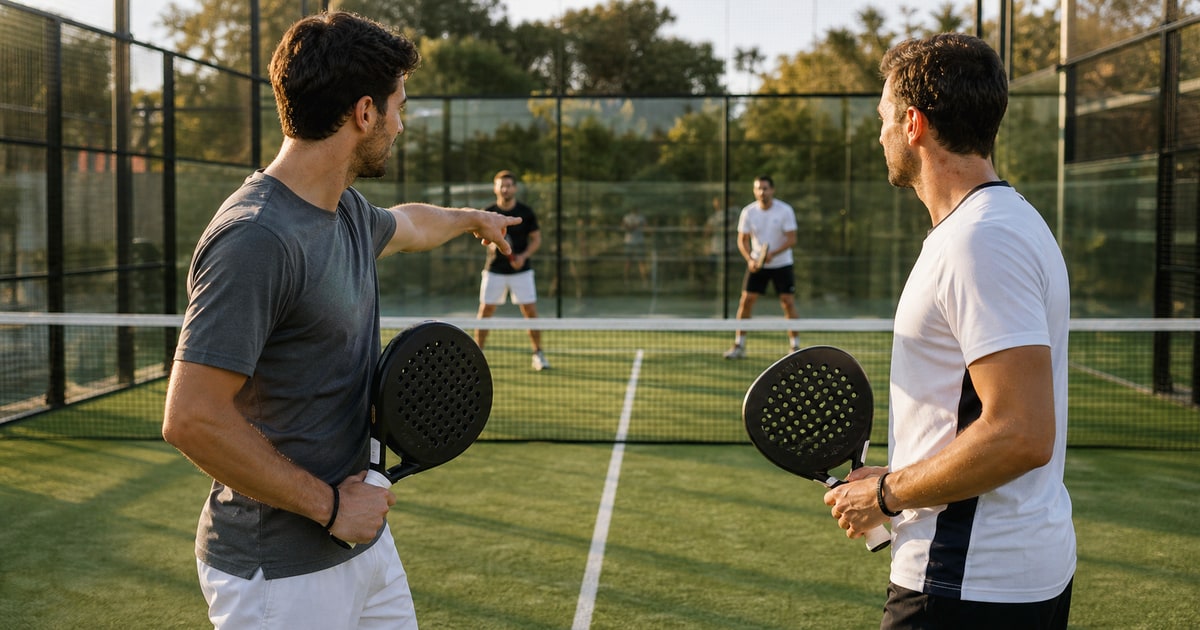
Padel Partner Communication: Calls That Save Points
Padel is always doubles. Learn to sync with your partner through clear calls and simple hand signals — habits that save more points than one big shot.
 Padel culture
How to Build a Padel Crew That Actually Sticks Together
A single match is a nice introduction. A standing four is a habit. Here's how to build a padel crew in Tashkent that lasts months, not one Saturday.
 Padel culture
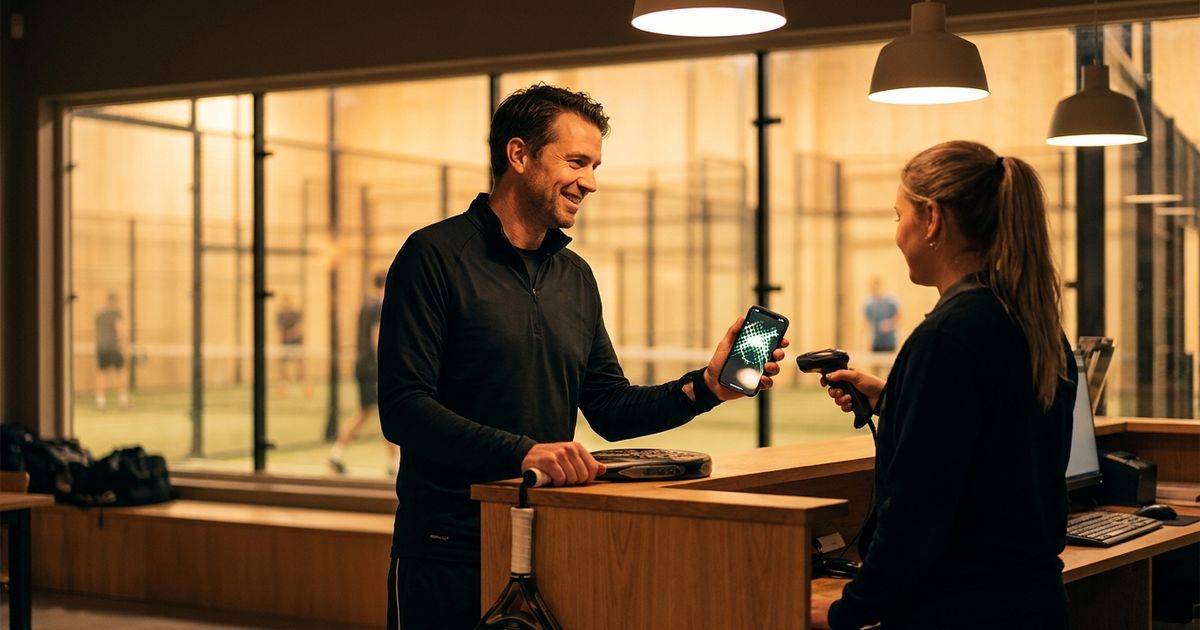
Court Booking Etiquette: Cancellations, No-Shows and Splitting the Bill
Booking the slot is the easy part. Here's how to handle cancellations, no-shows, splitting payment for four, and playing as a guest at another club.